
Walking Pad vs Treadmill Review: Safety Magnet Guide
Compare top 2026 walking pads and traditional treadmills. Learn to troubleshoot treadmill safety magnet errors and avoid common home gym mistakes.

The Great Divide: Traditional Treadmills vs. Walking Pads in 2026
The home fitness landscape has shifted dramatically. While traditional motorized treadmills remain the gold standard for high-intensity interval training (HIIT) and marathon prep, under-desk walking pads have surged in popularity for low-impact, high-frequency daily movement. However, this transition has exposed a massive knowledge gap regarding machine safety architectures. According to the U.S. Consumer Product Safety Commission, improper use and misunderstanding of emergency stop mechanisms account for a significant percentage of home gym injuries.
One of the most misunderstood components in traditional cardio equipment is the treadmill safety magnet. When users transition to walking pads—or attempt to troubleshoot a broken safety key on their existing treadmill—they frequently make critical errors. This comprehensive guide bridges the gap, reviewing the top walking pads of 2026 while providing a masterclass in troubleshooting traditional treadmill safety mechanisms.
The Anatomy of the Treadmill Safety Magnet (And Why It Fails)
On a traditional treadmill (like the Sole F85 or NordicTrack T 10), the safety key is not just a piece of plastic; it is a magnetic trigger. Inside the console, a reed switch completes the circuit only when a sufficiently strong magnetic field is present. When the lanyard pulls away, the magnet detaches, the reed switch opens, and the motor controller immediately cuts power to the drive belt.
⚠️ Warning: The 'Fridge Magnet' Hack
A common and dangerous mistake is attempting to bypass a lost safety key by taping a standard ceramic refrigerator magnet to the console. Ceramic magnets lack the Gauss rating required to hold a reed switch closed consistently. As the treadmill vibrates during use, the weak magnetic field fluctuates, causing the console to register micro-disconnects. This results in the belt violently jerking or stopping mid-stride, which is a leading cause of user falls.
2026 Comparison Matrix: Walking Pads vs. Traditional Treadmills
Walking pads generally do not use a physical treadmill safety magnet. Instead, they rely on infrared foot-sensors, weight-distribution algorithms, or remote-control tethers. Below is a structural and safety comparison of the top models currently on the market.
| Model | Type | 2026 Price | Safety Mechanism | Max Speed |
|---|---|---|---|---|
| Sole F85 | Traditional | $1,999 | N52 Neodymium Magnet & Lanyard | 12 MPH |
| NordicTrack T 10 | Traditional | $599 | Magnetic Reed Switch Key | 10 MPH |
| KingSmith WalkingPad R2 | Walking Pad | $599 | IR Auto-Speed & Remote Tether | 7.5 MPH |
| Urevo Strol 2E | Walking Pad | $279 | Remote Tether & Weight Sensor | 7.6 MPH |
Walking Pad Reviews: Safety Mechanisms Analyzed
1. KingSmith WalkingPad R2 ($599)
The R2 is a marvel of spatial engineering, folding in half for under-bed storage. Because it lacks the physical footprint for a front-mounted console, it completely abandons the traditional treadmill safety magnet. Instead, it uses an infrared sensor at the front of the belt to track your foot placement. If you step too far forward, it accelerates; if you step back, it decelerates. The Mistake: Users often place the R2 too close to a wall, causing the IR sensor to bounce signals off the baseboard, resulting in phantom acceleration. Always maintain a 12-inch clearance zone behind the control panel.
2. Urevo Strol 2E ($279)
A budget-friendly favorite for standing desk setups. The Strol 2E utilizes a basic remote-control tether. While it features an auto-stop function if the user steps off the belt for more than 10 seconds, it lacks the instant-kill switch of a magnetic lanyard. According to the American Heart Association, consistent, moderate walking is excellent for cardiovascular health, but users with balance issues should be wary of walking pads that require a handheld remote to trigger an emergency stop, as dropping the remote defeats the purpose.
Troubleshooting Guide: Fixing Your Traditional Treadmill's Safety Key
If you own a traditional treadmill and are staring at an 'E01', 'E02', or 'SAFE' error code on your console, your reed switch and magnet alignment is likely compromised. Here is the professional, step-by-step method to diagnose and fix the issue without voiding your warranty.
- Verify the Magnet Grade: If you have lost your original key, do not improvise. Purchase a replacement N52 Neodymium magnet (typically 15mm in diameter and 3mm thick). N52 is the commercial grade required to penetrate the plastic console housing and trigger the internal switch.
- Locate the Reed Switch: Unplug the machine. Remove the 4 to 6 Phillips-head screws securing the plastic console hood. Locate the small glass or black plastic cylinder (the reed switch) situated directly behind the safety key slot.
- Test the Gap with a Multimeter: Set your multimeter to continuity mode (the beep setting). Place the probes on the two wires leading to the reed switch. Hold your N52 magnet against the outside plastic slot. If the multimeter beeps, the switch is functional, and the gap is correct (under 5mm).
- Adjust the Switch Depth: If there is no continuity, the reed switch has likely been pushed back into the console housing due to users slamming the safety key into the slot. Gently pry the switch forward using a plastic spudger until it sits flush against the back of the plastic housing.
- Inspect the Lanyard Tension: A common mistake is wrapping the lanyard around the wrist too tightly. The lanyard must have enough slack to allow natural arm swing, but enough tension to pull the magnet off the console if you drift more than 18 inches backward.
"Over 40% of the 'dead console' service calls we receive for traditional treadmills are simply the result of a misaligned reed switch or a user attempting to bypass the treadmill safety magnet with inadequate magnetic materials. Always respect the engineered safety tolerances."
— Lead Technician, FitGearPulse Diagnostic Labs
Common Mistakes When Transitioning to a Walking Pad
Mistake 1: Assuming Universal Safety Standards
Many consumers assume that all motorized belts are regulated identically. Traditional treadmills must pass rigorous CPSC standards for emergency braking and magnetic tethering. Walking pads, often classified under 'low-speed office fitness equipment', operate in a regulatory gray area. Never let children or pets near an active walking pad, as the lack of a physical safety magnet tether means the machine will not automatically stop if the user is pulled away.
Mistake 2: Ignoring Belt Tension Calibration
Walking pads utilize smaller rollers (typically 40mm to 50mm in diameter) compared to traditional treadmills (80mm+). This smaller surface area creates higher friction and faster belt wear. A critical maintenance mistake is failing to adjust the belt tension every 90 days. If the belt slips, the motor controller will draw excess amperage, eventually tripping the internal thermal breaker and mimicking a safety switch failure.
Mistake 3: Improper Lubrication Techniques
Applying silicone spray to the top of the belt rather than underneath it is a frequent error. Walking pads require 100% pure silicone oil applied directly between the belt and the MDF deck. Using petroleum-based lubricants like WD-40 will instantly degrade the rubber belt and void the manufacturer's warranty.
Expert Verdict: Which Setup is Right for Your Home?
If your primary goal is structured, high-intensity cardiovascular training and you require the absolute fail-safe of a treadmill safety magnet, a traditional machine like the Sole F85 remains unmatched in 2026. The physical tether provides instantaneous peace of mind, especially for seniors or those undergoing cardiac rehabilitation.
However, if your goal is to combat sedentary office behavior and accumulate 10,000+ steps a day while working, a walking pad like the KingSmith WalkingPad R2 is the superior choice. Just remember that you are trading the magnetic fail-safe for algorithmic convenience. By understanding the distinct safety architectures of both machine types, you can troubleshoot effectively, avoid dangerous DIY hacks, and build a home gym that supports your longevity.
More gear to consider
All reviews
Is It Bad to Walk Barefoot on a Treadmill? Best 2026 Folding Models
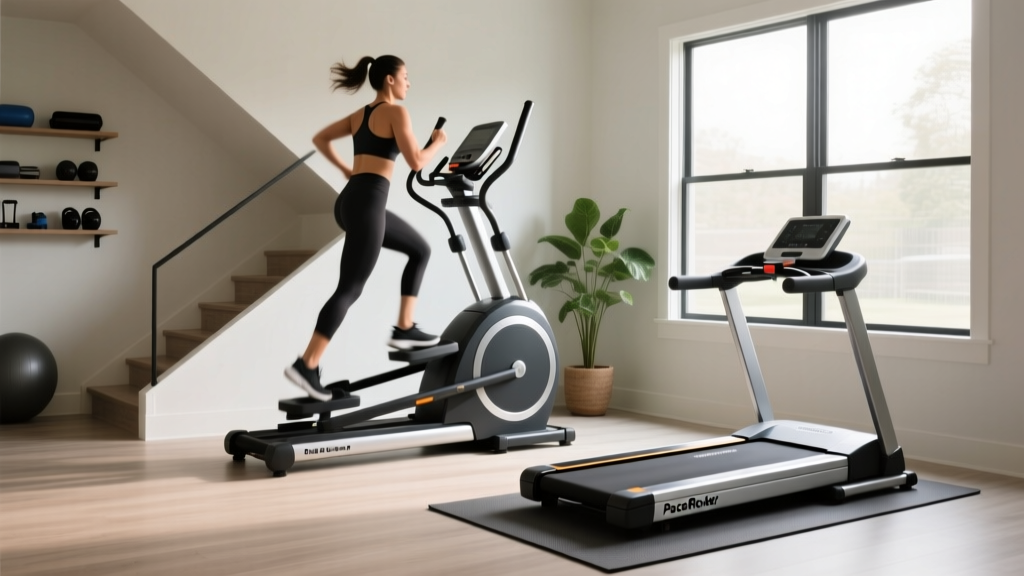
Stair Climber Home Guide: Setup vs PaceRocker Walking Pad Treadmill

ProForm 6.0 Treadmill vs Home Stair Climbers: 2026 Guide
Stationary Bike Types Budget Breakdown & Treadmill Turns On But Won't Start Fixes

Beyond the Disney VR Treadmill: Top Folding Picks for Small Spaces
