Vibration Plate vs Treadmill: Why Spin & Recumbent Bikes Win
Stuck on the vibration plate vs treadmill debate? Discover why upright, recumbent, and spin bikes are the ultimate 2026 cardio solutions.

Many fitness enthusiasts begin their home gym journey trapped in a confusing search loop: the vibration plate vs treadmill debate. On one side, you have treadmills, the undisputed kings of calorie burn but notorious for joint degradation over time. On the other, vibration plates promise passive muscle activation and recovery, yet fall drastically short of providing the sustained cardiovascular stimulus required for heart health and significant fat loss.
As we evaluate cardio equipment in 2026, it is clear that neither extreme serves the majority of home users optimally. The true sweet spot for sustainable, high-yield cardiovascular training lies in the often-overlooked middle ground: stationary bikes. Specifically, understanding the distinct biomechanical differences between upright, recumbent, and spin bikes is critical for matching your physiology to the right machine.
Why the Vibration Plate vs Treadmill Debate Misses the Mark
Treadmills force your body to absorb ground reaction forces equivalent to 2.5 times your body weight with every footstrike. While excellent for bone density, this makes them a poor choice for users with osteoarthritis or recovering from meniscus tears. Conversely, whole-body vibration (WBV) plates operate primarily as neuromuscular stimulation tools. According to the Mayo Clinic, true low-impact cardiovascular exercise must elevate your heart rate into the aerobic zone (64% to 76% of your max HR) without punishing the skeletal system. Vibration plates simply do not achieve this aerobic threshold, and treadmills fail the low-impact requirement. This is where stationary bikes dominate.
Upright Bikes: The Traditional Cardio Workhorse
Upright bikes mimic the geometry of a traditional road bicycle but with a more relaxed top tube and higher handlebars. They engage the core and upper body stabilizers to a moderate degree while delivering a highly efficient cardiovascular workout.
Top Pick: Sole Fitness SB700
- Price: $1,099
- Flywheel: 48 lbs (Front-mounted)
- Resistance: Friction pad (Micro-adjustable)
- Footprint: 42' x 24'
The SB700 remains a staple in 2026 for users who want a commercial-grade feel without the smart-screen subscription fatigue. The heavy 48-pound flywheel provides immense momentum, smoothing out the pedal stroke at high cadences (110+ RPM). Modern iterations also include Bluetooth FTMS connectivity, allowing you to broadcast your cadence and power data to third-party apps like Zwift. However, the friction resistance pad requires occasional replacement (roughly every 18 months of heavy use) and can generate ambient heat during long climbs.
Recumbent Bikes: Joint-Saving Rehabilitation & Steady State
If your primary concern is spinal loading or severe knee pathology, the recumbent bike is non-negotiable. The bucket seat and forward pedal placement eliminate axial loading on the lumbar spine and drastically reduce shear force on the patellofemoral joint.
Biomechanical Warning: Recumbent bikes do not engage the gluteus maximus to the same degree as upright or spin bikes due to the fixed hip angle. Users must supplement recumbent cycling with targeted posterior chain resistance training to prevent muscular imbalances.Top Pick: Schwinn 270 Recumbent
Priced at $899, the Schwinn 270 offers a 13-inch ergonomic seat with a ventilated mesh backrest, accommodating users from 5'0' to 6'4' via a 10-inch sliding seat rail. It features 25 levels of silent magnetic resistance. According to data published by Cleveland Clinic, the recumbent cycling motion is highly recommended for knee rehabilitation because it strengthens the quadriceps without the compressive forces of weight-bearing exercises.
Spin Bikes (Indoor Cycles): High-Intensity & Performance
Spin bikes are designed for aggressive, out-of-the-saddle riding, high-intensity interval training (HIIT), and precise power output. They feature a steeper seat tube angle and drop handlebars that force the rider into an aerodynamic, forward-leaning posture.
Top Pick: Keiser M3i
- Price: $2,295
- Drive System: Poly-V Belt with Eddy Current Magnetic Resistance
- Power Accuracy: +/- 1% (Laboratory tested)
- Q-Factor: 170mm (Mimics outdoor road bikes)
The Keiser M3i is the gold standard for data-driven cyclists. Unlike standard magnetic bikes that use a physical magnet moving closer to a steel flywheel, the M3i uses eddy current resistance, meaning there are zero moving parts in the resistance mechanism. This eliminates calibration drift over time. The rear-mounted 8-pound aluminum flywheel spins at a 1:11 gear ratio, perfectly replicating the inertia of a 50-pound outdoor wheel. It is a premium investment, but its failure rate over a 5-year period is virtually zero.
Head-to-Head Comparison Matrix
| Feature | Upright Bike | Recumbent Bike | Spin / Indoor Cycle |
|---|---|---|---|
| Primary Use Case | General fitness, moderate steady-state | Rehab, seniors, lumbar issues | HIIT, athletic performance, classes |
| Impact Level | Low | Ultra-Low (Non-weight bearing) | Low (High joint torque if poorly fitted) |
| Avg. Calorie Burn (30m) | 250 - 350 kcal | 200 - 280 kcal | 350 - 500+ kcal |
| Price Range (2026) | $600 - $1,500 | $800 - $2,200 | $1,200 - $3,500 |
*Calorie burn estimates based on a 155 lb individual, referencing Harvard Health Publishing metabolic equivalent (MET) data.
Real-World Maintenance & Failure Modes
When investing in a stationary bike, understanding long-term failure modes separates the experts from the casual buyers. Here is what you need to monitor based on bike type:
1. Sweat Corrosion on Magnetic Brakes
On mid-tier upright and spin bikes ($500–$1,000 range), the magnetic resistance bracket is often positioned directly above the flywheel. Over 12 to 18 months, acidic sweat drips onto the neodymium magnets and steel brackets, causing rust that seizes the tension cable. Pro Tip: Always use a silicone-based rust inhibitor on the resistance bracket every 6 months, and drape a microfiber towel over the handlebars during intense rides.
2. Belt Drive Tensioning
High-end spin bikes use Poly-V belts instead of chains. While they are whisper-quiet, they can stretch. If your Keiser or similar belt-drive bike develops a 'slipping' sensation at the bottom of the pedal stroke during high-wattage sprints, the belt tensioner pulley needs a 2mm hex adjustment to restore grip.
Expert Decision Framework: Which Bike Fits Your Goals?
'Stop debating the vibration plate vs treadmill. Ask yourself what your joints can handle today, and what your heart needs tomorrow.'
- Choose an Upright Bike if: You want a space-efficient machine (under 10 sq ft) that simulates outdoor cycling without the aggressive forward lean. It is the best all-rounder for general weight management.
- Choose a Recumbent Bike if: You are managing sciatica, herniated discs, or post-operative knee replacements. The bucket seat allows you to read or watch TV while maintaining Zone 2 heart rate targets without lower back fatigue.
- Choose a Spin Bike if: You are an endurance athlete, follow structured training plans, or want to perform standing climbs and high-cadence sprints. You must be willing to invest time in precise biomechanical bike fitting (setting saddle height so the knee has a 25-30 degree flexion at bottom dead center) to avoid saddle sores and patellar tendonitis.
Ultimately, the best cardio machine is the one that aligns with your orthopedic reality and keeps you consistent. By moving past the misleading vibration plate vs treadmill dichotomy and selecting the correct stationary bike variant, you secure a lifelong tool for cardiovascular longevity.
More gear to consider
All reviews
Beyond the Treadmills Definition: Expert Belt Maintenance Guide
Walking Pad Review: Decoding the Plae Treadmill Cost for Beginners
Bicycle and Treadmill Troubleshooting: Walking Pad Comparison & Fixes
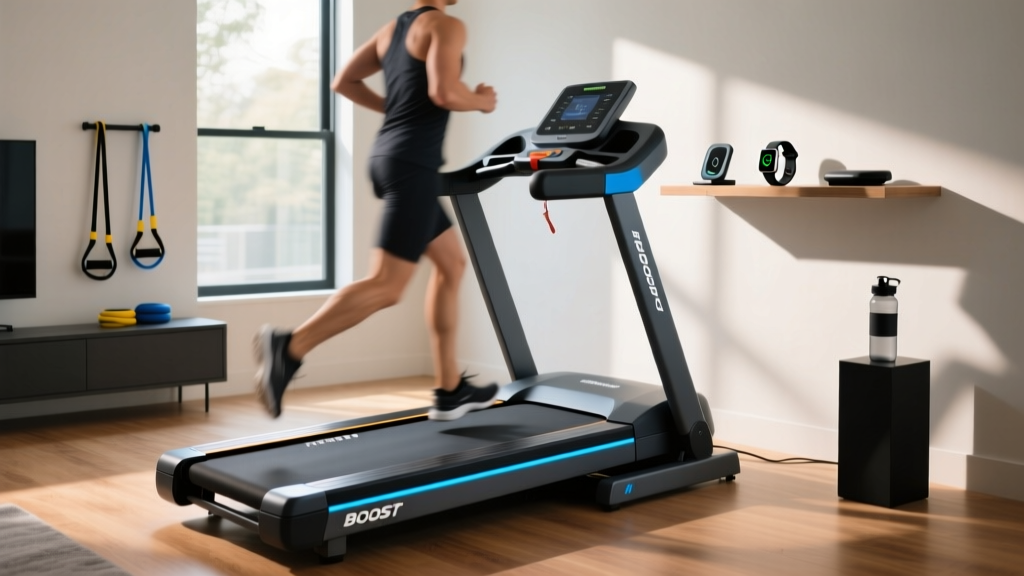
Boost Treadmills Setup: Motor Size and Horsepower Guide

ProForm Performance 300i Treadmill vs Elliptical Maintenance Guide