
How Much Do Treadmills Weigh? Walking Pad Comparison Guide
Discover how much treadmills weigh and compare top 2026 walking pads. A beginner's step-by-step guide to choosing the right lightweight cardio machine.

The Beginner's Dilemma: Standard Treadmills vs. Walking Pads
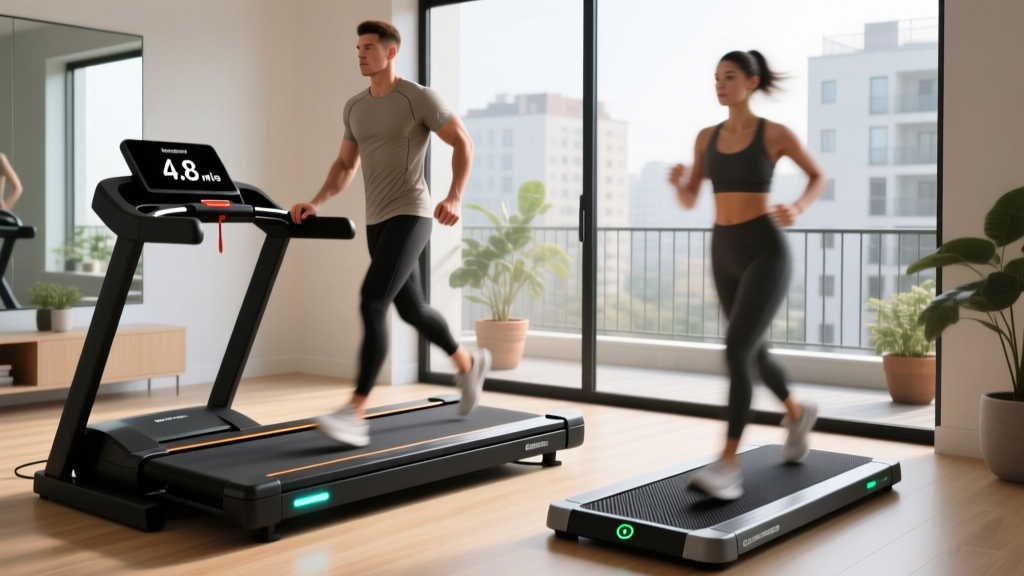
When setting up a home gym or adding cardio to your apartment, one of the first logistical questions beginners ask is: how much do treadmills weigh? The answer dictates whether you can place the machine on a second-floor bedroom, move it by yourself, or even fit it through your stairwell. Traditional motorized treadmills are notoriously heavy, often acting as permanent furniture anchors.
This realization has driven the massive surge in walking pads (under-desk treadmills). If you are trying to increase your Non-Exercise Activity Thermogenesis (NEAT)—the calories burned through daily movement—walking pads offer a lightweight, low-profile alternative. According to the American Council on Exercise (ACE), maximizing NEAT is one of the most effective, beginner-friendly ways to improve cardiovascular health without the burnout of high-intensity interval training.
In this step-by-step guide, we will break down exact treadmill weights, evaluate floor load limits, and review the best walking pads and lightweight treadmills available in 2026.
💡 Quick Rule of Thumb: If you live in an apartment with strict noise and weight ordinances, or need to store your machine under a bed, you need a walking pad (40–70 lbs). If you want to run at 8+ MPH and need handrails for safety, you need a standard treadmill (140–350+ lbs).Step 1: Understand the Weight Breakdown
To answer 'how much do treadmills weigh' accurately, we must categorize them by type. The weight of a cardio machine is directly tied to its motor size, frame material (steel vs. aluminum), and belt length.
| Machine Category | Average Weight Range | Motor Size (CHP) | Max User Weight | Ideal For |
|---|---|---|---|---|
| Commercial Treadmills | 250 – 350+ lbs | 3.5 – 4.0 CHP | 350 – 400 lbs | Dedicated home gyms, serious runners |
| Standard Home Treadmills | 140 – 220 lbs | 2.5 – 3.0 CHP | 250 – 325 lbs | Jogging, walking, incline training |
| Manual / Curved Treadmills | 100 – 160 lbs | N/A (Self-powered) | 250 – 300 lbs | HIIT, sprint intervals, power walking |
| Walking Pads (Under-Desk) | 40 – 75 lbs | 1.0 – 2.0 HP | 200 – 260 lbs | Apartment dwellers, office workers, NEAT |
Step 2: Assess Your Floor Load and Space Limits
Weight isn't just about moving the machine; it's about point-load distribution. A 200-pound standard treadmill has four small feet. When a 200-pound user steps on it, the total 400-pound load is concentrated on those four points.
Most modern residential floors are built to support 40 pounds per square foot (psf) across a room, but point loads can cause squeaking or drywall cracking on lower levels if the joists aren't reinforced. Walking pads, which often sit flat on a high-density foam base or feature wider, flush-mounted feet, distribute weight much more evenly. Furthermore, as Consumer Reports notes in their treadmill buying guide, lighter machines with smaller footprints are vastly superior for multi-use rooms where the machine must be moved after every session.
Step 3: 2026 Walking Pad vs. Lightweight Treadmill Review
Let's look at three highly-rated models in 2026 that bridge the gap between ultra-lightweight walking pads and entry-level standard treadmills.
1. KingSmith WalkingPad P1 (The Ultra-Lightweight Pioneer)
- Weight: 62 lbs
- Price (2026): ~$299
- Top Speed: 3.7 MPH
- Belt Size: 43.3' x 17.3'
The Verdict: The WalkingPad P1 remains the gold standard for under-desk use. Its 180-degree folding mechanism allows it to slide under a standard bed (requires 5 inches of clearance). However, the 1.0 HP motor means it is strictly for walking. Attempting to jog on it will trigger the thermal overload sensor within 15 minutes.
2. UREVO 2-in-1 Walking Pad with Handlebar
- Weight: 56 lbs
- Price (2026): ~$249
- Top Speed: 7.6 MPH (with handle raised)
- Belt Size: 41.3' x 16.5'
The Verdict: This is the best transitional machine for beginners. When the handlebar is folded down, it's a 56 lb under-desk pad. When raised, it unlocks speeds up to 7.6 MPH for light jogging. Warning: The 16.5-inch belt width is narrow. If you have a wide walking gait, you may frequently step on the side rails, which is a common failure point for beginner users.
3. Horizon Fitness T101 (The Lightweight Standard)
- Weight: 143 lbs
- Price (2026): ~$599
- Top Speed: 10 MPH
- Belt Size: 55' x 20'
The Verdict: If your answer to 'how much do treadmills weigh' is 'as light as possible, but I still need to run,' the T101 is your answer. At 143 lbs, it is roughly half the weight of a commercial treadmill but features a 2.5 CHP motor and a 55-inch belt. It includes transport wheels, allowing one person to tilt and roll it into a closet.
Step 4: Motor Thermals and the 'Weight Penalty'
Beginners often assume a lighter machine is strictly an upgrade for small spaces. However, weight reduction comes with a thermodynamic penalty. Heavy treadmills use massive steel flywheels and large copper-wound motors that dissipate heat efficiently.
Expert Insight: A 60 lb walking pad utilizes a micro-motor and a small, low-profile deck. Without the mass of a heavy steel frame to absorb vibration and a large fan to cool the electronics, walking pads require strict 'duty cycles.' Most manufacturers recommend a maximum of 60 to 90 minutes of continuous use before allowing the machine to cool for 20 minutes. Ignoring this will warp the PVC belt and fry the motherboard.
According to testing by Runner's World, belt friction is the primary enemy of lightweight cardio machines. To combat this, you must lubricate the silicone deck of your walking pad every 30 to 40 miles. Standard heavy treadmills often feature pre-waxed or maintenance-free belts that do not require this level of hands-on care.
Step 5: Delivery, Assembly, and Relocation Guide
Understanding how much your chosen machine weighs will dictate your setup strategy. Follow this checklist to avoid injury and property damage:
- For Walking Pads (40–75 lbs): These ship in standard cardboard boxes via FedEx/UPS. You can carry the box to your room before opening it. Pro Tip: Cut the box open flat rather than lifting the machine out. The smooth plastic base of a walking pad is incredibly slippery and will slide out of the box, potentially cracking the console if it hits the floor.
- For Lightweight Treadmills (140–180 lbs): These arrive via freight on a pallet. The box will weigh roughly 170 lbs. Do not attempt to carry the box up stairs. Open it on the ground floor, remove the heavy uprights and motor hood, and carry the pieces up separately.
- Matting is Non-Negotiable: Because lightweight machines and walking pads lack heavy internal sound-dampening materials, they transfer impact noise directly into the floor. Purchase a 3/8-inch thick high-density EVA foam mat. This reduces decibel transfer to downstairs neighbors by up to 40%.
Final Verdict: Which Should You Choose?
If your primary goal is to hit 10,000 steps a day while working from home, and your space is limited, a walking pad (under 70 lbs) is the ultimate 2026 solution. It solves the weight, space, and noise issues inherent to traditional cardio equipment.
However, if you want to train for a 5K, utilize steep inclines, or require the psychological safety of full-length handrails, you must accept the footprint and weight of a standard home treadmill (140+ lbs). By understanding exactly how much treadmills weigh and how that weight impacts motor longevity and floor safety, you can confidently select the machine that fits both your body and your living space.
More gear to consider
All reviews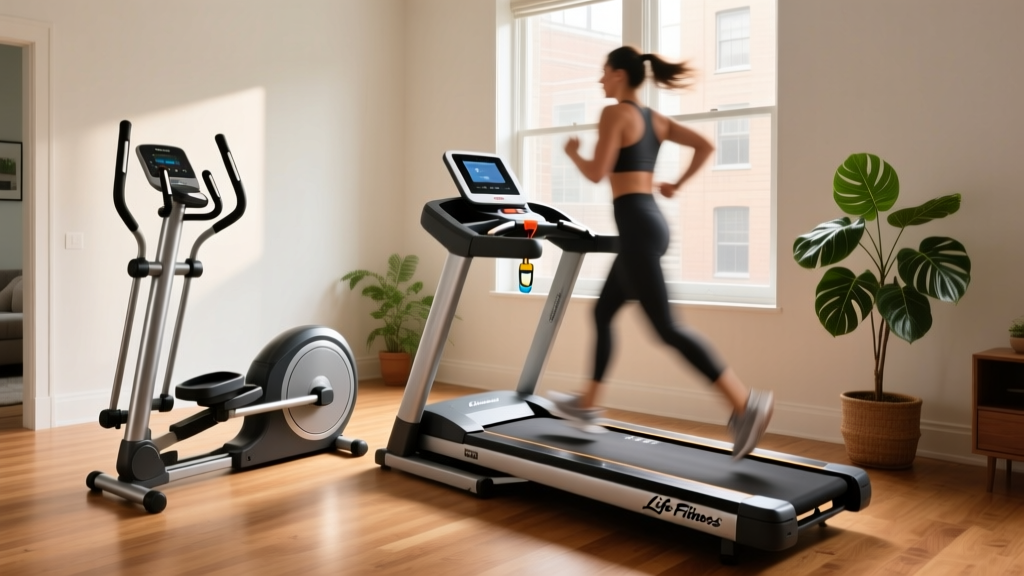
Elliptical vs Life Fitness F1 Smart Folding Treadmill for Small Spaces
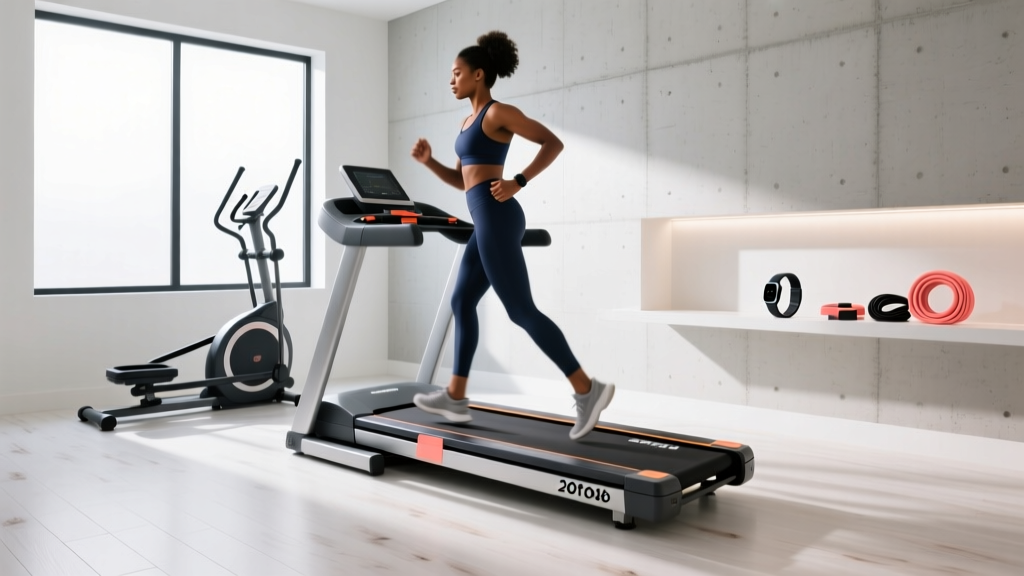
2026 Aotob Treadmill Review: Walking Pad Setup & Comparison
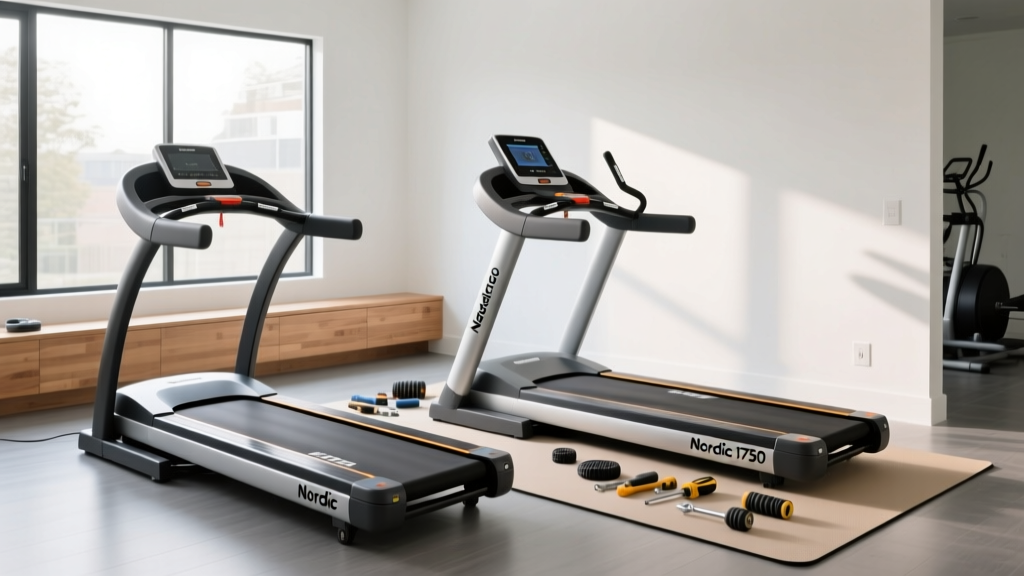
Setup Walkthrough: Curved Manual vs Nordic 1750 Treadmill Install
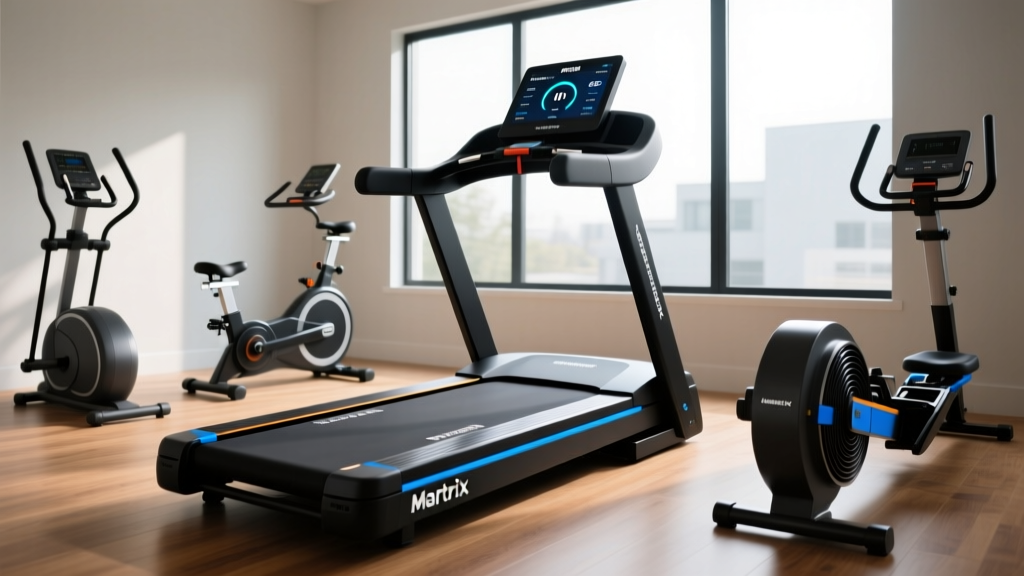
Matrix Ultimate Deck Treadmill vs. Top Cardio Machines: Noise Guide
Walking 5 Miles on a Treadmill vs. Walking Pad: Mistakes & Fixes
