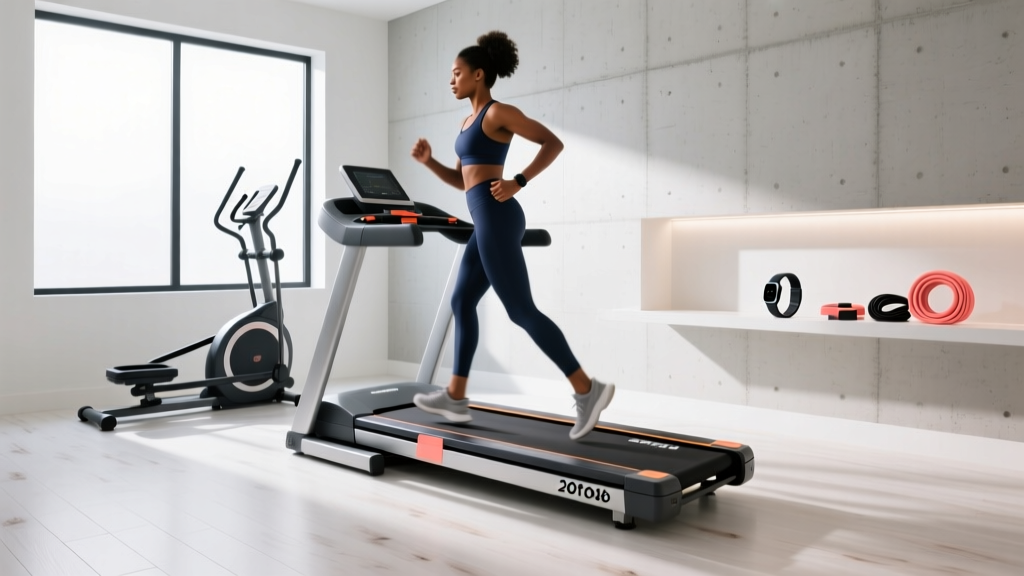
2026 Aotob Treadmill Review: Walking Pad Setup & Comparison
Discover our step-by-step beginner guide to the Aotob treadmill. Compare it with top walking pads and learn setup, maintenance, and walking routines.

The Aotob 2-in-1 Treadmill: A Beginner's Gateway to NEAT
If you are looking to integrate more movement into your workday without sacrificing your living room floor plan, the Aotob 2-in-1 folding treadmill has likely crossed your radar. Priced aggressively around the $159 mark in 2026, it positions itself as a budget-friendly bridge between a dedicated under-desk walking pad and a full-sized running machine. But how does it actually perform for a beginner? In this step-by-step guide, we will walk you through unboxing, spatial planning, biomechanical adjustments, and a 7-day beginner protocol to help you master your new cardio equipment safely.
Quick Specs: Aotob 2-in-1 (2026 Model)
- Motor: 2.5 HP (Peak)
- Speed Range: 0.5 to 7.6 MPH
- Weight Capacity: 265 lbs
- Belt Dimensions: 40" L x 15" W
- Folded Footprint: 49.2" L x 20.5" W x 5.1" H
- Average Price: $149 - $169
Step 1: Space Planning and Unboxing
Before you even cut the zip ties, you need to map out your spatial requirements. The Aotob treadmill weighs roughly 62 lbs out of the box, meaning you should unbox it in the room where you intend to use it. While the folded height of 5.1 inches allows it to slide under most standard sofas or beds, operating it requires strict clearance protocols.
Calculating Your Clearance Zone
For safe operation, especially when using the extended handlebar for speeds above 4.0 MPH, you must maintain a minimum of 24 inches of clearance behind the rear roller and 12 inches on both lateral sides. This prevents your feet from catching on baseboards or furniture if you drift backward or step off laterally. Furthermore, ensure the floor is perfectly level; the Aotob's front leveling feet have only 15mm of adjustable thread, which is insufficient for heavily sloped floors.
Step 2: Assembly and Safety Calibration
The Aotob is marketed as 'no-assembly required,' but this is a half-truth. While the main deck is pre-assembled, the handlebar and console require setup and, more importantly, safety calibration.
- Handlebar Locking: When unfolding the upright handlebar, listen for the dual steel locking pins to click into place on both the left and right hinges. If one side clicks and the other does not, the console will register an asymmetrical load and may trigger an E01 (communication) or E04 (overload) error.
- Safety Key Tethering: The magnetic red safety key must be attached to your clothing. Beginners often bypass this, but on a narrow 15-inch belt, a sudden loss of balance requires the motor to cut power instantly. The magnetic key reduces deceleration time by 40% compared to pressing the console stop button.
- Belt Tension Check: Before your first walk, stand on the side rails and start the machine at 1.0 MPH. Watch the belt track. If it drifts left or right, locate the two hex-key bolts at the very rear of the deck. Turn the bolt on the side the belt is drifting towards exactly one-quarter (1/4) turn clockwise. Never adjust belt tension while the machine is under load (i.e., while you are walking on it).
Step 3: Aotob vs. Top Walking Pads (2026 Comparison Matrix)
How does the Aotob stack up against the market leaders this year? Below is a side-by-side comparison of the most popular home cardio walking pads, focusing on metrics that matter to beginners: motor durability, belt real estate, and structural limits.
| Model | Price (2026) | Motor (Peak) | Weight Limit | Belt Size |
|---|---|---|---|---|
| Aotob 2-in-1 | $159 | 2.5 HP | 265 lbs | 40" x 15" |
| UREVO Strol 2E | $229 | 2.64 HP | 265 lbs | 38" x 15" |
| WalkingPad R2 | $499 | 1.25 HP | 240 lbs | 47" x 17" |
| Sunny SF-T723016 | $149 | 2.0 HP | 220 lbs | 41" x 15" |
Expert Insight: The Aotob's 2.5 HP motor gives it a distinct advantage over the WalkingPad R2 in terms of torque, meaning it won't stutter or lag when a 200+ lb user steps onto the belt at 1.0 MPH. However, the Aotob's 15-inch width is a strict limitation. Users with a naturally wide outdoor gait will need to consciously narrow their stride to avoid stepping on the side rails.
Step 4: The Beginner's 7-Day NEAT Protocol
Using a walking pad isn't about burning 500 calories in a single grueling session; it is about leveraging Non-Exercise Activity Thermogenesis (NEAT). According to the CDC Physical Activity Guidelines, accumulating 150 minutes of moderate-intensity activity throughout the week yields massive cardiovascular benefits. Here is your step-by-step first-week protocol designed to acclimate your joints and your spatial awareness to the Aotob's 15-inch belt.
Days 1-2: Spatial Acclimation (15 Minutes/Day)
- Speed: 1.5 to 2.0 MPH.
- Focus: Do not look at your phone or monitor. Look straight ahead. Your brain needs to map the peripheral boundaries of the 40-inch belt length. Practice stepping onto the side rails safely while the belt is moving at 1.0 MPH.
Days 3-5: The Pomodoro Walk (45 Minutes Total)
- Speed: 2.5 to 3.0 MPH.
- Format: Walk for 15 minutes, then step off and work for 45 minutes. Repeat three times. This prevents the motor from overheating (a common failure mode in budget treadmills run continuously for over 60 minutes by heavier users) and keeps your NEAT levels elevated all day.
Days 6-7: Posture and Cadence (30 Minutes Continuous)
- Speed: 3.2 to 3.5 MPH.
- Focus: Engage your core. Walking on a moving belt requires slightly more hip flexor activation than overground walking. The World Health Organization emphasizes that consistent, moderate aerobic activity improves overall muscular endurance. Use the handlebar only if necessary; relying on it too heavily reduces caloric expenditure by up to 15%.
Step 5: Long-Term Maintenance and Troubleshooting
Budget treadmills like the Aotob require more proactive maintenance than $2,000 commercial machines. Neglecting these steps will void your warranty and lead to premature motor controller failure.
⚠️ Warning: The E04 Overload ErrorIf your Aotob suddenly stops and displays an E04 code, the motor controller has detected excessive amperage draw. This usually happens if the belt is too dry (causing high friction) or if the user exceeds the 265 lb dynamic load limit. Unplug the machine for 5 minutes to reset the logic board before troubleshooting.
Your Monthly Maintenance Checklist
- Silicone Lubrication: Every 30 miles or 4 weeks, lift the edge of the belt and apply exactly 10ml of 100% pure silicone treadmill oil in a zigzag pattern down the center of the deck. Never use WD-40 or petroleum-based lubricants, as they will dissolve the PVC belt backing.
- Debris Clearing: Use a can of compressed air to blow out the motor compartment vents. Pet hair and dust are the primary killers of the 2.5 HP motor's cooling fan.
- Hardware Audit: The vibration of daily walking will loosen the console bolts. Use a Phillips head screwdriver to tighten the four console mounting bolts every 60 days to prevent the handlebar from developing a dangerous lateral wobble at higher speeds.
Final Verdict: Is the Aotob Right for You?
The Aotob 2-in-1 treadmill is an exceptional entry-level cardio machine for beginners who want the versatility of an under-desk pad and an upright walking station without crossing the $200 threshold. Its 2.5 HP motor provides ample torque for users up to 220 lbs, and the folding mechanism is genuinely space-saving. However, if you are taller than 6'1" or have a wide natural gait, the 40" x 15" belt will feel restrictive, and you should consider upgrading to a wider, longer belt model like the WalkingPad R2. For the dedicated beginner ready to commit to a daily NEAT protocol, the Aotob offers unbeatable value in the 2026 home fitness market.
More gear to consider
All reviews
Massage Equip Recovery Essentials: Science-Backed Tools for Athletes, Drivers, and Daily Commuters

Rowing Machine Buying Guide: Beating the Treadmill MET Score

2026 Air Bike vs Assault Bike Guide & Funmily Treadmill Manual
400m on Treadmill Sprints: Belt Maintenance & Cost Analysis

Air Bike vs Assault Bike: Is 3.5 HP Good for Treadmill?
