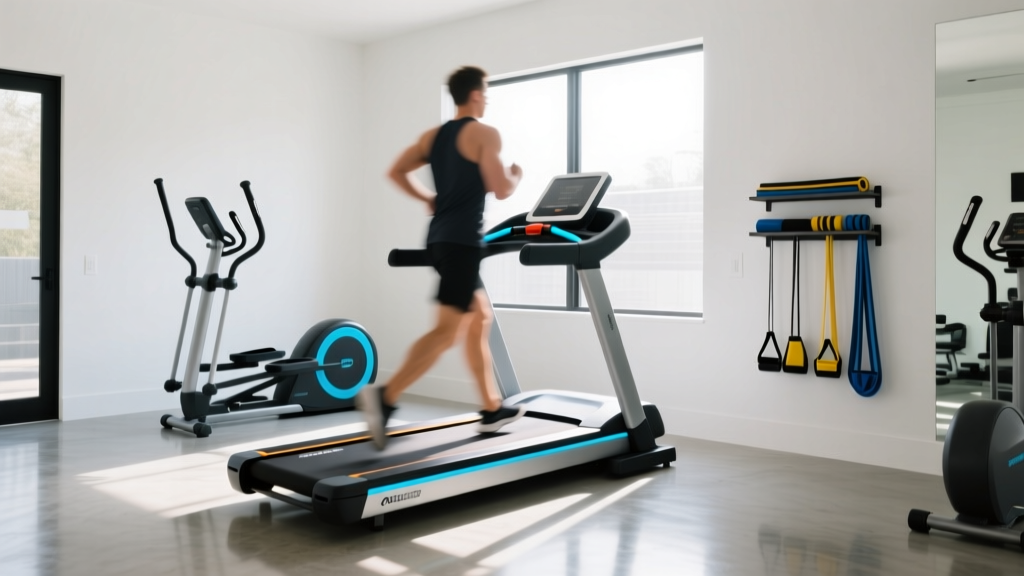
Treadmill Weight Loss: Step-by-Step Feature Buying Guide
Master treadmill weight loss with our step-by-step buying guide. Compare motors, belts, and inclines to find the perfect 2026 cardio machine.

Introduction: Engineering Your Treadmill Weight Loss Journey
Embarking on a fitness journey in 2026 requires more than just motivation; it requires the right equipment. When your primary goal is treadmill weight loss, selecting a machine based solely on price or brand recognition is a critical mistake. Many beginners purchase underpowered, poorly cushioned treadmills that lead to joint pain, motor burnout, and ultimately, a multi-thousand-dollar clothes hanger.
Effective fat oxidation and cardiovascular adaptation demand specific mechanical features. This step-by-step buying guide will walk you through the exact specifications, edge cases, and real-world pricing you need to evaluate before swiping your credit card. We will compare the critical features that separate a true weight-loss machine from a casual walking pad.
💡 The 2026 Market Reality: Supply chain stabilizations have brought the cost of heavy-duty continuous horsepower (CHP) motors down by roughly 12% compared to 2023 peaks. However, manufacturers are increasingly hiding weak 'Peak HP' motors behind sleek touchscreens. Always look past the screen and check the motor label.Step 1: Decoding the Motor (Continuous vs. Peak Horsepower)
The motor is the heart of your treadmill. For sustainable treadmill weight loss, you will be spending 45 to 60 minutes on the machine, often carrying extra body weight that puts immense torque on the drive system.
The 'Peak HP' Marketing Trap
Many budget treadmills (priced between $400 and $700) advertise a '3.0 Peak HP' motor. Peak HP measures the absolute maximum output the motor can hit for a fraction of a second before tripping the breaker. For a beginner weighing over 180 lbs, a Peak HP motor will overheat, cause the belt to stutter during foot strikes, and eventually fry the motor control board.
The CHP Golden Rule
You must look for Continuous Horsepower (CHP). This measures what the motor can sustain indefinitely.
- Walkers (Under 200 lbs): 2.5 CHP minimum.
- Joggers / Interval Training (Up to 250 lbs): 3.0 CHP minimum.
- Heavy-Duty Weight Loss (250+ lbs or intense sprinting): 3.5 to 4.0 CHP.
Real-World Example: The Sole F80 (retailing around $1,199) features a robust 3.5 CHP motor. It is widely considered the gold standard for heavier beginners because it maintains consistent belt speed even during aggressive incline intervals, preventing the micro-stutters that cause knee strain.
Step 2: Belt Dimensions and Joint Preservation
Weight loss requires consistency. If your treadmill causes shin splints or lower back pain, you will stop using it. Belt size and deck cushioning are your primary defenses against impact injuries.
Width and Length Requirements
As fatigue sets in during a 45-minute calorie-burn session, your form degrades. Beginners tend to drift laterally. A standard 18-inch wide belt is a recipe for stepping on the side rails and falling.
- Minimum Width: 20 inches (Standard for safe walking/light jogging).
- Optimal Width: 22 inches (Provides a psychological and physical safety margin for drifting).
- Minimum Length: 55 inches for walking; 60 inches if you plan to transition to running as you lose weight.
Deck Cushioning Technology
Running on asphalt sends a shockwave of up to 3 times your body weight through your joints. According to the Mayo Clinic, low-impact cardiovascular exercise is crucial for overweight beginners to avoid early burnout from joint inflammation. Look for variable cushioning systems, like Sole's Cushion Flex or NordicTrack's FlexSelect, which absorb impact at the front of the deck (where your foot strikes) but remain firm at the back (for push-off). Avoid treadmills with 'thick belts' marketed as cushioning; true shock absorption comes from elastomer pads beneath the deck board.
Step 3: Incline Capabilities for Caloric Torque
Walking on a flat surface is great for baseline cardiovascular health, but maximizing caloric expenditure requires manipulating gravity. Harvard Health Publishing notes that increasing your incline drastically shifts your metabolic equivalent of task (MET), allowing you to burn significantly more calories without increasing your speed to a run.
Comparing Incline Tiers
| Incline Tier | Max Grade | Best For | Example Models (2026 Pricing) |
|---|---|---|---|
| Entry-Level | 10% - 12% | Light walking, beginners on a strict budget. | Horizon T101 (~$699) |
| Standard Optimal | 15% | HIIT, steady-state fat oxidation, muscle endurance. | Sole F80 (~$1,199), ProForm Pro 9000 (~$1,299) |
| Extreme Incline | 30% - 40% | Alpine simulation, massive caloric burn at slow speeds. | NordicTrack X22i (~$2,999) |
Step 4: Heart Rate Tracking and Zone 2 Training
To optimize treadmill weight loss, you need to train in specific heart rate zones. 'Zone 2' cardio (typically 60-70% of your max heart rate) is scientifically proven to maximize fat oxidation while minimizing central nervous system fatigue, allowing you to exercise daily without burning out. The American Council on Exercise (ACE) provides excellent frameworks for calculating these personalized zones.
Sensor Accuracy: Grips vs. Chest Straps
Do not rely on the metal pulse sensors built into treadmill handrails. They are notoriously inaccurate, often lagging by 10-15 beats per minute and failing entirely if your hands are sweaty. Instead, ensure the treadmill console features Bluetooth FTMS connectivity. This allows you to pair a highly accurate chest strap, like the Polar H10 or Garmin HRM-Pro Plus (both around $89), directly to the machine. The treadmill can then auto-adjust the speed and incline to keep you locked in your fat-burning Zone 2, a feature prominent in NordicTrack's iFIT and Bowflex's JRNY ecosystems.
Step 5: Weight Capacity and the 'Plus 50' Rule
One of the most common failure modes in beginner treadmill purchases is ignoring the user weight capacity. If a treadmill box claims a 300 lb weight limit, and you weigh 285 lbs, you are operating in the red zone. The motor will draw excessive amperage, the deck will warp under repetitive stress, and the warranty will likely be voided due to 'commercial or over-stressed use'.
Applying the 'Plus 50' Rule
Always add a 50 lb buffer to your current body weight when shopping.
- User Weight: 200 lbs → Buy a treadmill rated for 250+ lbs.
- User Weight: 250 lbs → Buy a treadmill rated for 300+ lbs (e.g., Sole F85, 4.0 CHP, ~$1,899).
- User Weight: 300+ lbs → Look for specialized heavy-duty frames like the Horizon 7.4 or commercial-grade Life Fitness models, ensuring a robust steel frame thickness of at least 2mm.
Step 6: Evaluating the Warranty (The Ultimate BS Detector)
A manufacturer's warranty tells you exactly how much faith they have in their own product. For a treadmill dedicated to daily weight loss routines, accept nothing less than the following baseline coverage:
- Frame: Lifetime. (If it's less, walk away. Steel shouldn't degrade).
- Motor & Parts: Minimum 3 to 5 years. (A 1-year parts warranty is a massive red flag indicating cheap internal electronics).
- Labor: 1 to 2 years. (Labor is expensive; a 2-year labor warranty saves you $200+ if the motor control board fails in year two).
Final Verdict: Building Your 2026 Setup
Achieving lasting treadmill weight loss is a marathon, not a sprint. By prioritizing a 3.0+ CHP motor, a 22-inch wide belt, a 15% max incline, and respecting the 'Plus 50' weight capacity rule, you will invest in a machine that supports your body rather than punishing it. Skip the flashy, underpowered budget models with built-in fans and tablet holders. Put your money into the motor, the deck, and the incline mechanics. Your joints, your metabolism, and your long-term consistency will thank you.
More gear to consider
All reviews
Rowing Buying Guide: Technique vs. Benefits of Treadmill Walking

Stair Climber vs Beginner Treadmill Workout: Home Guide

NordicTrack T Series 7 Treadmill vs Portable Cardio: Value Analysis

Matrix Treadmill LED C Manual: Cardio Machine Noise Level Comparison

Curved vs Motorized: Finding the Best Made in USA Treadmill