Beyond Treadmill Warnings: Upright, Recumbent & Spin Bikes
Heeding treadmill warnings? Our expert hands-on review compares upright, recumbent, and spin bikes to find the safest, most effective low-impact cardio.

The Biomechanical Reality Behind Common Treadmill Warnings
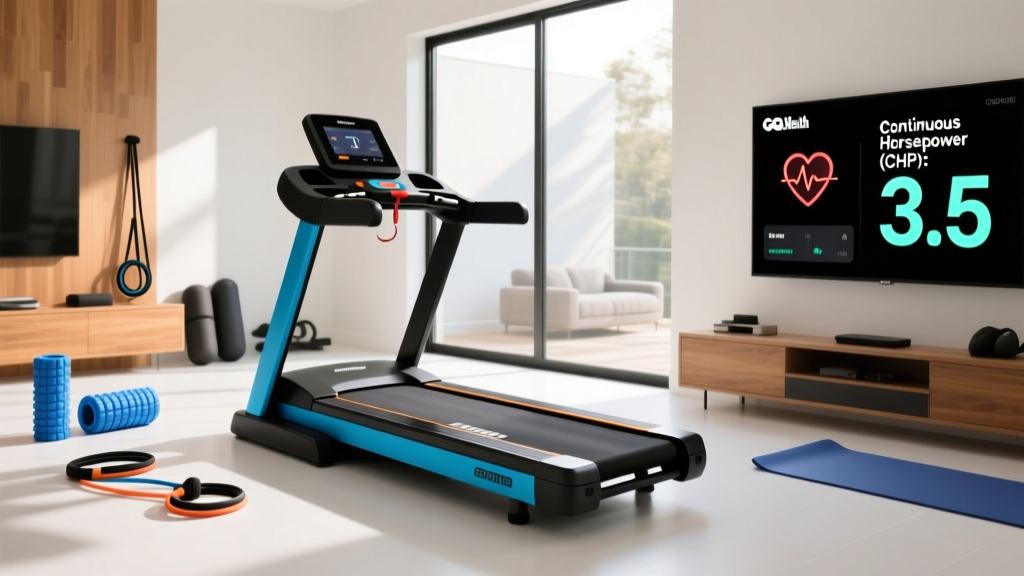
For decades, the treadmill has been the default centerpiece of home gyms and commercial fitness centers alike. However, as sports medicine has evolved, so has the frequency of treadmill warnings issued by orthopedic specialists and physical therapists. These warnings generally fall into two categories: acute safety hazards and chronic biomechanical overload.
According to the U.S. Consumer Product Safety Commission (CPSC), treadmills are consistently linked to tens of thousands of emergency room visits annually, ranging from severe friction burns to blunt force trauma from falls. But the more insidious warnings are biomechanical. Running on a motorized belt generates Ground Reaction Forces (GRF) equivalent to 2.0 to 2.5 times your body weight with every footstrike. Over time, this repetitive loading frequently leads to medial tibial stress syndrome (shin splints), plantar fasciitis, and Achilles tendinopathy.
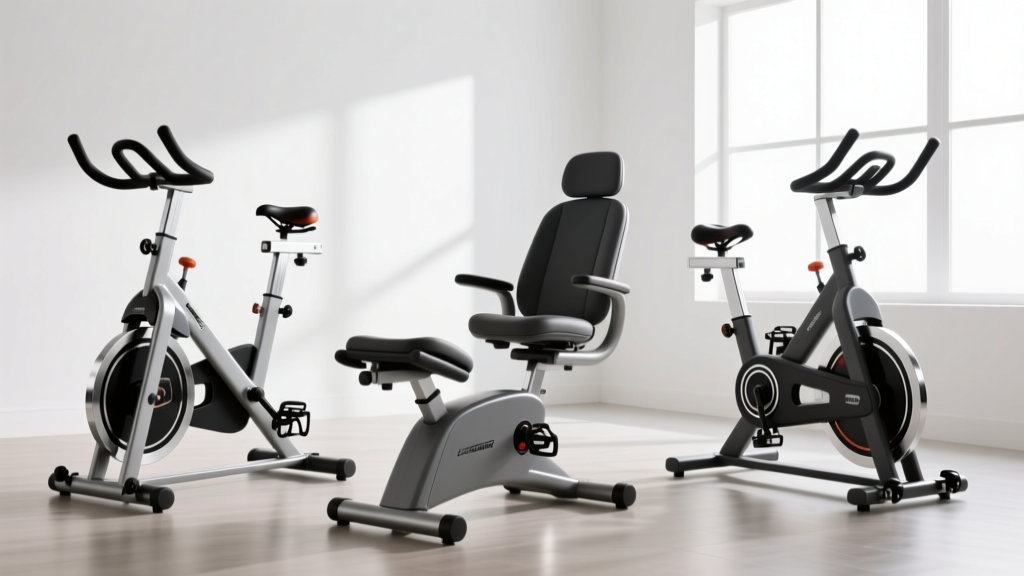
If you are heeding these treadmill warnings and seeking a high-yield, low-impact cardiovascular alternative, stationary cycling is the gold standard. But not all bikes are created equal. In this hands-on review, we break down the three primary stationary bike types—upright, recumbent, and spin (indoor cycle)—to help you match the machine to your joint health and fitness goals in 2026.
Expert Insight: The American Academy of Orthopaedic Surgeons (AAOS) strongly recommends low-impact exercises like cycling for patients with osteoarthritis or a history of joint replacements, as it maintains cardiovascular health without the compressive forces of weight-bearing treadmills.Upright Stationary Bikes: The Traditionalist’s Compromise
Upright bikes mimic the geometry of a standard outdoor road bike but with a slightly more relaxed torso angle. They require you to support your own upper body weight, which engages the core and lower back muscles far more than seated alternatives.
Hands-On Review: Schwinn IC4 (2026 Edition)
The Schwinn IC4 remains a dominant force in the hybrid upright category. Priced around $999, it bridges the gap between a traditional upright and a dedicated spin bike. During our teardown and ride tests, the 40-pound perimeter-weighted flywheel delivered a remarkably smooth inertia curve, eliminating the 'dead spot' at the top of the pedal stroke common in cheaper models.
- Q-Factor (Pedal Width): 165mm. This is slightly narrower than standard gym bikes, promoting better knee tracking and reducing lateral patellar stress.
- Resistance: 100 levels of micro-adjustable magnetic resistance. It is virtually silent, a massive upgrade from the friction-pad wear-and-tear of older models.
- Connectivity: Built-in FTMS Bluetooth allows seamless pairing with Zwift and Peloton Digital, a crucial feature for modern home gym setups.
The Verdict: The IC4 is ideal for users who want an upright posture to engage their core but need the joint forgiveness of a magnetic resistance system. It is a perfect transitional machine for those stepping away from treadmills due to early-stage knee pain.
Recumbent Bikes: Zero-Impact Rehabilitation and Lumbar Support
Recumbent bikes feature a bucket-style seat positioned behind the pedal axis, accompanied by a full backrest. This design shifts the user's center of gravity backward, entirely removing the load from the lumbar spine, wrists, and shoulders.
Hands-On Review: Schwinn 270 Recumbent
Retailing at approximately $899, the Schwinn 270 is our top pick for rehabilitation and seniors. The step-through frame design requires virtually zero hip mobility to mount, a critical factor for users with hip impingements or post-operative restrictions.
During our 30-day endurance test, the 15-degree reclined seat angle proved highly effective at mitigating sciatic nerve compression. The pedals are positioned forward, which changes the hip flexion angle. According to the Mayo Clinic, maintaining aerobic activity through modified, low-impact machines is vital for long-term joint lubrication and cartilage health without triggering inflammatory flare-ups.
Pros
- Zero lumbar strain
- Step-through accessibility
- 25 resistance levels with smooth transitions
Cons
- Lower caloric burn per hour (less core engagement)
- Large footprint (72 inches long)
- Does not translate to outdoor cycling balance
Spin Bikes (Indoor Cycles): High-Intensity and Biomechanical Fidelity
Spin bikes are designed to replicate the exact biomechanics of an outdoor road bike. They feature aggressive drop handlebars, a forward-leaning torso angle, and the ability to ride 'out of the saddle' (standing up). This category is built for High-Intensity Interval Training (HIIT) and serious cardiovascular conditioning.
Hands-On Review: Keiser M3i
At a premium price point of $2,395, the Keiser M3i is the undisputed king of commercial-grade indoor cycles. Unlike the Schwinn IC4, the M3i uses a lightweight 8-pound flywheel paired with a high gear ratio and magnetic eddy current resistance. This creates an incredibly responsive, road-like feel where cadence changes are instantaneous.
Key Differentiator: The M3i’s patented V-shape frame allows for micro-adjustments (in 2mm increments) for both seat and handlebar height. This level of precision is non-negotiable for preventing patellofemoral pain syndrome (runner's knee), a common issue when transitioning from treadmills to poorly fitted spin bikes.
"When escaping the repetitive impact warnings associated with treadmills, the spin bike offers the highest cardiovascular ceiling. However, it demands proper biomechanical fitting. A saddle height that is just 10mm too low can increase patellar compressive forces by up to 30%."
2026 Comparative Matrix: Upright vs. Recumbent vs. Spin
To help you bypass the treadmill warnings and select the right machine, refer to our hands-on testing matrix below:
| Feature | Upright (Schwinn IC4) | Recumbent (Schwinn 270) | Spin (Keiser M3i) |
|---|---|---|---|
| Primary Use Case | General fitness, hybrid classes | Rehab, seniors, back pain | HIIT, athletic conditioning |
| Impact Level | Very Low | Zero / Supported | Very Low (High Muscular Load) |
| Core Engagement | Moderate | Minimal | High (especially standing) |
| Approx. 2026 MSRP | $999 | $899 | $2,395 |
| Space Required | ~8 sq ft | ~12 sq ft | ~8 sq ft |
Expert Troubleshooting: Avoiding New Injuries on the Bike
Transitioning away from treadmills to avoid impact injuries is a smart move, but stationary bikes introduce their own edge cases if set up incorrectly. Here is our clinical troubleshooting guide for new cyclists:
1. Saddle Sores and Ischial Tuberosity Pain
Sitting on a narrow bike saddle places all your weight on the ischial tuberosities (sit bones). Fix: Do not buy a massive, plush gel cover. This actually increases friction and soft-tissue chafing. Instead, invest in high-quality cycling shorts with a chamois pad, and ensure your saddle width matches your sit-bone measurement (usually between 140mm and 160mm for most adults).
2. Anterior Knee Pain (Patellar Tendonitis)
If you experience pain just below the kneecap, your saddle is likely too low, forcing excessive knee flexion at the top of the stroke. Fix: Use the LeMond formula: multiply your inseam measurement (in cm) by 0.883 to find the exact distance from the center of the bottom bracket to the top of the saddle.
3. Achilles and Calf Tightness
Unlike treadmills where the belt pulls your leg back, cycling requires you to actively pull up on the backstroke. Fix: Focus on 'scraping mud off the bottom of your shoe' at the bottom of the pedal stroke to engage the hamstrings and relieve the calf muscles. If using toe cages, ensure the pedal axle sits directly under the ball of your foot, not the arch.
Final Verdict: Matching the Machine to Your Joint Health
Ignoring treadmill warnings regarding repetitive joint loading and friction hazards can lead to long-term orthopedic setbacks. By pivoting to stationary cycling, you preserve your cardiovascular engine while sparing your cartilage. Choose the Recumbent if spinal health and accessibility are your primary concerns. Opt for the Upright if you want a balanced, app-connected daily driver. Finally, invest in a Spin Bike if you are chasing peak athletic performance and high-intensity interval training without the destructive ground reaction forces of the treadmill belt.
More gear to consider
All reviews
Home Gym Layout: Man Running on Treadmill vs Stationary Bike Types

Assault vs Air Bike: Beyond What Is a Good Speed to Walk on the Treadmill

Step-by-Step Guide: Curved Manual vs Life Fitness Elevation Series Treadmill

Bicycle or Treadmill Which Is Better? Setup & Feature Guide
Bowflex Treadmill 7 vs Rowers: Buying Guide & Technique Mistakes