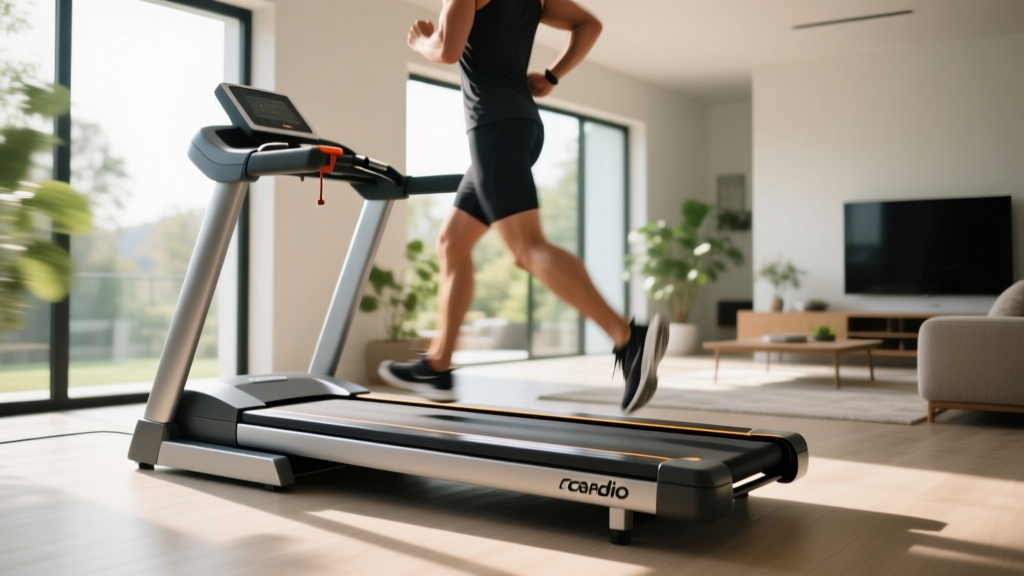
Troubleshoot Noise: A Good Treadmill Workout to Lose Weight at Home
Learn to troubleshoot loud cardio machines, compare noise levels, and discover a good treadmill workout to lose weight without disturbing your household.

Nothing derails home fitness consistency faster than a cardio machine that sounds like a departing freight train. If your treadmill shakes the floorboards or whines loud enough to drown out your television, you are likely cutting your sessions short, avoiding high-intensity intervals, or dealing with noise complaints from neighbors. In 2026, with more people living in shared walls and multi-story homes than ever before, managing acoustic output is just as critical as managing your heart rate.
This guide dives deep into the mechanics of cardio machine noise, compares the decibel output of popular equipment, and provides a step-by-step troubleshooting protocol to silence your gear. Finally, we will outline a highly effective, low-impact, and apartment-friendly good treadmill workout to lose weight that maximizes caloric burn without generating excessive structural vibration.
The Decibel Dilemma: Cardio Machine Noise Level Comparison
Not all cardio machines are created equal when it comes to acoustic pollution. Noise is generally categorized into two types: airborne noise (motor whine, fan whoosh) and impact/structure-borne noise (footstrikes, mechanical vibrations transferring through the floor). Below is a comparative analysis of average operating noise levels for top-tier home cardio equipment.
| Machine Type | Popular 2026 Model | Average Noise (dB) | Primary Noise Source |
|---|---|---|---|
| Motorized Treadmill | Sole F80 / NordicTrack 2450 | 65 - 78 dB | Footstrike impact, motor hum, belt friction |
| Elliptical Cross-Trainer | Bowflex SE7 / Sole E35 | 45 - 55 dB | Drive bearings, magnetic resistance hum |
| Rowing Machine | Concept2 Model D | 70 - 82 dB | Air flywheel 'whoosh', chain rattle |
| Air Bike | AssaultBike ProX | 75 - 88 dB | Chain drive, high-RPM air fan |
| Walking Pad | WalkingPad R2 | 55 - 65 dB | Belt slapping, lower-torque motor strain |
According to the CDC National Institute for Occupational Safety and Health (NIOSH), prolonged exposure to noise above 70 dB can begin to cause annoyance and stress, while 85 dB is the threshold for potential hearing damage over time. Treadmills and air bikes frequently breach the 75 dB mark during vigorous use, making them prime candidates for noise troubleshooting.
3 Common Mistakes Making Your Treadmill Too Loud
⚠️ Troubleshooting Warning: Never ignore a sudden change in your treadmill's acoustic profile. A new grinding, squealing, or thumping sound is usually the first indicator of mechanical failure, which can void your warranty if left unaddressed.Mistake #1: Ignoring the Belt-Deck Friction Coefficient
The most common cause of a high-pitched squeal or a strained, loud motor is a dry running belt. When the belt lacks proper lubrication, the friction coefficient between the belt and the wooden deck increases drastically. This forces the drive motor to work harder, drawing more amperage and generating a loud, whining hum. Many users mistakenly tighten the belt when they hear slipping or straining, which only compounds the friction and can destroy the motor bearings.
Mistake #2: Neglecting Structural Resonance and Floor Coupling
If your treadmill generates a deep, rhythmic thudding that travels through the floor, you are experiencing structural resonance. When a 180-pound runner strikes a treadmill deck at 6.0 mph, the impact force can exceed 2.5 times their body weight (450+ lbs of force). If the machine sits directly on hardwood or laminate flooring, this kinetic energy transfers directly into the floor joists, acting like a giant speaker diaphragm for the room below.
Mistake #3: Misaligned Motor Hood and Loose Fasteners
Treadmills vibrate by nature. Over hundreds of miles, the micro-vibrations from the motor and belt rollers can back out the screws securing the plastic motor hood and side rails. This results in an annoying, high-frequency plastic rattling that mimics a failing internal component.
Step-by-Step Troubleshooting Guide to Silence Your Machine
Follow this precise maintenance protocol to eliminate 90% of common treadmill noise issues.
- The 10-Second Belt Lift Test: Turn off and unplug the machine. Reach under the center of the running belt and lift. You should achieve exactly 2 to 3 inches of vertical lift. If it is less than 2 inches, the belt is too tight (causing motor whine). If it is more than 3 inches, it is too loose (causing slapping noises). Adjust the rear roller bolts in quarter-turn increments.
- Apply 100% Silicone Lubricant: Loosen the belt slightly, lift the edge, and apply exactly 1 ounce of 100% silicone treadmill lubricant in a zig-zag pattern across the deck. Run the treadmill at 2.0 mph for 3 minutes to distribute the silicone evenly. Never use WD-40 or petroleum-based products, which will melt the deck coating.
- Decouple the Floor: Purchase a 3/8-inch thick vulcanized rubber anti-vibration mat (such as the Super Mats 3/8" Heavy Duty Equipment Mat). Do not use cheap PVC foam mats; they compress entirely under the weight of a treadmill and offer zero acoustic decoupling. The dense rubber absorbs the low-frequency impact waves before they reach the subfloor.
- Level the Feet with a Digital Torpedo Level: Place a digital level on the side rail. If the treadmill is off by even 1 degree, the belt will track to one side, rubbing against the plastic side caps and creating a persistent squeak. Adjust the leveling feet at the rear of the machine until the bubble is perfectly centered.
- Tighten the Cowling: Use a Phillips-head screwdriver to hand-tighten every visible screw on the motor hood and console uprights. Apply a single drop of blue Loctite to any screw that continually backs out.
The 'Apartment-Friendly' Good Treadmill Workout to Lose Weight
Even with a perfectly maintained machine and a rubber mat, running at high speeds (7.0+ mph) will inevitably generate impact noise that is difficult to mask in an apartment setting. If you are searching for a good treadmill workout to lose weight that won't get you evicted, the solution lies in biomechanics: manipulating the incline rather than the speed.
Walking at a steep incline drastically reduces the footstrike impact force from 2.5x your body weight down to roughly 1.2x, virtually eliminating the low-frequency thud that bothers neighbors. Furthermore, research highlighted by the Mayo Clinic confirms that incline walking significantly increases caloric expenditure and engages the posterior chain (glutes and hamstrings) without the joint degradation associated with running.
'By shifting the workload from speed to incline, you maintain a high heart rate in the fat-burning zone (Zone 2 and low Zone 3) while keeping the acoustic footprint of your workout incredibly low.' — Biomechanics and Home Fitness Analysis, 2025
The 12-3-30 Silent Burn Protocol
This specific routine is designed to maximize calorie burn while keeping treadmill noise below 60 dB. It is based on the popular 12-3-30 methodology, adapted for joint longevity and acoustic stealth.
- Warm-Up (5 Minutes): 0% incline, 2.5 mph. Focus on a heel-to-toe rolling stride to minimize slapping sounds.
- The Climb (20 Minutes): Increase incline to 12%. Set speed to 3.0 mph. Crucial Mistake to Avoid: Do not hold onto the handrails. Holding the rails reduces caloric burn by up to 25% and alters your natural gait, which can actually cause the belt to track unevenly and create noise. Pump your arms to engage your core and increase heart rate.
- The Peak (5 Minutes): Increase incline to 15% (if your machine supports it) and drop speed to 2.5 mph. This pushes your heart rate into Zone 3 without requiring a running stride.
- Cool Down (5 Minutes): Drop incline to 0%, maintain 2.0 mph. Allow your heart rate to descend gradually.
Why This Works for Weight Loss
Weight loss is fundamentally driven by a caloric deficit, and consistency is the primary driver of that deficit. A Harvard Health publication notes that the best exercise for weight loss is the one you can perform consistently without injury or external barriers. By eliminating the noise barrier through proper machine troubleshooting and adopting a high-incline, low-impact walking protocol, you remove the friction that prevents daily exercise. A 160-pound individual performing this 35-minute incline protocol will burn approximately 320 to 380 calories, entirely in silence, preserving both their joints and their relationship with their downstairs neighbors.
Final Thoughts on Home Gym Acoustics
Treating your cardio machine's noise output as a critical maintenance metric is essential for long-term home gym success. Keep your belt lubricated, decouple your machine from the subfloor, and leverage steep inclines over high speeds. By doing so, you ensure that your equipment supports your fitness goals rather than disrupting your household.
More gear to consider
All reviews
Best Folding Treadmills for Small Spaces & Treadmill Apps 2026

Horizon T202 Treadmill Reviews Miss This: Belt Maintenance Guide

Curved vs Motorized: 30 Minute Walking Treadmill Workout Showdown
Strava Treadmill vs Elliptical: 2026 Home Cardio Market Trends
Stair Climber vs Runow Treadmill: Beginner Home Guide
