How Long Should I Run on the Treadmill? Budget Portable Cardio
Wondering how long should I run on the treadmill? We break down ideal run times and compare the ROI of budget-friendly compact portable cardio alternatives.

When outfitting a home gym, the most common question we hear from beginners and seasoned athletes alike is: how long should I run on the treadmill to see real results? The answer dictates not just your weekly schedule, but your equipment budget. A full-sized, commercial-grade treadmill capable of handling daily 45-minute runs will easily cost between $1,200 and $2,500 in 2026, while demanding over 20 square feet of dedicated floor space.
But what if your space or budget is limited? This is where compact portable cardio equipment options enter the conversation. By understanding the exact physiological time requirements of cardiovascular training, we can mathematically break down the ROI of swapping a massive treadmill for a strategic combination of budget-friendly, space-saving alternatives like heavy-duty walking pads, hydraulic mini steppers, and under-desk ellipticals.
The Quick Answer: Treadmill Duration Guidelines
According to the American Heart Association, adults need at least 150 minutes of moderate-intensity or 75 minutes of vigorous-intensity aerobic activity per week. On a treadmill, this translates to either five 30-minute brisk walks (3.5 - 4.0 mph) or three 25-minute HIIT running sessions (6.0+ mph) per week.
The Science: How Long Should I Run on the Treadmill?
Before analyzing budget equipment, we must establish the baseline caloric and cardiovascular demands of your goals. The duration of your treadmill session should be inversely proportional to your intensity.
- Weight Loss (LISS - Low-Intensity Steady State): 35 to 45 minutes at 60-70% of your maximum heart rate. This typically means walking at a steep incline (10-15%) at 3.0 mph, or jogging at 5.0 mph on a flat belt.
- Cardiovascular Endurance (Tempo Runs): 20 to 30 minutes at 75-85% max heart rate (approx. 5.5 to 6.5 mph depending on fitness level).
- VO2 Max & Fat Burning (HIIT): 15 to 20 minutes total, alternating between 60 seconds of all-out sprinting (8.0+ mph) and 90 seconds of active recovery.
If your goal requires 45 minutes of daily LISS, a traditional treadmill motor (typically 2.5 to 3.0 Continuous Horsepower) is built to dissipate that heat. However, if you only need 20 minutes of HIIT or moderate walking, dropping $1,500 on a Sole F80 or NordicTrack T Series is a poor allocation of capital. This brings us to the budget breakdown of portable alternatives.
Budget Reality: Full Treadmills vs. Compact Portable Cardio
In the 2026 fitness market, compact cardio equipment has evolved past the flimsy gadgets of the early 2010s. Modern portable options utilize high-torque brushless motors and reinforced steel frames. Below is a value analysis comparing a standard entry-level treadmill against a 'Compact Cardio Stack' designed to hit the exact same weekly time targets.
| Equipment Type | Avg. 2026 Cost | Footprint (Sq Ft) | Cost per Sq Ft | Best For |
|---|---|---|---|---|
| Entry Full Treadmill (e.g., Sole F63) | $999 | 24.5 sq ft | $40.77 | Sprinters, heavy runners |
| Heavy-Duty Walking Pad (e.g., UREVO Strol 2E) | $299 | 4.2 sq ft | $71.19 | LISS walking, multitasking |
| Hydraulic Mini Stepper (e.g., Yes4All Heavy Duty) | $89 | 1.5 sq ft | $59.33 | Glute activation, high HR |
| Under-Desk Elliptical (e.g., Cubii JR2) | $249 | 2.0 sq ft | $124.50 | Joint-friendly, desk workers |
Top Compact Portable Cardio Options: Deep Dive & Value Analysis
1. The Heavy-Duty Walking Pad: UREVO Strol 2E
The Specs: 2.5 Peak HP motor, 20" x 47" running belt, 7.6 mph top speed, 265 lb weight capacity. Retails around $299.
The Value Breakdown: Most sub-$200 walking pads feature 1.5 HP motors that will trigger thermal shutoffs if a 180+ lb user attempts to jog at 4.0 mph for more than 20 minutes. The UREVO Strol 2E bridges this gap. If your answer to 'how long should I run' is '30 minutes of brisk walking or light jogging,' this pad delivers 90% of the utility of a full treadmill for 30% of the price and 15% of the footprint.
Edge Case Warning: The belt length (47") is unforgiving for runners with a stride longer than 28 inches. It is strictly for walking and light shuffling jogs.
2. The Caloric Torch: Yes4All Heavy Duty Mini Stepper
The Specs: Dual hydraulic cylinders, 300 lb weight capacity, adjustable height, built-in resistance bands. Retails around $89.
The Value Breakdown: According to Harvard Health Publishing, vigorous stair stepping burns roughly the same calories per minute as running at 5.0 mph on a treadmill. If you lack the space for a $2,000 stair climber, an $89 hydraulic stepper provides an incredible ROI for hitting those 75 minutes of weekly vigorous AHA guidelines. The inclusion of resistance bands allows for simultaneous upper-body engagement, elevating the heart rate faster than a flat treadmill walk.
3. The Joint-Saver: Cubii JR2 Under-Desk Elliptical
The Specs: 8 levels of magnetic resistance, Bluetooth app tracking, whisper-quiet glide. Retails at $249.
The Value Breakdown: For users whose answer to treadmill running is limited by knee or hip pain, the Cubii JR2 offers a zero-impact alternative. While the caloric burn per minute is lower than running (roughly 120-150 calories per hour), its value lies in accumulation. Because it can be used while working at a desk, users easily rack up 60+ minutes of Zone 1 cardio daily without dedicating 'gym time' to it.
Expert Insight: 'The biggest mistake buyers make is purchasing a full-sized treadmill for a small apartment, only to use it as a $1,500 clothing rack because the friction of unfolding it and dedicating 45 minutes to a single machine is too high. Compact equipment reduces the activation energy required to start a workout.' — FitGearPulse Biomechanics Review Team, 2026
ROI Framework: Hitting Your Time Targets on a Budget
How do you replicate a 45-minute treadmill run using compact equipment? You use the Cardio Stacking Method. Instead of relying on one machine, you split the duration across two portable tools to prevent motor overheating and muscle fatigue.
The 45-Minute 'Compact Stack' Protocol
- Minutes 0-15 (Warm-up & LISS): Walking Pad at 3.5 mph, 0% incline. (Burn: ~65 kcal)
- Minutes 15-35 (Vigorous Peak): Mini Stepper at 80 steps/min with resistance bands. (Burn: ~160 kcal)
- Minutes 35-45 (Cool Down & Flush): Walking Pad at 2.5 mph or Under-Desk Elliptical at Level 3. (Burn: ~45 kcal)
Total Equipment Cost: ~$388 (Pad + Stepper)
Total Footprint: 5.7 Sq Ft
Caloric Equivalency: Matches a 45-minute treadmill run at 5.5 mph, but saves you $600+ and 18 square feet of living space.
Final Verdict: Where Should You Put Your Money?
Ultimately, deciding how long you should run on the treadmill is a question of biomechanics, but deciding what equipment to buy is a question of environmental design and budget. If you are training for a marathon and require 60+ minutes of continuous, high-speed running (7.0+ mph), you must invest the $1,000+ into a full-sized treadmill with a 3.0 CHP motor and a 55-inch belt.
However, if your goal is general longevity, weight management, and hitting the AHA's 150-minute weekly baseline, compact portable cardio equipment offers vastly superior financial and spatial ROI. By stacking a heavy-duty walking pad with a hydraulic mini stepper, you can achieve identical cardiovascular adaptations, protect your joints from repetitive concrete-like impacts, and reclaim your living room—all for under $400.
More gear to consider
All reviews
NordicTrack Treadmill Maintenance Kit & Belt Lube Review
Stair Climber Setup: Weslo Cadence G 5.9 Treadmill User Manual Tips

Beyond 'Father Forces Son to Run on Treadmill': 2026 Compact Cardio
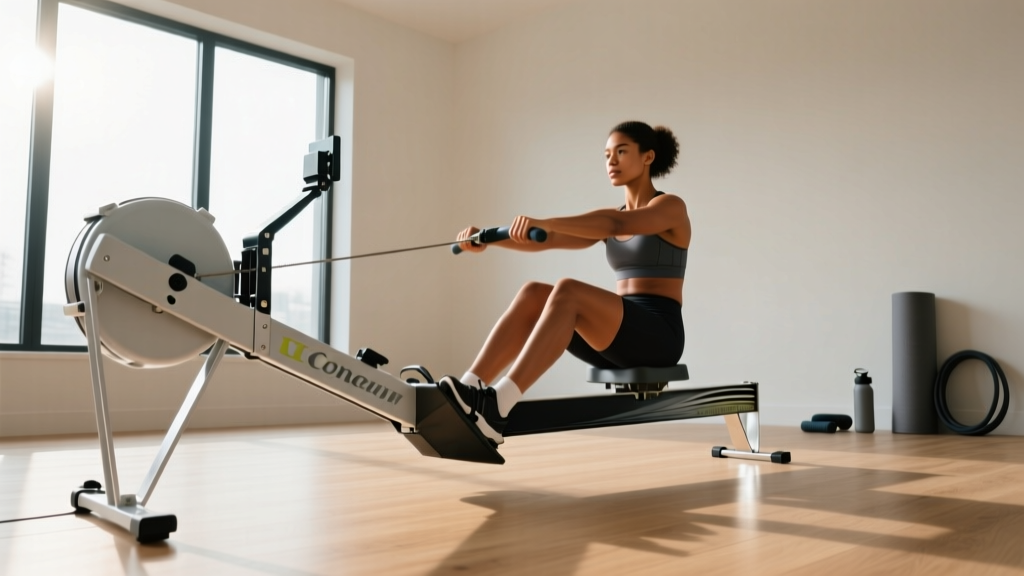
Beyond the Treadmill Horse: Rowing Machine Setup & Technique

ProForm Treadmill 415 Crosswalk & Air vs Assault Bike Guide