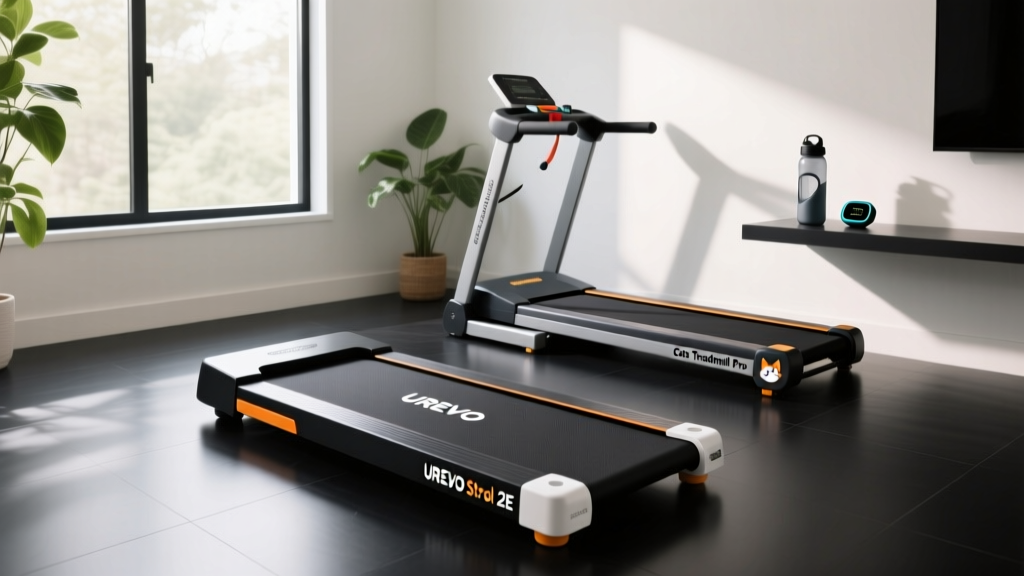
Treadmill Motor Size Guide: Horsepower & Treadmill Spray Lube Care
Master treadmill motor sizes, CHP vs HP ratings, and learn how proper treadmill spray lube reduces friction to protect your machine's horsepower.

When investing in a home cardio setup, the treadmill motor is the beating heart of your machine. In 2026, brushless DC motors and advanced pulse-width modulation (PWM) controllers have made home treadmills more efficient than ever. However, consumers often make a critical mistake: they obsess over motor size but completely neglect the friction dynamics that dictate how hard that motor actually works. Understanding treadmill motor sizing is only half the battle; preserving that horsepower with a high-quality treadmill spray lube is what ultimately determines whether your machine lasts three years or fifteen.
This comprehensive buying guide breaks down the realities of treadmill horsepower, provides a concrete sizing matrix based on user weight and activity, and explains the mechanical science behind why proper lubrication is non-negotiable for motor longevity.
Decoding Treadmill Motor Sizes: HP vs. CHP
Walk into any fitness showroom or browse online retailers, and you will see two distinct acronyms: HP (Peak Horsepower) and CHP (Continuous Horsepower). According to the Consumer Reports Treadmill Buying Guide, understanding the difference between these two metrics is the first step in avoiding buyer's remorse.
Peak Horsepower (HP): The Marketing Gimmick
Peak HP measures the absolute maximum output the motor can achieve for a fraction of a second before overheating. A treadmill advertised with a '4.0 Peak HP' motor might only sustain 2.0 HP during a continuous 30-minute run. Relying on Peak HP ratings will almost always result in purchasing an underpowered machine.
Continuous Horsepower (CHP): The Real Metric
Continuous Horsepower (CHP) is the gold standard. It measures the power the motor can sustain indefinitely during normal operation without overheating. When evaluating motor size, always look at the CHP rating. Modern premium treadmills utilize high-torque, brushless DC motors that deliver consistent CHP while operating at lower decibel levels.
Expert Insight: A 3.0 CHP motor from a reputable manufacturer (like Johnson Health Tech or Dyaco) will vastly outperform and outlast a generic '5.0 Peak HP' motor found on budget warehouse models. Always verify the continuous rating on the manufacturer's specification sheet.Treadmill Motor Sizing Chart by User Weight and Activity
Motor requirements scale linearly with user weight and impact force. A 150 lb walker exerts significantly less downward force on the deck than a 220 lb sprinter. Below is the industry-standard matrix for selecting the correct CHP rating in 2026.
| User Weight | Walking (Up to 4.0 MPH) | Jogging (Up to 6.0 MPH) | Running (6.0+ MPH) |
|---|---|---|---|
| Under 150 lbs | 2.0 CHP | 2.5 CHP | 3.0 CHP |
| 150 - 200 lbs | 2.5 CHP | 3.0 CHP | 3.5 CHP |
| 200 - 250 lbs | 3.0 CHP | 3.5 CHP | 4.0 CHP |
| Over 250 lbs | 3.5 CHP | 4.0 CHP | 4.25+ CHP |
The Friction Factor: Why Treadmill Spray Lube Protects Your Motor
Here is the mechanical reality that most buying guides ignore: your motor size is irrelevant if your belt-to-deck friction coefficient is too high. When a treadmill belt dries out, the friction between the PVC belt and the wooden deck increases exponentially. To maintain your target speed (e.g., 6.0 MPH), the motor controller must draw significantly more amperage from your wall outlet.
According to maintenance data from the Treadmill Doctor Belt Lubrication Guide, a poorly lubricated belt can cause the motor's amp draw to spike from a normal 4-6 amps up to 12-18 amps. This extreme electrical draw doesn't just overheat the motor windings; it routinely fries the MOSFETs on the lower control board, resulting in a $200 to $400 repair bill.
How Treadmill Spray Lube Bridges the Gap
Applying a 100% silicone treadmill spray lube creates a microscopic hydrodynamic barrier between the belt and the deck. This reduces the friction coefficient to near zero, allowing a 3.0 CHP motor to operate effortlessly at its baseline amp draw. In essence, proper lubrication ensures you actually get to use the horsepower you paid for.
"Never use WD-40, petroleum-based oils, or household lubricants on a treadmill. These chemicals will break down the urethane backing of the belt, causing it to stretch, slip, and ultimately destroy the motor drive system." - Fitness Equipment Repair Standards, 2025
Step-by-Step: Applying Treadmill Spray Lube to Reduce Motor Strain
To maintain optimal motor performance, you should apply treadmill spray lube every 150 miles or every 3 to 6 months, depending on usage frequency. Follow this precise procedure:
- Loosen the Belt: Use an Allen wrench to turn the rear roller adjustment bolts counter-clockwise (usually 3 to 4 full turns) until you can easily slide your hand under the belt.
- Clean the Deck: Wipe away old, clumped silicone and dust using a lint-free cloth and a mild, non-abrasive cleaner. Allow it to dry completely.
- Apply the Spray Lube: Insert the nozzle of your 100% silicone treadmill spray lube under the belt. Spray a 2-inch wide zig-zag pattern down the center of the deck. Use exactly 0.5 oz of lubricant per side (1.0 oz total).
- Retighten and Distribute: Tighten the rear bolts back to their original position. Turn the treadmill on at 2.0 MPH and walk on it for 3 minutes to evenly distribute the silicone across the entire deck surface.
Warning Signs of Motor Strain and Lubrication Failure
If you have neglected your treadmill spray lube routine, your machine will exhibit specific failure modes before the motor completely burns out. Watch for these critical warning signs:
- Belt Hesitation (Stuttering): When your foot strikes the deck, the belt momentarily slows down. This indicates the motor lacks the torque to overcome the friction spike caused by your body weight on a dry deck.
- Console Resetting: If the console shuts off or resets during a run, the motor is likely drawing too many amps, causing a voltage drop that starves the upper control board of power.
- Thermal Breaker Trips: A sudden shutdown accompanied by a clicking sound near the motor hood means the internal thermal overload switch has tripped to prevent a fire.
- Ozone or Burning Plastic Smell: This indicates the PWM motor controller is overheating or the motor windings are beginning to melt their protective enamel coating.
2026 Comparison: Premium Treadmill Motors & Maintenance Profiles
When shopping for a new treadmill, consider both the motor's continuous output and the manufacturer's specific maintenance requirements. The American Council on Exercise (ACE) recommends matching the machine's duty cycle to your household's total weekly mileage. Below is a comparison of popular 2026 motor configurations and their lubrication profiles.
| Brand / Model Tier | Motor Spec (CHP) | Deck Technology | Spray Lube Interval | Estimated Price Range |
|---|---|---|---|---|
| Sole Fitness (F80/F85) | 3.5 to 4.0 CHP | Cushion Flex Whisper Deck | Every 150 miles (Manual Silicone Spray) | $1,299 - $1,899 |
| NordicTrack (Commercial Series) | 3.6 to 4.25 CHP | Reflex Cushioning | Every 3 months (Performance Silicone Lube) | $1,599 - $2,999 |
| Horizon (7.4 / 7.8) | 3.5 to 4.0 CHP | Three-Zone Variable Response | Every 6 months (Pre-infused belts require less) | $1,199 - $1,799 |
| ProForm (Pro Series) | 3.0 to 3.6 CHP | ProShox Cushioning | Every 100 miles (High-friction deck requires strict lube) | $899 - $1,499 |
Frequently Asked Questions
Can I use a 2.5 CHP treadmill for running if I am under 140 lbs?
While a lighter user exerts less downward force, running at speeds above 7.0 MPH generates high-impact strike forces that can momentarily stall a 2.5 CHP motor. For dedicated running, we always recommend a minimum of 3.0 CHP to ensure the PWM controller doesn't overwork, regardless of user weight.
How do I know if my treadmill belt already has enough spray lube?
Perform the 'slide test'. Reach under the center of the walking belt and touch the deck. If your fingers feel slick and oily, you do not need to add more treadmill spray lube. If the deck feels dry, gritty, or generates heat after a 10-minute walk, it is time to apply 0.5 oz of 100% silicone lubricant.
Does a larger motor (4.0+ CHP) consume significantly more electricity?
Surprisingly, no. A 4.0 CHP motor running at 6.0 MPH with a properly lubricated belt will often draw fewer watts than a strained 2.5 CHP motor trying to maintain the same speed on a dry deck. Larger motors operate well within their efficiency curve, resulting in lower long-term energy costs and less heat generation in your workout space.
What is the lifespan of a well-maintained treadmill motor?
With strict adherence to deck lubrication and belt tensioning protocols, a premium brushless DC treadmill motor can easily last 10,000 to 15,000 hours of active use. In a home environment, this translates to 15 to 20 years. Neglecting the treadmill spray lube can reduce this lifespan to under 3 years due to thermal degradation of the internal components.
More gear to consider
All reviews
Elliptical vs Treadmill: Training for a Half Marathon on a Treadmill Schedule
Flylinktech Treadmill Review: 2026 Walking Pad Comparison

Does StairMaster or Incline Treadmill Burn More Calories? Home Guide

2026 Home Gym Maintenance: Treadmill Guide TweeklyNutrition & Bikes
Treadmill Distance Accuracy vs Garmin Watch: Walking Pad Mistakes