Elliptical vs Treadmill: Space Layouts & the F3 Treadmill Fit
Optimize your home gym layout. We compare elliptical vs treadmill spatial footprints, ceiling clearances, and review the folding Life Fitness F3 treadmill.

The Spatial Reality of Home Cardio: Footprints and Clearances
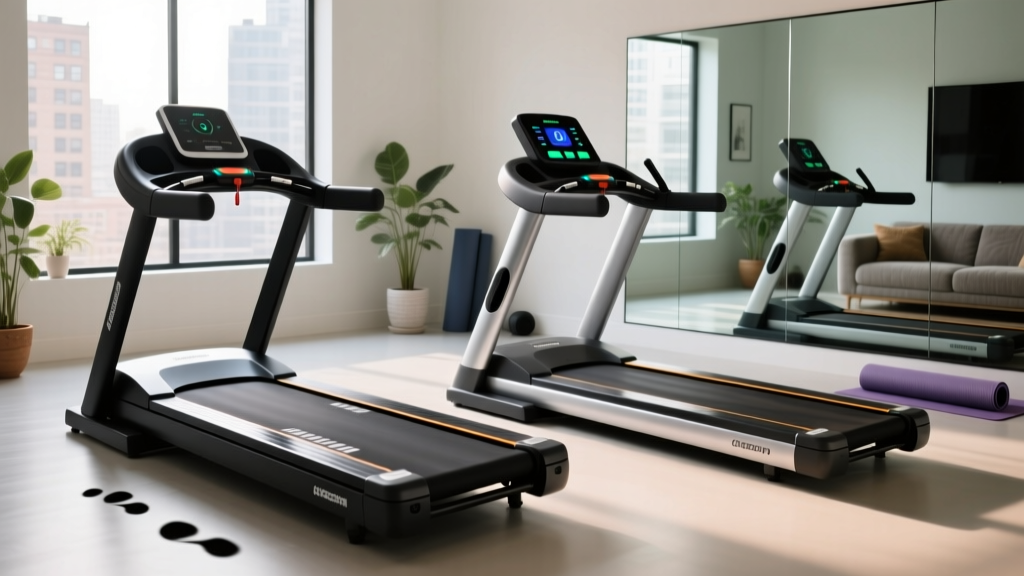
Designing a dedicated home gym in 2026 requires more than just picking the machine with the best interactive screen; it demands a rigorous approach to spatial geometry, traffic flow, and structural limitations. When debating the merits of an elliptical vs treadmill for home cardio, most buyers focus purely on joint impact or calorie burn. However, from a layout and interior design perspective, these two machines interact with your room's architecture in fundamentally different ways.
Treadmills dominate horizontal floor space and require strict safety perimeters, while ellipticals present hidden vertical challenges that can turn a low-ceiling basement into a hazard zone. In this guide, we break down the exact dimensions, clearance requirements, and architectural considerations for both, using the premium Life Fitness F3 treadmill as our benchmark for high-end folding treadmill spatial dynamics.
Treadmill Layouts: Analyzing the F3 Treadmill and Folding Mechanics
The treadmill is traditionally the most spatially demanding piece of cardio equipment. A standard commercial treadmill requires a permanent footprint of roughly 80 by 35 inches. However, the premium home market has pivoted toward sophisticated folding mechanisms to reclaim square footage.
Deep Dive: The Life Fitness F3 Treadmill Footprint
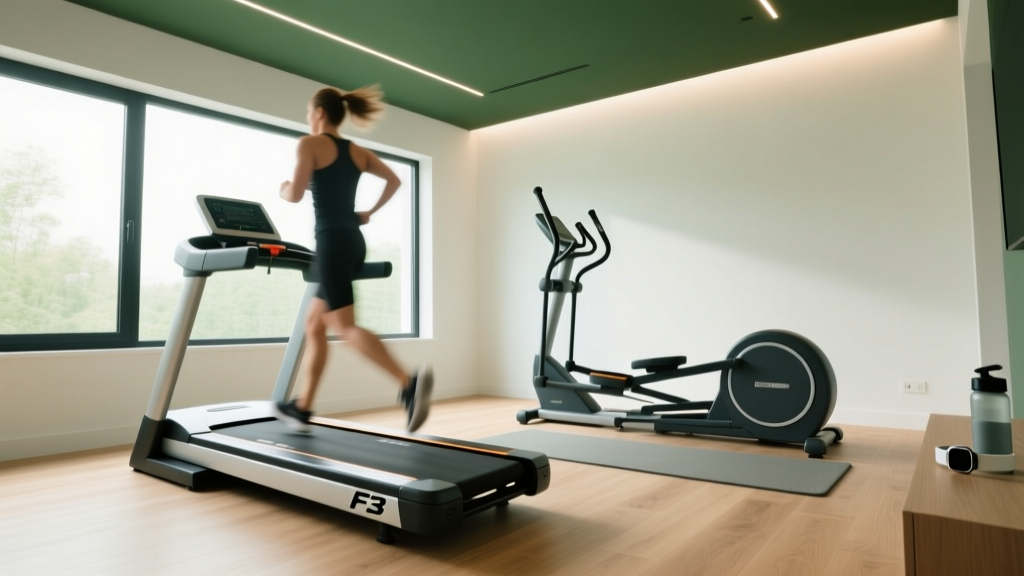
The Life Fitness F3 treadmill is a masterclass in balancing commercial-grade biomechanics with residential space constraints. Priced around $3,899, the F3 is a heavy-duty machine (weighing nearly 300 lbs) that utilizes a hydraulic-assisted folding system. But 'folding' does not mean 'disappearing.' Here is the exact spatial reality of the F3:
- Active Footprint: 77 inches long x 35 inches wide.
- Folded Footprint: 43 inches long x 35 inches wide.
- Folded Vertical Height: 69 inches to the top of the console.
- Motor Housing Depth: Even when the deck is folded, the motor cowling extends forward, meaning you cannot push the machine flush against a baseboard.
The Elliptical Vertical Trap: Stride Length and Ceiling Clearance
While treadmills eat up floor space, ellipticals are notorious space-killers in the vertical plane. Unlike the F3 treadmill, which folds to reduce its profile, most high-quality ellipticals (like the Sole E95 or NordicTrack SpaceSaver series) feature fixed, rigid frames. The true spatial challenge of an elliptical is calculating the dynamic user height.
Calculating the 'Head-Strike' Zone
Elliptical pedals sit elevated above the floor to accommodate the flywheel and crank mechanism. A front-drive elliptical typically has a pedal height of 10 to 12 inches, while a rear-drive model can elevate the user by 15 inches or more at the peak of the stride arc.
To determine if an elliptical fits your room, use this architectural formula:
User Height + Maximum Pedal Height (15 inches) + Safety Clearance (6 inches) = Minimum Ceiling Height.
For a user who is 6 feet 2 inches (74 inches) tall, using a rear-drive elliptical with a 15-inch pedal apex requires a minimum ceiling height of 95 inches (7 feet 11 inches). If you are designing a cardio zone in a finished attic, a basement with drop ceilings, or a room with exposed HVAC ductwork, an elliptical may be structurally unviable, making a low-profile treadmill the only ergonomic choice.
Head-to-Head Spatial Matrix: Elliptical vs Treadmill
To help you finalize your floor plan, refer to this comparative matrix detailing the spatial and environmental requirements for both machine types.
| Spatial Metric | Premium Folding Treadmill (e.g., F3) | Front-Drive Elliptical (e.g., Sole E95) |
|---|---|---|
| Active Floor Footprint | ~18.8 sq ft (77' x 35') | ~14.5 sq ft (83' x 25') |
| Stored Footprint | ~10.5 sq ft (Folded) | 14.5 sq ft (Fixed Frame) |
| Ceiling Requirement (6' User) | 7 feet (Standard) | 8 feet 4 inches (Minimum) |
| Rear Safety Clearance | 36 inches (Mandatory) | 12 inches (Ventilation) |
| Electrical Draw | 15-Amp Dedicated Circuit | Standard 120V Outlet |
Designing Your Home Gym Layout: Flow, Safety, and HVAC
Selecting the machine is only half the battle; integrating it into your home's infrastructure requires addressing safety perimeters, electrical loads, and airflow.
The 36-Inch Safety Perimeter Rule
When mapping out an elliptical vs treadmill layout, you must adhere to strict safety guidelines. According to the Consumer Product Safety Commission (CPSC), treadmills require a mandatory 36-inch (3-foot) clear zone directly behind the machine. This is not a suggestion; it is a critical entrapment prevention measure. If a user falls off the back of a moving treadmill belt and hits a wall or furniture immediately behind it, the friction can cause severe abrasions or entrapment injuries. Ellipticals, being closed-loop, low-impact systems, do not require this extreme rear clearance, allowing them to be placed closer to the center of a room or facing a window.
Electrical Load and Flooring Infrastructure
The Life Fitness F3 treadmill features a robust 3.0 HP continuous-duty motor. When a user weighing 200+ lbs is running at an incline, the motor experiences peak amperage spikes. The American College of Sports Medicine (ACSM) and major manufacturers strongly advise plugging high-end treadmills into a dedicated 15-amp or 20-amp circuit. Sharing a circuit with a space heater, air conditioner, or even a high-draw entertainment center can trip the breaker mid-run or degrade the treadmill's lower control board over time.
Furthermore, layout design must account for subfloor vibration. A 300-lb treadmill subjected to the repetitive impact of a 180-lb runner generates significant kinetic energy. If your gym is on a second-floor wood-framed structure, you must incorporate a high-density rubber flooring matrix (at least 3/8-inch thick) beneath the machine to disperse the load and prevent acoustic transfer to the rooms below. Ellipticals, being zero-impact, transmit vastly less structural vibration.
HVAC and Airflow Positioning
Cardio machines generate localized heat islands. A treadmill motor housing can raise the ambient temperature in a 10x10 room by several degrees over a 45-minute session. When designing your layout, never place the rear of a treadmill or the flywheel of an elliptical directly in front of a cold air return vent, as the dust and particulate matter kicked up by the machine will clog your HVAC filters prematurely. Instead, position the machine so that the user faces a supply vent or a window, ensuring cross-ventilation for thermoregulation during high-intensity intervals.
Final Verdict: Matching the Machine to Your Room Geometry
The decision between an elliptical and a treadmill ultimately comes down to the specific architectural constraints of your space:
- Choose the Treadmill (e.g., Life Fitness F3) if: You have standard 8-foot ceilings, a rectangular room that allows for the 36-inch rear safety clearance, and the ability to run a dedicated electrical circuit. The F3's folding capability is ideal for multi-use spaces like a guest bedroom or home office where reclaiming 8 square feet of floor space post-workout is highly valuable.
- Choose the Elliptical if: You are designing a layout in a narrow room where the 36-inch rear treadmill clearance is impossible to achieve, or if you are situated on an upper floor where impact noise and structural vibration are primary concerns. Just be absolutely certain to calculate your dynamic ceiling clearance to avoid head-strike hazards.
By prioritizing spatial geometry, safety perimeters, and infrastructural requirements over mere aesthetic preferences, you can create a home cardio layout that is both highly functional and architecturally harmonious.
More gear to consider
All reviews
Walking Pads vs Motorized Treadmills: Setup & Install Guide

Air Bike vs Assault Bike vs Omnidirectional Treadmill
Sytiry Treadmill Reviews: Elliptical vs Treadmill Care

Umay Treadmill How to Use & Rowing Machine Buying and Technique Guide

ProForm 380 E Treadmill Maintenance & Folding Space-Saver Review