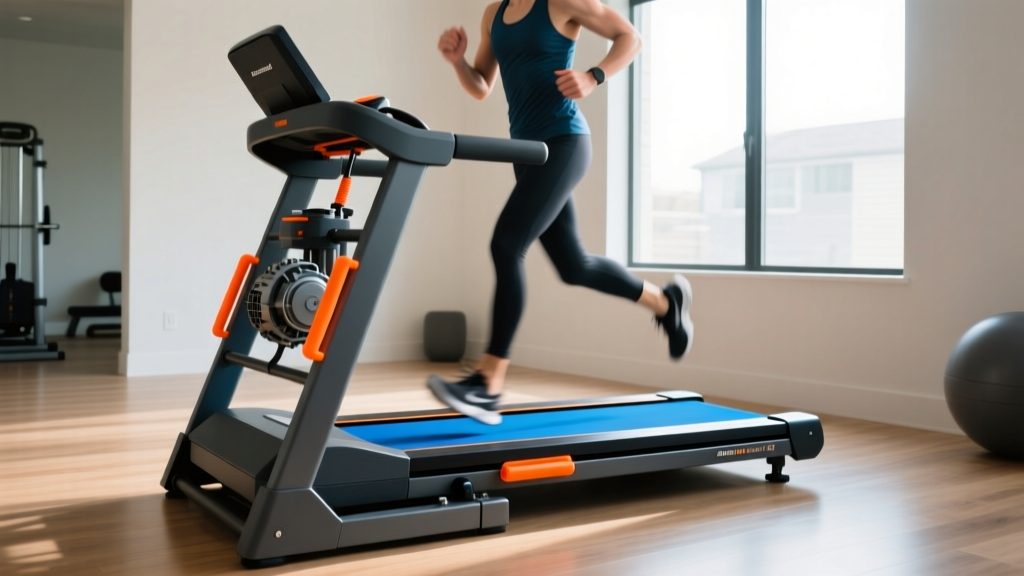
What Incline Should I Walk on a Treadmill? Belt Wear & Lube Costs
Discover what incline you should walk on a treadmill for optimal results, plus a complete budget breakdown for belt maintenance and lubrication costs.

The Biomechanics of Incline Walking and Deck Friction
When fitness enthusiasts ask, what incline should I walk on a treadmill, the answer depends entirely on their physiological goals. According to the American Council on Exercise (ACE), setting your treadmill to a 1% to 2% incline accurately simulates the wind resistance and minor terrain variations of outdoor walking. However, for maximum caloric expenditure and posterior chain activation (glutes and hamstrings), the highly popular 10% to 15% incline range—popularized by routines like the 12-3-30 workout—is vastly superior. The Centers for Disease Control and Prevention (CDC) notes that increasing the intensity of your aerobic activity through incline walking significantly improves cardiovascular health without the high-impact joint stress of running.
Quick Answer: What Incline Should I Walk On?1% - 2%: Best for simulating flat outdoor terrain and joint-friendly recovery walks.
5% - 9%: Ideal for moderate cardiovascular conditioning and calf engagement.
10% - 15%: Optimal for high-calorie burn, glute activation, and low-impact high-intensity interval training (HIIT).
While high-incline walking is a metabolic powerhouse, it introduces a hidden mechanical cost. When you elevate the treadmill deck to a 15% grade, the vector of gravity shifts. Instead of your weight being distributed evenly, a significant portion of your body mass is driven directly downward into the belt and deck interface. This exponentially increases the coefficient of friction. Over time, this severe friction strips away the factory-applied silicone layer, accelerating belt wear, stretching the PVC material, and risking catastrophic motor burnout if the belt is not properly maintained and lubricated.
The True Cost of Treadmill Belt Maintenance
Understanding the budget breakdown of treadmill maintenance is crucial for protecting your investment. High-incline walkers must adhere to a stricter maintenance schedule than flat-walkers. While a standard user might lubricate their deck every 150 miles or six months, a dedicated 12-3-30 incline walker should inspect and lubricate their belt every 90 miles or three months.
Below is a comprehensive budget breakdown of the costs associated with treadmill belt and deck maintenance in 2026, contrasting routine upkeep with the severe costs of neglect.
| Maintenance Task / Part | DIY Cost Estimate | Professional Service Cost | Frequency (High Incline) |
|---|---|---|---|
| 100% Silicone Lubricant | $8 - $14 per bottle | $75 - $120 (Service Call) | Every 3 months / 90 miles |
| Replacement Belt (e.g., Sole F80, Horizon T101) | $80 - $160 | $200 - $300 (w/ Labor) | Every 3 - 5 years |
| Replacement MDF/Phenolic Deck | $120 - $250 | $300 - $450 (w/ Labor) | Every 5 - 8 years |
| Motor Control Board (MCB) Replacement | $150 - $350 | $250 - $500 (w/ Labor) | Failure due to neglect |
DIY Lubrication vs. Professional Servicing: A Value Analysis
From a pure value perspective, DIY treadmill lubrication offers an unmatched return on investment. A single $12 bottle of 100% pure silicone lubricant typically contains enough fluid for 4 to 6 applications. By performing the task yourself, your annual maintenance cost drops to roughly $5. Conversely, hiring a certified fitness equipment technician involves a standard dispatch fee of $75 to $100, plus an hourly labor rate of $85 to $125.
The 100% Silicone Rule and Chemical Edge Cases
The most common and costly mistake DIYers make is using the wrong chemical compound. Never use WD-40, petroleum jelly, or household oil-based lubricants. Treadmill belts are constructed from layered PVC and rubber compounds. Petroleum-based products will chemically react with the PVC, causing the belt to stretch, warp, and ultimately disintegrate within weeks. You must use 100% pure liquid silicone, specifically formulated for fitness equipment. Some premium brands offer Teflon-infused silicone blends (costing around $18-$22), which claim to reduce friction by an additional 4%, though standard pure silicone is perfectly adequate for 99% of home users.
Step-by-Step Budget-Friendly Maintenance Protocol
Follow this exact protocol to maintain your belt without voiding your manufacturer's warranty. You will need an 8mm or 6mm Allen wrench (depending on your brand), a microfiber cloth, and your 100% silicone lubricant.
- Power Down and Unplug: Always sever the power connection to prevent accidental startup or electrical shock.
- Check Belt Tension: Slide your hand under the center of the belt. You should be able to lift it exactly 2 to 3 inches off the deck. If it lifts higher, it is too loose (which causes slipping on steep inclines); if lower, it is too tight (which strains the motor).
- Loosen the Rear Roller: Using your Allen wrench, turn the left and right rear adjustment bolts counter-clockwise by exactly 3 to 4 full turns. Keep track of your turns so you can reverse them later.
- Clean the Deck: Slide a dry microfiber cloth under the belt and wipe the deck surface to remove old, clumped silicone and dust debris.
- Apply the Lubricant: Squeeze exactly 1 ounce (30ml) of 100% silicone under the belt. Apply it in a zig-zag or 'W' pattern across the center third of the deck, where your footfalls actually occur.
- Retighten and Distribute: Tighten the rear bolts clockwise by the exact number of turns you loosened them. Plug the machine in and run it at 3 MPH for 5 minutes without walking on it. This centrifugal force distributes the silicone evenly.
Edge Cases: When Lubrication Fails and Parts Need Replacing
There are specific failure modes where no amount of budget-friendly lubrication will save your machine. High-incline walking accelerates a phenomenon known as 'deck grooving.' Over years of heavy downward friction, the belt wears a physical trench into the MDF or phenolic deck board.
Expert Diagnostic Tip: If you have just lubricated your belt but still experience a 'chattering' sound, sudden speed drops, or the belt slipping underfoot when walking at a 12% incline, your deck is likely grooved. The friction is so severe that the lubricant is instantly pushed out of the wear trench. At this stage, replacing the belt alone is a wasted expense; the new belt will be destroyed by the grooved deck within 30 days. You must replace the belt and deck simultaneously.
Furthermore, excessive friction forces the drive motor to work harder, drawing higher electrical amperage. If you have access to a multimeter or a clamp meter, you can measure the amp draw on the motor wires. A healthy treadmill walking at 3 MPH on a flat surface should draw between 4 to 8 amps. If your machine is drawing over 15 amps under normal walking loads, the mechanical resistance is dangerously high. This amp spike generates excess heat in the Motor Control Board (MCB), eventually melting the solder joints and frying the board—a repair that will immediately erase any budget savings you achieved by skipping routine $10 silicone applications.
Ultimately, answering the question of what incline you should walk on a treadmill requires balancing your fitness ambitions with mechanical reality. High-incline walking is an elite cardiovascular tool, but it demands strict adherence to a low-cost, high-frequency lubrication schedule to protect your equipment's longevity and your wallet.
More gear to consider
All reviews
ProForm 2000 Treadmill vs Elliptical: Maintenance & Home Cardio

Alter G Treadmill Cost vs. Home Stair Climbers: 2026 Guide

Stair Climber vs Pro2000 Treadmill: Home Buying Guide

Upgrading Your Treadmill Walking Routine: Home Stair Climber Guide
Folding Treadmill Review: Avoid a Crease in Treadmill Belt