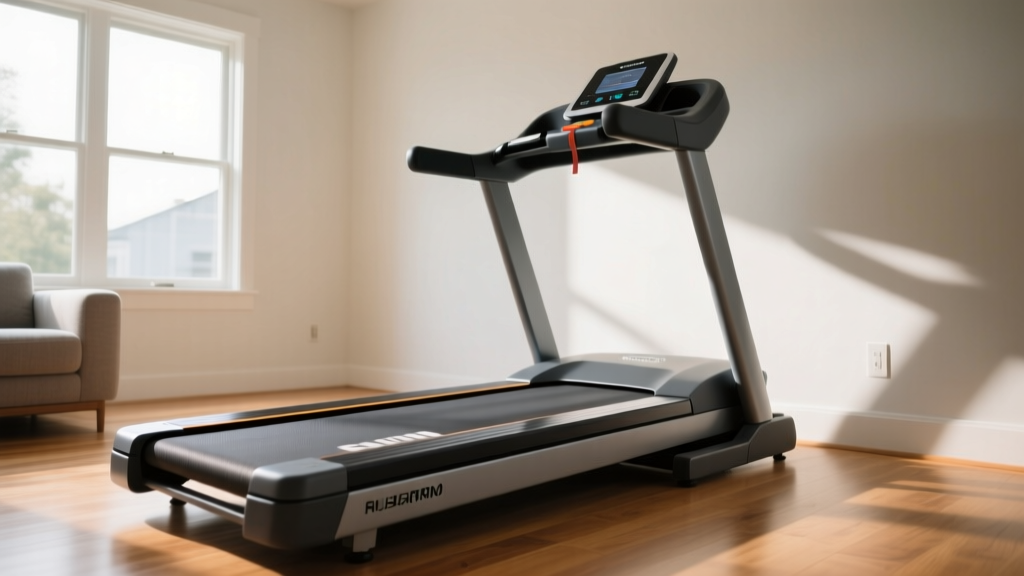
Maintaining Your Treadmill for Fat Loss: Belt Lubrication Guide
Keep your treadmill for fat loss running smoothly. Learn expert belt maintenance, exact lubrication intervals, and top silicone oils to prevent motor burnout.

The Hidden Physics of Fat Loss Workouts on Your Treadmill
When you commit to using a treadmill for fat loss, your machine endures a radically different stress profile than it would under casual use. Popular 2026 fat-loss protocols—such as high-incline walking (like the viral 12-3-30 method) and High-Intensity Interval Training (HIIT)—demand sustained motor torque and generate immense kinetic friction. According to cardiovascular programming guidelines from the American Council on Exercise (ACE), consistent, high-output cardio is foundational for creating a caloric deficit, but this high mileage rapidly degrades the belt-deck interface if left unmaintained.
Friction is the silent killer of home gym equipment. When a treadmill belt dries out, the coefficient of friction between the belt and the wooden deck spikes. This forces the drive motor to pull excessive amperage to maintain your target speed. Over time, this electrical strain leads to catastrophic failure modes, including blown lower control board MOSFETs and demagnetized drive motors. This comprehensive guide will show you exactly how to maintain, align, and lubricate your treadmill belt to protect your investment and keep your fat-loss journey on track.
Warning Signs: Is Your Belt Starved for Lubrication?
Before you grab your tools, you need to diagnose the current state of your running belt. Do not wait for a total mechanical failure. Watch for these critical indicators:
- The 'Hesitation' or 'Slipping' Sensation: If the belt stutters momentarily when your foot strikes the deck during a heavy incline walk, the drive belt or running belt is slipping due to excessive friction or poor tension.
- Static Shocks: A dry belt generates massive static electricity. If you are consistently getting shocked when touching the console or handrails, the belt lacks its necessary silicone moisture barrier.
- Thermal Breaker Trips: If your machine suddenly powers down mid-workout and requires a 10-minute cool-down before the reset button on the surge protector or motor hood can be engaged, your motor is overheating from amp spikes.
- Frayed Edges: White, fuzzy threads appearing on the left or right edge of the belt indicate the belt is misaligned and rubbing against the motor hood or side rails.
⚠️ Critical Warning: The WD-40 Fallacy
Never use WD-40, 3-in-One oil, or any petroleum-based lubricant on your treadmill. Petroleum products dissolve the structural integrity of the PVC and urethane layers in the belt, causing it to stretch, warp, and ultimately destroy the deck. Only use 100% silicone-based treadmill lubricant.
Step-by-Step Belt Lubrication Protocol
Proper lubrication requires precision. You will need a T-handle Allen wrench (usually 3/16" or 5mm, depending on your brand), a microfiber cloth, and a bottle of 100% silicone treadmill oil (typically $12–$18 for an 8 oz bottle from brands like Horizon or Impulse).
Step 1: Access the Belt-Deck Interface
Unplug the treadmill from the wall. Locate the rear roller adjustment bolts at the very back of the side rails. Using your Allen wrench, turn both the left and right bolts counter-clockwise exactly three full turns. This releases the tension, allowing you to lift the belt.
Step 2: Clean the Deck
Slide your hand under the loosened belt. If you feel a gritty, black residue, this is a mix of old silicone and degraded belt backing. Wipe the deck and the underside of the belt with a dry microfiber cloth to remove this abrasive paste.
Step 3: Apply the Silicone
Squeeze exactly 0.5 to 1.0 ounces of 100% silicone lubricant onto the deck in a zigzag or 'W' pattern. Focus the application on the center third of the deck, as this is where 90% of foot-strike friction occurs during fat-loss walking and running routines.
Step 4: Redistribute and Re-tension
Re-tighten the rear roller bolts by turning them clockwise exactly three turns. Plug the machine in, set the speed to 2.0 MPH, and let it run for three minutes. Stand on the side rails and gently press a clean towel against the moving belt to spread the silicone evenly across the entire deck surface.
Lubricant Comparison Matrix: What to Buy in 2026
Not all silicone is created equal. Commercial-grade maintenance protocols outlined by Precor emphasize the importance of viscosity in extending deck life. Here is how the top options compare:
| Lubricant Type | Viscosity & Application | Cost (Approx.) | Verdict |
|---|---|---|---|
| 100% Liquid Silicone | Low viscosity, spreads easily under belt heat. | $12 - $15 | Best Overall for home machines (Sole, NordicTrack). |
| Silicone Spray Aerosol | Includes propellants; highly messy, risks overspray on electronics. | $8 - $12 | Avoid. Propellants can degrade belt adhesives. |
| Performance Silicone Gel | Thicker, stays in place longer, ideal for high-incline use. | $18 - $25 | Premium Choice for heavy daily fat-loss routines. |
Maintenance Schedule: Casual vs. High-Volume Fat Loss
If you are using your treadmill for fat loss, you are likely logging 15 to 25 miles per week. Consumer advocacy groups like Consumer Reports frequently note that users severely underestimate the maintenance required for high-mileage home gyms. Use this framework to schedule your upkeep:
- Casual User (Under 10 miles/week): Lubricate every 6 months or 150 miles. Check belt alignment every 3 months.
- Fat Loss / High-Volume User (15–30 miles/week): Lubricate every 90 days or 130 miles. Check belt alignment and vacuum the motor hood monthly.
- Heavy Incline User (Daily 12-3-30 or similar): Lubricate every 60 days. The extreme downward force on the deck pushes silicone out toward the edges much faster than flat walking.
Advanced Troubleshooting: Edge Cases and Failure Modes
Sometimes, lubrication alone will not solve your problem. If you have properly oiled the deck and are still experiencing issues, you are likely facing one of these advanced mechanical edge cases:
1. The 'Amp Draw' Motor Test
If your treadmill still hesitates after lubrication, the motor or control board may be damaged. You can test this using a digital multimeter or a plug-in watt meter (like a Kill A Watt). A healthy Sole F80 or NordicTrack Commercial 1750 should pull between 2 to 4 amps at 3.0 MPH with a 150 lb user. If the meter reads consistently above 8–10 amps, your deck is likely warped (creating a concave 'valley' that pinches the belt) or the motor brushes are entirely worn down. Replacement decks cost $200–$400, while new drive motors range from $350–$600.
2. Persistent Belt Drift (The 3-Inch Rule)
If the belt constantly drifts to the left, users often over-tighten the left bolt, stretching the belt unevenly. The correct diagnostic test is the 'Lift Test'. With the machine off, reach under the center of the belt and pull upward. You should achieve exactly 2 to 3 inches of vertical lift. If it lifts 4+ inches, it is too loose and will slip during heavy foot strikes. If it lifts less than 1.5 inches, you are creating artificial friction that will burn out the motor capacitor. Adjust the rear bolts in quarter-turn increments until the 3-inch sweet spot is achieved.
Protecting Your Investment
Using a treadmill for fat loss is one of the most effective ways to transform your physique, but it requires treating your equipment like a high-performance vehicle. By adhering to strict 100% silicone lubrication intervals, monitoring your amp draw, and maintaining proper belt tension, you will easily add 5 to 7 years to the lifespan of your machine. Stay consistent with your workouts, and stay consistent with your maintenance.
More gear to consider
All reviews
Stair Climber Guide: Home Picks vs the 6.0 RT Treadmill

Escaping treadmill.murder: Stationary Bike Budget Breakdown
Rowing Machine Guide & Technique: Cleaning Treadmill Belt Tips
Rowing Machine Buying Guide & Technique: Rower vs Circle Treadmill

Sole F80 Folding Treadmill Reality: Cardio Noise Level Comparison
