
Is the Calorie Count on a Treadmill Accurate? Belt Friction & Costs
Discover if the calorie count on a treadmill is accurate, and how hidden belt friction skews workout data while inflating your equipment repair budget.

The Telemetry Trap: Is the Calorie Count on a Treadmill Accurate?
If you have ever stared at your treadmill console mid-run and wondered, is the calorie count on a treadmill accurate? you are not alone. The short answer is no. Most consumer treadmills rely on standardized metabolic equations rather than real-time biometric feedback. According to research published in the National Institutes of Health (NIH), fitness machines and wearable trackers can overestimate energy expenditure by 15% to 20% because they fail to account for individual variations in metabolic efficiency, stride length, and resting heart rate.
However, there is a hidden mechanical variable that makes this data skew even worse while simultaneously destroying your home gym budget: belt friction. When a treadmill belt lacks proper lubrication, the friction coefficient between the belt and the deck increases dramatically. This causes the belt to 'grab' and 'release' microscopically, altering your natural gait. You end up expending more biomechanical energy to fight the machine's mechanical drag, yet the console's optical encoder only reads the motor's RPM. The machine remains entirely blind to the friction you are fighting. The result? Your perceived exertion skyrockets, but the console's calorie count remains rigidly tied to the belt speed sensor, creating a massive disconnect between your actual physiological output and the displayed data.
The Friction Cascade: How Dry Belts Destroy Treadmill Components
From a budget breakdown perspective, inaccurate calorie counts are the least of your worries when dealing with a dry treadmill belt. The real financial damage occurs under the hood. A treadmill's drive motor and Motor Control Board (MCB) are designed to operate within a specific electrical envelope. When the belt is dry, the motor must work significantly harder to maintain the set speed under your body weight.
CRITICAL WARNING: The Amp Draw ThresholdA properly lubricated treadmill belt operating at 3.0 MPH with a 150 lb user should draw between 3 to 5 amps. If your belt is dry, that amp draw can spike to 10 to 15+ amps. Sustained operation above 8 amps generates excessive heat in the motor windings and will eventually cause the MOSFETs on your Motor Control Board to short out, leading to catastrophic and expensive failure.
Accessing Your Machine's Diagnostic Mode
You do not need expensive tools to measure this friction. Many modern treadmills feature hidden engineering menus. For example, on most Sole Fitness models (like the F63 or F85), you can power on the machine and simultaneously hold the Speed Up and Incline Up buttons for 5 seconds. This grants access to the diagnostic menu where you can view real-time Motor Amp Draw. On NordicTrack models, holding the Stop and Speed Up buttons while inserting the safety key often triggers the calibration and amp-readout mode. Checking this metric once a month is the single most valuable budget-protection habit a treadmill owner can adopt.
Budget Breakdown: Preventative Maintenance vs. Catastrophic Failure
To understand the true value of treadmill belt maintenance, we must compare the cost of routine lubrication against the replacement costs of the components destroyed by friction. The data below reflects average 2026 aftermarket and OEM part pricing for mid-tier to premium residential treadmills (e.g., Horizon 7.4, Sole F85, ProForm Pro 9000).
| Component | Lifespan (Lubricated) | Lifespan (Dry/Neglected) | Replacement Cost (Parts) |
|---|---|---|---|
| 100% Silicone Lubricant | N/A (Applied every 3-6 mos) | N/A | $12 - $18 (2-year supply) |
| Running Belt | 7 - 10 Years | 1 - 2 Years | $60 - $140 |
| Walking Deck (MDF/Phenolic) | 10+ Years | 2 - 4 Years | $150 - $350+ |
| Drive Motor (DC) | 10+ Years | 3 - 5 Years | $250 - $550 |
| Motor Control Board (MCB) | 10+ Years | 1 - 3 Years | $150 - $400 |
As illustrated by the data from Fitness Repair Parts, a $15 bottle of silicone can prevent over $1,000 in cascading component failures. When the belt drags, it wears through the urethane backing and scores the deck. Once the deck is grooved, a new belt will be destroyed in a matter of weeks, forcing a dual belt-and-deck replacement.
The $15 Protocol: Diagnosing and Fixing Belt Friction
Maintaining your treadmill is not just about preserving the accuracy of your workout metrics; it is an essential financial safeguard. Follow this step-by-step protocol to ensure your machine operates at peak efficiency.
Step 1: The Coast-Down Test
Before applying lubricant, perform a physical friction test. Set the treadmill to 3.0 MPH. Walk on it for two minutes to warm up the belt. Step off the side rails safely, pull the safety key, and use a stopwatch to time how long it takes for the belt to come to a complete stop. A healthy, lubricated belt on a standard residential machine should coast for roughly 8 to 12 seconds. If it stops abruptly in under 4 seconds, your friction coefficient is dangerously high.
Step 2: Select the Correct Lubricant
Never use WD-40, silicone sprays with petroleum propellants, or household oils. Petroleum distillates will chemically break down the PVC and polyurethane backing of the treadmill belt, causing it to delaminate and stretch. You must use 100% pure liquid silicone specifically formulated for fitness equipment. Brands like Impresa, Godora, or OEM Horizon/Sole silicone are reliable choices that cost around $12 to $15 per bottle.
Step 3: Application and Tensioning
- Unplug the treadmill from the wall to prevent accidental startup or MCB surges.
- Loosen the rear roller bolts on both sides by exactly two full turns using a 3/8-inch or 1/2-inch hex key (depending on the brand).
- Lift the edge of the belt and apply a half-ounce of liquid silicone in a zigzag pattern across the center third of the deck.
- Retighten the rear roller bolts exactly two turns to restore baseline tension.
- Plug the machine in, run it at 2.0 MPH without walking on it for 3 minutes to distribute the silicone, then walk at 3.0 MPH for 5 minutes to seat the lubricant into the deck pores.
Edge Cases: When Lubrication Cannot Save Your Budget
While routine maintenance is highly cost-effective, there are edge cases where lubrication is no longer a viable budget strategy. If your treadmill deck is made of medium-density fiberboard (MDF) with a phenolic resin coating, and that resin has worn through to expose the raw wood grain, the deck is structurally compromised. Applying silicone to raw MDF will result in the wood absorbing the liquid, swelling, and creating a permanently uneven running surface. In this scenario, the deck must be replaced alongside the belt to avoid immediate destruction of the new belt.
Furthermore, if your rear roller bearings are failing, they will create a high-pitched whining noise and mimic the symptoms of a dry belt by increasing motor load. Bearings cannot be lubricated; the entire roller assembly must be replaced (typically $40 to $80 for the part).
Final Verdict: Protecting Your Data and Your Wallet
So, is the calorie count on a treadmill accurate? From a purely algorithmic standpoint, treadmills provide a baseline estimate governed by the American College of Sports Medicine (ACSM) metabolic equations, often missing the mark by up to 20%. But when you introduce mechanical friction from a neglected belt, the disconnect between your actual physiological effort and the console's blind telemetry becomes even more pronounced.
More importantly, treating your treadmill as a 'set it and forget it' appliance is a fast track to hundreds of dollars in unnecessary repair bills. By investing 15 minutes and $15 in pure silicone lubricant every six months, you ensure the motor operates within its designed amp envelope, the MCB stays cool, and your belt glides smoothly. You may not be able to force the console to calculate your exact metabolic burn, but you can absolutely prevent mechanical friction from burning a hole in your wallet.
More gear to consider
All reviews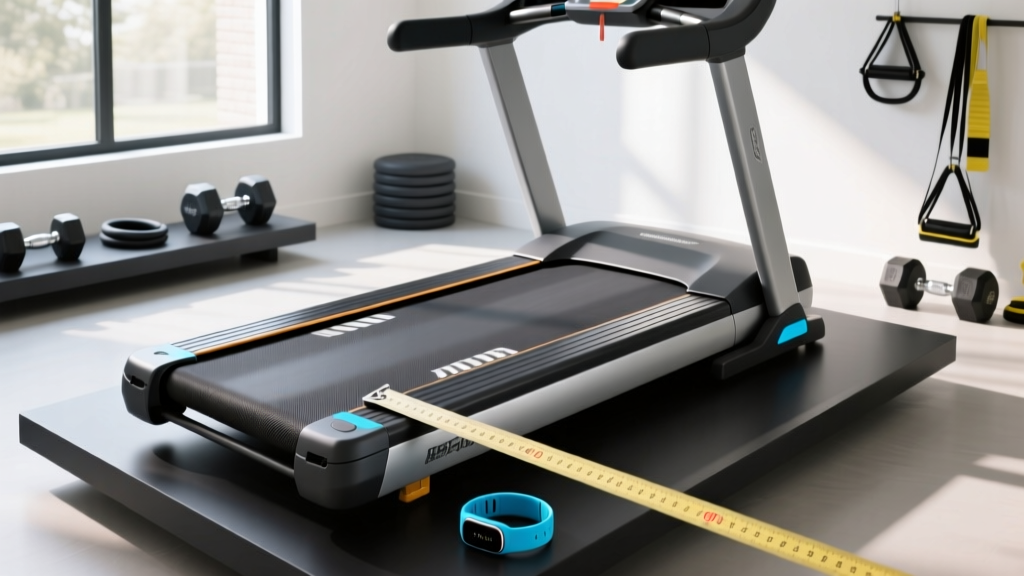
Calculate Treadmill Speed to Test Belt Slip: Expert Lube Reviews

Can a Plane Take Off on a Treadmill? Stair Climber Setup Guide
Selling Treadmill? 2026 Stair Climber Home Buying Guide
Merit Fitness 715T Plus Treadmill Setup & Noise Comparison

Beyond the iMovr Treadmill: Stair Climber Home Guide 2026
