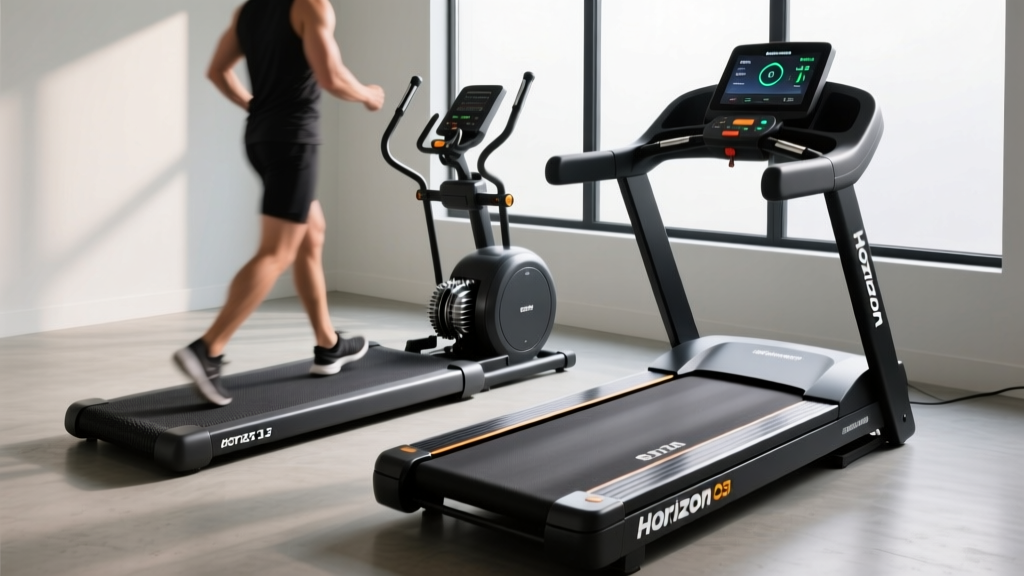
Staircase Treadmill Motor Guide: Sizing & Horsepower Explained
Learn how to choose the right motor size for a staircase treadmill. Our step-by-step guide covers CHP, incline strain, and weight limits for 2026 models.

What Is a Staircase Treadmill and Why Motor Size Matters
When fitness enthusiasts refer to a "staircase treadmill," they are typically talking about high-incline trainers or treadclimbers designed to simulate the intense biomechanics of stair climbing. Unlike standard flat treadmills that max out at a 15% grade, modern staircase treadmills—like the NordicTrack Incline Trainer series—can reach staggering 30% to 40% inclines. According to Johns Hopkins Medicine, walking on steep inclines drastically increases caloric expenditure and lower-body muscle activation without the high-impact joint stress of running.
However, this immense gravitational resistance places extraordinary torque on the machine's drive motor. Buying a staircase treadmill without understanding motor sizing is the most common beginner mistake, often leading to belt stuttering, thermal shutdowns, and voided warranties. This step-by-step guide will teach you how to evaluate treadmill motor size and horsepower to ensure your investment survives your steepest workouts.
Step 1: Decode the Horsepower Jargon (Peak vs. CHP)
The fitness equipment industry is notorious for misleading marketing metrics. When shopping for a staircase treadmill, you will see two distinct horsepower (HP) measurements. Understanding the difference is non-negotiable.
- Peak Horsepower (Peak HP): This is the absolute maximum power the motor can generate for a few seconds before it overheats or fails. It is a marketing gimmick. A motor might boast a "4.0 Peak HP" but only sustain 2.0 HP continuously.
- Continuous Horsepower (CHP): This is the metric that actually matters. CHP measures the power the motor can deliver consistently over a long, grueling 45-minute incline workout without overheating.
Expert Rule of Thumb: Completely ignore Peak HP on the spec sheet. Only base your purchasing decisions on the Continuous Horsepower (CHP) rating. As noted in the Consumer Reports Treadmill Buying Guide, a minimum of 2.5 CHP is required for standard walking, but staircase treadmills demand significantly more due to the vertical load.
Step 2: Calculate Your Required CHP Based on User Weight
The motor's workload is directly proportional to the weight it must push up an incline. A 150-pound user walking at a 30% incline requires vastly less torque than a 250-pound user on the same grade. If you undersize the motor for your body weight, the internal copper windings will overheat, triggering the machine's thermal cutoff switch and abruptly stopping the belt—a major safety hazard on a steep incline.
Weight-to-CHP Matrix for High-Incline Treadmills
| User Weight | Standard Flat Treadmill (0-15%) | Staircase Treadmill (30-40% Incline) | Real-World Failure Risk if Undersized |
|---|---|---|---|
| Under 150 lbs | 2.5 CHP | 3.25 CHP | Low (Minor belt hesitation) |
| 150 - 200 lbs | 3.0 CHP | 3.75 CHP | Moderate (Thermal shutdowns) |
| 200 - 250 lbs | 3.5 CHP | 4.0 CHP | High (Motor controller burnout) |
| 250+ lbs | 4.0+ CHP | 4.25+ CHP (Commercial Grade) | Severe (Catastrophic motor failure) |
Step 3: Factor in the "Staircase" Incline Strain
Why do staircase treadmills need up to 30% more horsepower than flat treadmills? It comes down to physics. On a flat surface, the motor only fights the friction of the belt and the rolling resistance of the deck. On a 40% incline, the motor is actively lifting your body weight against gravity with every single step.
⚠️ The 40% Incline Motor Burnout Warning:When a staircase treadmill is set to a 40% grade at a slow speed (e.g., 1.5 to 2.0 MPH), the motor operates at high torque but low RPM. This is the most dangerous thermal zone for direct current (DC) treadmill motors because the internal cooling fan—attached directly to the motor shaft—spins too slowly to dissipate the heat generated by the high electrical current. If your motor is under 3.75 CHP, extended slow-speed, high-incline walking will degrade the motor's insulation over time.
Step 4: Check Motor Cooling and Controller Specs
The motor itself is only half the equation; the motor controller (the circuit board that regulates power) is equally vital. When you increase the incline, the controller uses Pulse Width Modulation (PWM) to send more voltage to the motor.
Here is what to look for in the 2026 equipment market:
- Sealed Bearings: Ensure the spec sheet mentions permanently sealed precision bearings. Staircase treadmills generate excessive lateral dust and debris from the belt; unsealed bearings will grind and fail within 18 months.
- Heavy-Duty Flywheels: Look for a front roller/flywheel diameter of at least 2.5 inches. A heavier, thicker roller maintains momentum, effectively reducing the continuous draw on the motor by up to 15%.
- Lifetime Motor Warranties: Reputable brands like NordicTrack and ProForm offer lifetime warranties on the motor. If a brand only offers a 1-year or 5-year motor warranty on a high-incline machine, walk away. It indicates they expect the motor to fail prematurely under stair-climbing loads.
Step 5: Compare Top 2026 Staircase Treadmill Motors
To put this theory into practice, let's examine the motor specifications of the leading high-incline "staircase" treadmills currently dominating the home fitness market. Prices reflect early 2026 retail averages.
| Model | Motor Size (CHP) | Max Incline | Price Range (2026) | Expert Verdict |
|---|---|---|---|---|
| NordicTrack X32i | 4.0 CHP | 40% | $3,999 - $4,299 | The gold standard for home staircase training. The 4.0 CHP motor easily handles 250+ lb users at max incline without thermal throttling. |
| ProForm Pro 9000 | 3.6 CHP | 30% | $1,599 - $1,799 | A budget-friendly alternative. The 3.6 CHP is adequate for users under 200 lbs, but heavier users may experience belt hesitation at 30%. |
| Bowflex Max Trainer M9 | N/A (Magnetic) | Simulated | $2,299 - $2,499 | Uses magnetic resistance rather than a traditional belt motor. Excellent for joint health, but lacks the true continuous belt feel of an incline trainer. |
Frequently Asked Questions
Can I upgrade the motor on my existing treadmill later?
No. Treadmill motors are matched to the machine's specific voltage, controller board, and physical chassis mounts. Attempting to retrofit a larger CHP motor onto a frame designed for a 2.5 CHP motor will immediately fry the motor controller and void all safety certifications.
Does the CDC recommend stair climbing for beginners?
Yes, but with caveats. The CDC's physical activity guidelines highly recommend incorporating muscle-strengthening and moderate-intensity aerobic activities into your weekly routine. Using a staircase treadmill at a low speed (1.5 - 2.0 MPH) fulfills the moderate-intensity aerobic requirement while safely building lower-body muscular endurance, provided you have the correct motor size to prevent sudden belt stops.
Why does my treadmill smell like burning rubber on high inclines?
A burning rubber smell on a steep incline is rarely the motor itself; it is usually belt-deck friction. When the motor strains against gravity, the belt can slip against the deck if it lacks proper silicone lubrication. Before assuming your motor is failing, lift the belt and apply 100% pure silicone treadmill lubricant. If the smell persists and is accompanied by an ozone-like scent, your motor's internal wiring is overheating, and you must stop using the machine immediately.
Final Thoughts on Sizing Your Staircase Treadmill
Investing in a staircase treadmill is an investment in high-intensity, low-impact cardiovascular health. However, the extreme physics of a 40% incline requires a robust, high-CHP motor to keep you safe. By ignoring Peak HP marketing traps, calculating your required CHP based on your body weight, and prioritizing heavy-duty flywheels and lifetime warranties, you will secure a machine that delivers relentless stair-climbing performance for years to come.
More gear to consider
All reviews
Stationary Bike Types: Budget Guide & Treadmill Removal Near Me
Treadmill Games Setup: Motor Size & Installation Walkthrough

Elliptical vs Treadmill with Arm Workout: Maintenance & Longevity
Fell Off Treadmill? Compare Top Rowing Machines for Safer Cardio

Does Goodwill Take Treadmills? Care for Upright & Spin Bikes