Are Treadmills Good for Weight Loss? Why Belt Maintenance Matters
Wondering if treadmills are good for weight loss? They are, but only if maintained. Learn expert belt lubrication and tension tips to keep workouts smooth.

The Hidden Saboteur of Your Weight Loss Journey
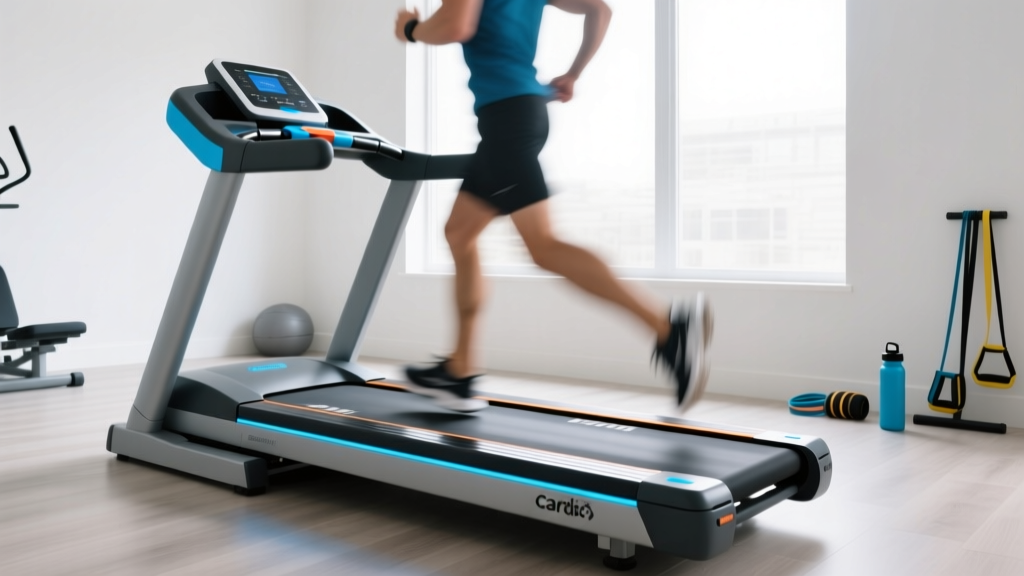
If you have ever typed 'are treadmills good for weight loss' into a search engine, the answer from fitness professionals is a resounding yes. According to the Mayo Clinic, consistent cardiovascular exercise on a treadmill is one of the most effective ways to create the caloric deficit required for sustainable weight loss. However, there is a mechanical caveat that most home gym owners ignore until it is too late: belt friction.
A poorly maintained treadmill belt does not just damage your machine; it actively sabotages your biomechanics. When the running belt dries out, friction against the wooden or composite deck increases exponentially. This causes 'stuttering' or micro-hesitations in the belt's rotation. Your body subconsciously compensates for these micro-hesitations by altering your stride, leading to shin splints, Achilles tendonitis, and knee pain. Ultimately, the injury forces you to abandon your routine, halting your weight loss progress entirely. To keep your body burning calories and your machine running smoothly in 2026, mastering treadmill belt maintenance and lubrication is non-negotiable.
Diagnostic Matrix: Is Your Belt Dry, Loose, or Worn?
Before grabbing a bottle of lubricant, you must accurately diagnose the issue. Applying silicone to a belt that is actually suffering from improper tension or severe wear will not fix the problem. Use this diagnostic table to identify your treadmill's exact failure mode.
| Symptom | Primary Cause | Diagnostic Test | Required Fix |
|---|---|---|---|
| Belt hesitates or 'stutters' underfoot during heavy strides | High deck friction (Dry Belt) | Touch test: Slide hand under belt; if it feels completely dry or dusty, it lacks lubrication. | Deep clean and apply 100% silicone lubricant. |
| Belt slips when stepping on, but motor sounds smooth | Low belt tension | Lift test: Lift belt in the center of the deck. If it rises more than 3 inches, it is too loose. | Adjust rear roller bolts using the quarter-turn method. |
| Motor strains, smells like burning rubber, or trips the breaker | Severe friction or worn deck | Amp draw test: Use a multimeter on the motor wires. Normal is 5-8 amps; over 12 amps indicates severe drag. | Lubricate immediately; if amp draw remains high, replace the deck and belt. |
| Visible fraying on the edges or black dust on the floor | Material degradation / End of life | Visual inspection: Check for exposed nylon threads or uneven wear patterns. | Replace the walking belt (lubrication will not save it). |
The 2026 Standard for Treadmill Belt Lubrication
Modern treadmill decks, such as those found on the Sole F85 or NordicTrack Commercial series, are often coated with a low-friction wax or silicone layer from the factory. However, this coating degrades after 130 to 150 miles of use. When it comes to choosing a lubricant, the chemistry matters immensely.
CRITICAL WARNING: Never Use WD-40 or Petroleum-Based SpraysPetroleum distillates will instantly dissolve the urethane and PVC compounds in your walking belt, causing it to stretch, warp, and disintegrate. Furthermore, petroleum products will strip the protective wax coating off the wooden deck, ruining a $150+ component. Always use 100% pure silicone liquid or gel specifically formulated for fitness equipment (brands like Godora or Impresa cost between $12 and $18).
Step-by-Step Application Guide
Follow this precise procedure to ensure even distribution without over-saturating the deck, which can cause the belt to slip.
- Power Down and Unplug: Never perform maintenance while the machine is connected to a power source. The thermal breaker will not protect you from a shock if a wire is exposed.
- Loosen the Belt Tension: Using the provided Allen wrench, turn the left and right rear roller adjustment bolts counter-clockwise by exactly two full turns. This creates enough slack to lift the belt.
- Clean the Deck: Slide a microfiber cloth attached to a long ruler under the belt to wipe away old, clumped silicone and dust. Debris trapped under the belt acts like sandpaper on the deck.
- Apply the Silicone: Lift the edge of the belt and apply a zig-zag pattern of 100% silicone gel or liquid directly onto the center of the deck. Use approximately 0.5 to 1 ounce (roughly half the bottle). Do not apply it to the edges, as it will fling off during operation.
- Restore Tension: Tighten the rear roller bolts clockwise by the exact two turns you removed. Ensure both sides are even to keep the belt centered.
- Distribute the Lube: Plug the treadmill in, set the speed to 2.0 MPH, and let it run for 5 minutes. Then, walk on the treadmill at 3.0 MPH for 3 minutes, stepping deliberately across the width of the belt to spread the silicone evenly.
Tension vs. Lubrication: The Delicate Balance
A common mistake among home gym owners is confusing a dry belt with a loose belt. If your belt is slipping at the rear roller when you push off for a sprint, your first instinct might be to tighten it. However, over-tightening a belt to compensate for friction is a catastrophic error.
When you over-tension a walking belt, you place immense lateral load on the front and rear roller bearings. According to Sole Fitness maintenance guidelines, excessive tension is the leading cause of premature bearing failure and motor drive-belt snapping. Furthermore, a tightly stretched belt presses harder into the deck, increasing friction rather than reducing it.
The Golden Rule of Tension: You should be able to lift the walking belt in the exact center of the deck by 2 to 3 inches with moderate effort. If you cannot lift it 2 inches, it is too tight and is actively choking your drive motor.
Cost Analysis: Maintenance vs. Catastrophic Motor Failure
Understanding the financial stakes of treadmill maintenance highlights why skipping a $15 bottle of silicone is a poor economic decision. When a belt runs dry, the friction forces the drive motor to work significantly harder to maintain the set speed. This spikes the electrical amp draw.
Most residential treadmills in 2026 utilize 2.5 to 4.0 Continuous Horsepower (CHP) DC motors. A healthy motor running on a well-lubricated deck draws between 5 and 8 amps. When friction spikes due to a dry belt, the amp draw can surge past 15 amps. This excess current generates massive heat, which first destroys the Motor Control Board (MCB) and eventually burns out the copper windings inside the drive motor itself.
Real-World Repair Costs (2026 Estimates)
- 100% Silicone Lubricant Kit: $12 - $18 (Preventative)
- Replacement Walking Belt: $60 - $120 (If neglected and stretched)
- Motor Control Board (MCB) Replacement: $200 - $450 (Fried by amp spikes)
- Complete Drive Motor Replacement: $350 - $650 (Burned out windings)
- Professional Technician Labor: $90 - $150 per hour
By spending ten minutes every three months (or every 130 miles) lubricating your belt, you are protecting over $800 in potential electromechanical repairs. The CDC recommends at least 150 minutes of moderate-intensity aerobic activity weekly; if you follow this on your treadmill, you will hit the 130-mile lubrication threshold roughly every 8 to 10 weeks.
Frequently Asked Questions
Can I use a silicone spray aerosol instead of a gel?
Yes, but with extreme caution. Aerosol sprays tend to coat the sides of the belt and the motor hood, which can attract dust and create a slipping hazard. Liquid or gel applied via a squeezable bottle with an extension tube is vastly superior because it allows you to target the exact center of the deck without overspray.
How do I know if my treadmill has a 'maintenance-free' deck?
Some older or budget models claim to have 'maintenance-free' wax-impregnated decks. However, fitness equipment engineers widely agree that no deck is truly maintenance-free forever. The wax eventually wears away. If your machine is over three years old and you feel stuttering, it requires liquid silicone regardless of the original marketing claims.
Does belt maintenance actually help with weight loss?
Indirectly, yes. Weight loss requires consistency. A poorly maintained treadmill causes joint pain due to stuttering, leads to frustrating mid-workout machine shutdowns (tripped breakers), and ultimately ends up as a clothes rack. A smoothly lubricated belt ensures your high-intensity interval training (HIIT) and steady-state cardio sessions are safe, comfortable, and uninterrupted, keeping you on track to hit your caloric deficit goals.
More gear to consider
All reviews
Treadmill Setup & Features for a 20 Minute Treadmill Walking Workout

Treadmill Motor Size Guide: Achieving Maximum Treadmill Speed

How to Pass a Treadmill Stress Test: Curved vs Motorized
Rowing Machine Buying Guide: Beating 6.5 Speed on Treadmill

Fulmly Treadmill vs. Top Compact Rivals: 2026 Buying Guide