
Do Treadmills Burn Fat? The Belt Maintenance Guide for Max Results
Do treadmills burn fat? Yes, but only if the machine runs smoothly. Learn expert treadmill belt maintenance and lubrication tips to protect your workouts.

The Hidden Link Between Fat Loss and Treadmill Friction
When fitness enthusiasts ask, do treadmills burn fat, the physiological answer is a resounding yes—provided you can maintain the requisite heart rate zones. According to the Mayo Clinic, optimizing lipid oxidation requires sustaining specific cardiovascular intensities, often referred to as Zone 2 training (60-70% of your maximum heart rate) or utilizing High-Intensity Interval Training (HIIT). However, there is a mechanical variable that most home-gym owners completely ignore: belt friction.
A poorly maintained, dry treadmill belt does more than just squeak. It creates severe drag between the PVC belt and the phenolic-coated MDF deck. This friction causes the drive motor to work harder, leading to micro-stutters in belt speed. If you are trying to hold a steady 135 BPM for Zone 2 fat-burning, a stuttering belt forces your stride to adapt constantly, spiking your heart rate out of the lipid-oxidation zone and into anaerobic glycolysis. In short, poor treadmill maintenance actively sabotages your fat-loss physiology.
Callout: The 'Stutter Effect' on Heart Rate
A dry belt can increase motor amp draw from a normal 6-8 amps to over 14 amps. This electrical strain causes the lower control board to momentarily limit power to prevent overheating, resulting in a 0.2 to 0.5 MPH speed drop that the user feels as a 'stutter.' This breaks your running cadence and ruins the steady-state cardio required for efficient fat metabolism.
The Expert Protocol: Step-by-Step Belt Lubrication
To ensure your treadmill delivers the flawless performance required for effective fat-burning workouts, you must adhere to a strict lubrication protocol. Forget the generic advice of 'spraying some oil.' Modern 2026 treadmill decks require precise chemical and mechanical care.
Step 1: Select the Correct Lubricant
You must use 100% pure liquid silicone. Never use WD-40, petroleum-based oils, or silicone sprays containing propellants or PTFE (Teflon). Petroleum products will instantly dissolve the urethane backing of the belt and strip the wax/phenolic coating off the deck, resulting in catastrophic failure. Industry experts at Treadmill Doctor consistently warn that using the wrong lubricant voids manufacturer warranties and necessitates full deck-and-belt replacements.
Step 2: Clean the Deck Substrate
Before applying new silicone, you must remove oxidized dust and old wax buildup.
- Unplug the machine and loosen the rear roller bolts by exactly 5 full turns to release belt tension.
- Slide your hand under the belt with a dry microfiber cloth to wipe away debris.
- If the deck feels gritty, use a vacuum with a brush attachment along the edges to extract dried silicone dust.
Step 3: The 1-Ounce Application Rule
More is not better. Over-lubrication causes the silicone to squeeze out the sides, attracting dust and causing the belt to slip during heavy sprint intervals.
- Apply exactly 1 ounce (30 ml) of 100% silicone liquid in a zig-zag pattern directly onto the center of the deck, underneath the belt.
- Re-tension the belt by tightening the rear roller bolts back to their original position (usually 5 full turns).
- Plug the machine in and walk at 2.0 MPH for 5 minutes. This allows the roller friction to evenly distribute the silicone across the entire deck surface.
Tension, Alignment, and the 'Lift Test'
Lubrication is only half the battle. If your belt is too tight, you will burn out the motor bearings; too loose, and the belt will slip when your foot strikes the deck during a heavy incline fat-burning sprint.
The 2-Inch Lift Rule: With the machine off, reach under the center of the belt and lift upward. You should be able to lift the belt exactly 2 to 3 inches off the deck. If it lifts 4+ inches, it is too loose and will slip. If you cannot lift it 2 inches, it is overtightened and is actively destroying your motor.
To adjust, use a 3/16-inch Allen wrench on the rear roller bolts. Adjust in quarter-turn increments. Never adjust one side more than the other, or you will force the belt off-track, causing edge fraying against the side rails.
Lubrication Schedule & Environmental Variables
How often you need to perform this maintenance depends heavily on your local climate and weekly mileage. High humidity can cause MDF decks to swell slightly, increasing friction, while arid climates can cause silicone to dry out faster.
| Usage Level | Climate / Environment | Recommended Interval | Silicone Volume |
|---|---|---|---|
| Light (Under 3 hrs/week) | Climate-Controlled (68-72°F) | Every 12 Months | 1 oz (30 ml) |
| Moderate (3-6 hrs/week) | Average Humidity (40-50%) | Every 6 Months | 1 oz (30 ml) |
| Heavy (6+ hrs/week) | Arid / High Dust | Every 3 Months | 1 oz (30 ml) |
| Commercial / Multi-User | Variable | Monthly | 1.5 oz (45 ml) |
Troubleshooting: When Lubrication Isn't the Problem
If you have properly lubricated and tensioned the belt, but the machine still stutters during your fat-burning intervals, you are likely facing a hardware failure. Here are the most common edge cases and their 2026 replacement costs:
- Warped MDF Deck ($120 - $180): If the deck has a physical dip or groove worn into the center, lubrication will not fill the gap. The belt will drop into the groove, causing a physical 'thud' with every footstrike. The deck must be flipped (if reversible) or replaced.
- Frayed Belt Edges ($150 - $250): If the belt edges are unraveling, the internal cotton/polyester weave is compromised. No amount of tensioning will fix this. Continuing to run on it will eventually cause the belt to snap mid-stride.
- Lower Control Board (LCB) Failure ($180 - $300): If the motor amp draw spikes and the machine shuts off entirely after 15 minutes, the LBC's thermal capacitor has likely failed due to historical friction overload. This is the most common casualty of neglected belt maintenance.
- Worn Drive Belt ($40 - $75): Located under the front motor hood, the ribbed drive belt connects the motor to the front roller. If it is glazed or cracked, it will slip under heavy loads, mimicking the symptoms of a dry walking belt.
Expert FAQ: Fat Loss and Treadmill Upkeep
Does walking on an incline burn more fat, and does it affect the belt?
Yes. Incline walking heavily targets the posterior chain and keeps the heart rate in the optimal fat-burning zone without the joint impact of running. However, incline walking places significantly more downward force on the rear two-thirds of the deck. If you do mostly incline walking, inspect the rear section of your deck for wear and ensure your silicone application is biased slightly toward the back half of the belt.
Can I use a silicone spray instead of liquid?
It is highly discouraged. Aerosol silicone sprays contain propellants and solvents that can degrade the adhesive layers of the treadmill belt. Furthermore, the overspray inevitably coats the side rails and motor housing, creating a dust-magnet that accelerates wear on the motor's carbon brushes. Always use a squeeze-bottle of 100% pure liquid silicone with an application wand.
How do I know if my treadmill is ruining my HIIT workouts?
HIIT requires rapid acceleration and deceleration. If your treadmill takes more than 15 seconds to reach top speed, or if you feel the belt 'lag' when you plant your foot for a sprint, the belt is either too loose or the deck is completely dry. This lag forces your Achilles tendon and calves to absorb the kinetic shock, increasing injury risk and reducing the metabolic output of your interval.
Final Thoughts on Machine Longevity
So, do treadmills burn fat? Absolutely. They remain one of the most efficient tools for cardiovascular conditioning and lipid oxidation available for the home gym. But your body can only adapt to the stimulus if the machine provides a consistent, reliable platform. By dedicating 20 minutes every six months to properly clean, lubricate, and tension your treadmill belt, you protect your lower control board, preserve your deck, and most importantly, ensure that your fat-burning heart rate zones remain uninterrupted by mechanical failure.
More gear to consider
All reviews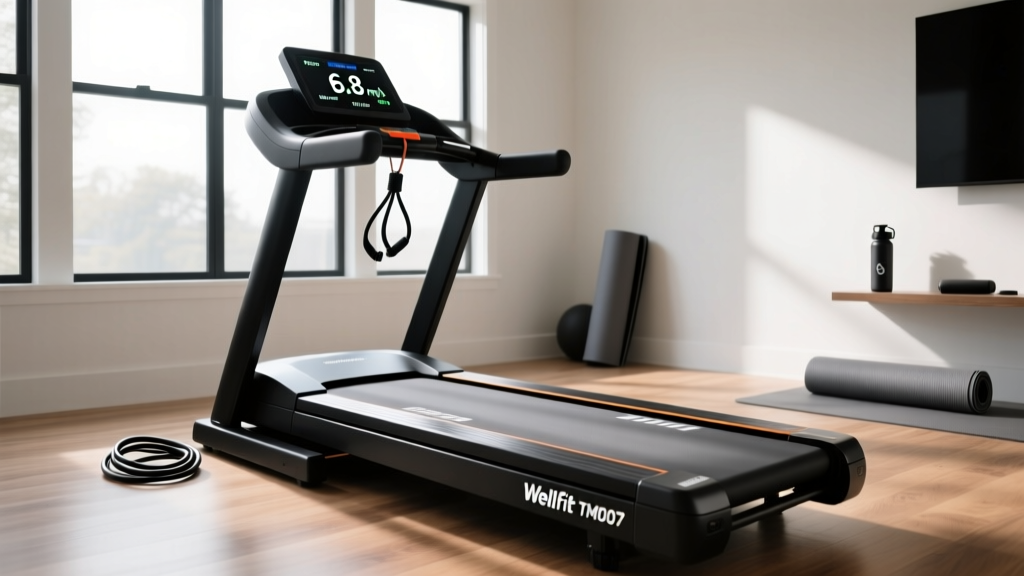
Wellfit TM007 Treadmill: 2026 Feature Comparison & Buying Guide

LifeSmart TM4000 Power Touch Treadmill vs 2026 Portable Cardio Trends

Elliptical vs Treadmill: Training for a Half Marathon on a Treadmill Schedule

IN10CT Treadmill: How to Use, Maintain, and Maximize Longevity
Air Bike vs Assault Bike: Value vs Fat Burning Interval Treadmill Workout
