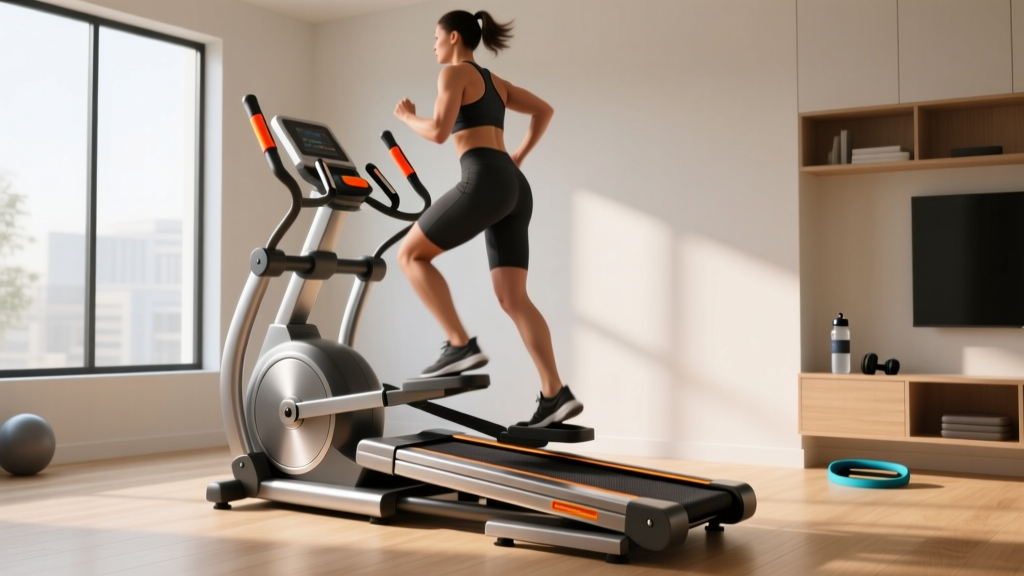
Does Strava Work on Treadmill? Portable Cardio Value
Discover if Strava works on treadmill and walking pad setups. We break down the budget, value, and tech of compact portable cardio equipment.

When outfitting a small apartment or home office, compact portable cardio equipment is the undisputed champion of space-saving fitness. But as you browse folding treadmills and under-desk walking pads, a critical question inevitably arises for data-driven athletes: does Strava work on treadmill setups that lack built-in screens and GPS?
The short answer is no, not natively or directly for most budget machines. Strava relies on GPS for outdoor tracking and requires specific Bluetooth protocols or manual uploads for indoor cardio. However, with the right workarounds and an understanding of the 2026 portable cardio market, you can seamlessly bridge the gap between your compact machine and your Strava feed without blowing your budget.
The Tech Reality: How Strava Tracks Indoor Cardio
To understand the value of portable cardio machines, you first need to understand how Strava processes indoor data. Unlike outdoor runs where your phone's GPS maps your route and pace, indoor treadmill tracking requires alternative data inputs. According to the official Strava Support guidelines for indoor activities, the platform accepts data via manual entry, compatible smartwatches (using indoor run profiles), or third-party apps that sync via API.
Most budget-friendly portable treadmills and walking pads do not have the internal hardware to broadcast data directly to Strava. They lack the Bluetooth FTMS (Fitness Machine Service) protocol required to 'talk' to third-party fitness ecosystems. Instead, they rely on proprietary, closed-loop apps or simple LED consoles. This creates a friction point for buyers who want automated Strava syncing without paying the premium for a $2,000 smart treadmill.
Budget Breakdown: Compact Portable Cardio Tiers
Let us break down the 2026 market for compact cardio equipment, analyzing the price-to-value ratio specifically through the lens of data tracking and app integration.
| Equipment Tier | 2026 Price Range | Native Strava Sync? | Best Tracking Workaround | Value Rating |
|---|---|---|---|---|
| Basic Walking Pad | $150 - $280 | No | Smartwatch Indoor Walk | High (for NEAT) |
| Mid-Range Folding Treadmill | $300 - $550 | No (Proprietary Apps) | Foot Pod / Chest Strap | Medium |
| Smart Portable Bike/Rower | $400 - $700 | Yes (via FTMS Bridge) | Zwift/Kinomap to Strava | High |
| Premium Auto-Fold Treadmill | $800 - $1,200 | Yes (via Bridge) | Native Ecosystem Sync | Low (Diminishing returns) |
Tier 1: Under-Desk Walking Pads ($150 - $280)
Models like the UREVO Strol 2E ($249) or the Sunny Health & Fitness SF-T723016 ($179) are exceptional for boosting Non-Exercise Activity Thermogenesis (NEAT) while working. However, they feature basic 1.5 HP motors and lack Bluetooth entirely. Failure mode alert: Attempting to run on these budget pads (exceeding 3.5 mph) often causes belt slip and motor overheating, rendering pace tracking inaccurate even if you use a wearable.
Tier 2: Mid-Range Folding Treadmills ($300 - $550)
Stepping up to the Horizon Fitness T101 ($499) gives you a 2.5 HP motor and a longer 55-inch belt, making actual running viable. While it features Bluetooth, it is restricted to Horizon's proprietary app ecosystem. You cannot push data directly to Strava from the console, meaning you must rely on secondary hardware to track your run.
Tier 3: Smart Portable Cardio ($400 - $700)
This is where the value peaks for data nerds. Compact smart bikes like the Sunny Health SF-B2721 or portable rowers with FTMS-enabled sensors allow you to connect to bridge apps. While not treadmills, they offer the most seamless Strava integration in the compact footprint category.
Expert Insight: The FTMS Protocol
If a portable machine advertises 'Smart Connectivity,' check the manual for FTMS (Fitness Machine Service) support. This is the universal Bluetooth standard that allows third-party apps to read your machine's speed, cadence, and incline data. Without FTMS, the machine's Bluetooth is likely just for basic firmware updates or proprietary walled-garden apps.
How to Actually Sync Portable Cardio to Strava
Since your budget folding treadmill will not beam data to Strava on its own, here are the two most reliable, cost-effective workarounds used by professional coaches and home-gym enthusiasts.
Method A: The Wearable + Foot Pod Route (Best for Treadmills)
If you are using a mid-range folding treadmill, the most accurate way to track your indoor run and push it to Strava is by bypassing the machine's console entirely.
- Equip a Foot Pod: Purchase a Garmin HRM-Pro Plus ($129) or a Stryd Footpod ($239). These devices use advanced accelerometers to measure your exact cadence, ground contact time, and pace, completely independent of the treadmill's belt speed.
- Pair to a Smartwatch: Connect the pod to your Apple Watch, Garmin, or COROS device via Bluetooth/ANT+.
- Start an 'Indoor Run' Profile: This disables the watch's GPS (which would otherwise show you as standing still) and forces it to pull pace data from the foot pod.
- Auto-Sync: Once your workout ends, the watch syncs to its native app (e.g., Garmin Connect), which is authorized to auto-upload the .FIT file directly to Strava.
Method B: The Bridge App Route (Best for FTMS Machines)
If you invested in a portable machine with verified FTMS support, you can use a bridge app.
- Download an app like Kinomap or Zwift on your tablet.
- Pair the app directly to the cardio machine via Bluetooth.
- Complete your workout in the app, which records the telemetry.
- Link your Zwift or Kinomap account to Strava in the app's settings menu. The activity will automatically appear on your Strava feed as an indoor session.
'The biggest mistake buyers make in the compact cardio space is assuming a machine's proprietary app will integrate with Strava. Always verify if the hardware supports open FTMS or if you need to budget an extra $100 for a dedicated foot pod.' - Home Gym Equipment Analyst
Value Analysis: Are App-Connected Portable Machines Worth the Premium?
When conducting a budget breakdown, you have to weigh the cost of hardware against the cost of accessories. A premium auto-folding treadmill with native Wi-Fi and screen-based app integration (like the Echelon Stride-S) can cost upwards of $999.
Conversely, a highly rated, mechanically sound folding treadmill like the Horizon T101 costs around $499. By pairing it with a $129 Garmin HRM-Pro Plus chest strap, your total investment is $628. You save nearly $370 while actually achieving more accurate biomechanical data tracking for Strava, because chest straps and foot pods capture physiological metrics (heart rate, vertical oscillation) that a treadmill's internal motor sensor simply cannot detect.
Final Verdict: Maximizing Your Compact Cardio Budget
So, does Strava work on treadmill setups in the compact, portable category? Not out of the box for machines under $600. But with a fundamental understanding of Bluetooth protocols and wearable sensors, you can easily bypass this limitation.
For pure walking and NEAT, buy a $200 walking pad and let your Apple Watch handle the basic step tracking. For serious indoor running on a budget, invest in a $400-$500 folding treadmill with a strong continuous horsepower (CHP) motor, and allocate $130 for a dedicated foot pod or chest strap. This hybrid approach delivers the space-saving benefits of portable cardio without sacrificing the data integrity your Strava profile demands.
More gear to consider
All reviews
Skipping Rope vs Treadmill: Upright, Recumbent & Spin Bike Trends

Elliptical vs Treadmill: How Much Electric Does a Treadmill Use?
2026 Quiet Treadmills for Orange Theory Treadmill Workouts
Weslo Cadence 5.2 Treadmill Setup & Walking Pad Review
What Is a Good Incline to Walk on Treadmill? 2026 Folding Reviews