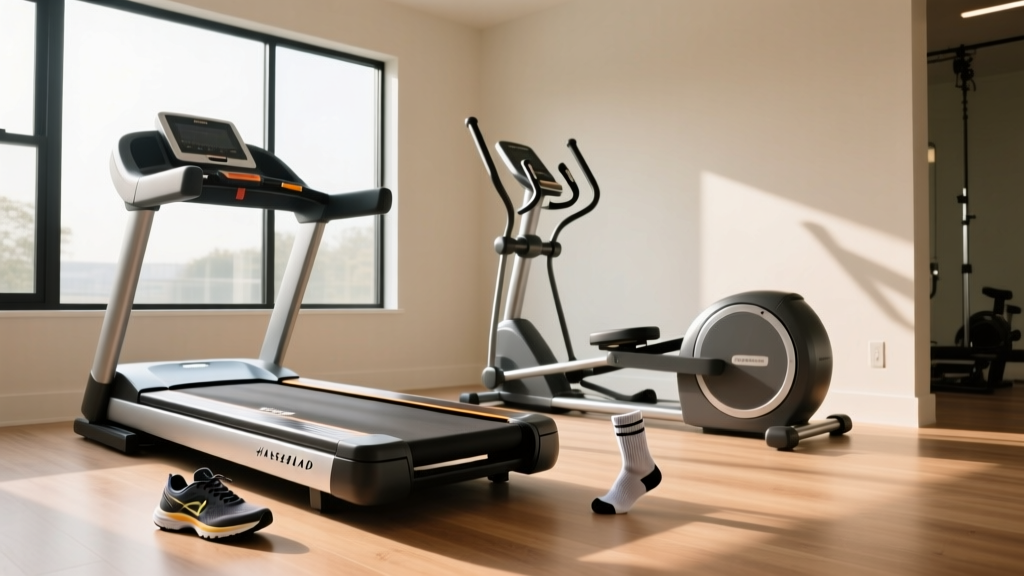
Treadmill vs Outdoor Running: The Elliptical Maintenance Advantage
Discover the true long-term costs of home cardio. We compare treadmill vs outdoor running and ellipticals to reveal the ultimate low-maintenance machine.

The Hidden Cost of Home Cardio: Maintenance Realities
Building a home gym in 2026 is an investment in convenience, but it also introduces a hidden variable that most buyers overlook: long-term mechanical maintenance. When you bring commercial-grade fitness equipment into a residential environment, you become the facility manager. While the upfront price tag of a machine is easy to calculate, the decade-long cost of upkeep, part replacements, and mechanical calibration often goes unexamined until a critical failure occurs mid-workout.
In this comprehensive guide, we are analyzing the home cardio landscape through the lens of longevity and maintenance. Specifically, we will address the frequent comparisons of treadmill vs outdoor running regarding equipment wear, and then pivot to why the elliptical cross-trainer has quietly become the undisputed champion of low-maintenance home cardio.
Treadmill vs Outdoor Running: The Maintenance Divide
When evaluating the classic debate of treadmill vs outdoor running, most athletes focus on joint impact, biomechanics, or weather constraints. However, from an equipment longevity perspective, the contrast is stark. Outdoor running requires zero machine maintenance; your only recurring mechanical cost is rotating and replacing running shoes every 300 to 500 miles. The pavement requires no lubrication, no electrical calibration, and no dust mitigation.
A home treadmill, conversely, is a high-friction, high-voltage machine subjected to repetitive kinetic loading. A 180-pound runner striking a treadmill deck generates thousands of pounds of cumulative force per hour. This constant friction creates a hostile environment for the machine's internal components. According to the American Heart Association, consistent aerobic exercise is vital for cardiovascular health, but if your home machine is sidelined for repairs, that consistency breaks down.
Common Treadmill Failure Modes & Costs
If you opt for a treadmill over outdoor running, you must budget for the following inevitable maintenance events over a 10-year lifecycle:
- Walking Belt Fraying & Deck Wear ($250 - $450): The phenolic deck beneath the belt slowly wears down due to friction. If you neglect silicone lubrication, the belt will overheat, melt the deck coating, and require a full belt-and-deck replacement.
- Motor Control Board Burnout ($200 - $350): Dust and pet hair are sucked into the motor hood via the cooling fan. This debris acts as an insulator, causing the motor to overheat and eventually fry the control board capacitors.
- Rear Roller Bearing Seizure ($80 - $150): The bearings inside the rear roller degrade over time, leading to a rhythmic thumping noise and eventual belt tracking failure.
The Elliptical Alternative: Engineering Longevity
This brings us to the core subtopic of our analysis: the elliptical vs treadmill for home cardio. If you want the climate-controlled consistency of a home gym without the relentless friction and high-voltage failure points of a treadmill, the elliptical is the superior engineering choice for longevity.
Unlike treadmills, modern ellipticals (such as the Bowflex Max Trainer series or NordicTrack SE7i) utilize eddy-current magnetic resistance. There is zero physical friction between the resistance mechanism and the flywheel. Furthermore, your feet never leave the pedals, eliminating the thousands of high-impact strikes that crack treadmill decks and shatter motor mounts. As noted by the Mayo Clinic, elliptical machines offer a highly effective, low-impact aerobic workout that spares the joints while still delivering rigorous cardiovascular conditioning.
Expert Insight: The primary reason ellipticals outlast treadmills in home environments is the absence of a high-draw AC/DC motor driving a friction belt. An elliptical's drive system relies on human kinetic energy turning a flywheel, with magnets providing resistance. Fewer moving parts under high electrical load translates directly to a longer lifespan.
Head-to-Head: 10-Year Maintenance Cost Matrix
To visualize the long-term ownership experience, we have modeled the estimated 10-year maintenance costs for a mid-to-premium tier machine used 4 hours per week.
| Modality | Routine Upkeep Required | 10-Year Est. Repair Cost | Primary Failure Point |
|---|---|---|---|
| Outdoor Running | Shoe rotation (every 400 miles) | $0 (Machine) | N/A (Biomechanical only) |
| Home Treadmill | Belt lube, vacuuming, calibration | $600 - $950 | Deck friction / Motor board |
| Home Elliptical | Track wiping, pivot greasing | $150 - $250 | Console potentiometer / Cables |
Essential Care Protocols for Your Home Machines
Whether you have decided that the elliptical is the right low-maintenance fit, or you are committed to a treadmill and want to mitigate repair costs, strict adherence to maintenance protocols is non-negotiable. Below are the exact, step-by-step procedures utilized by certified fitness equipment technicians.
Treadmill Belt Lubrication & Alignment
If you choose a treadmill, you must manage the friction between the belt and the deck. Most premium 2026 models feature maintenance-free decks infused with silicone, but standard decks require manual intervention.
- Test for Lubrication: Slide your hand under the walking belt to the center of the deck. If it feels dry or gritty, it needs lubrication. If it feels slightly oily, it is fine.
- Apply 100% Silicone: Never use petroleum-based products. Lift the belt and apply exactly 0.5 ounces of 100% pure liquid silicone in a zigzag pattern across the deck.
- Distribute the Lube: Turn the machine on to 2 MPH and walk on it for 3 minutes to spread the silicone evenly.
- Check Tension: If the belt slips when you plant your foot, locate the two rear roller adjustment bolts. Turn both bolts exactly one-quarter turn clockwise. Never over-tighten, as this will destroy the rear roller bearings and stretch the belt prematurely.
Never use standard WD-40, lithium grease, or aerosol solvents on any home cardio machine. Standard WD-40 is a solvent that will strip the factory-applied lubricants from your elliptical's pivot bearings and will chemically degrade the rubber of a treadmill belt, causing it to crack and snap within weeks.
Elliptical Track and Roller Maintenance
While ellipticals avoid belt friction, they rely on guide rails and roller wheels (on models like the Sole E35 or Precor EF series). Dust accumulation on these tracks causes micro-abrasions that eventually lead to a rough, jerky stride.
- Weekly Track Wipe: Use a dry, lint-free microfiber cloth to wipe down the aluminum guide rails after every third workout. Do not use wet chemical cleaners, which can leave a sticky residue that attracts more dust.
- Bi-Annual Pivot Greasing: Locate the pedal arm pivot points and the crank bearings. Apply a small dab of PTFE (Teflon) synthetic grease. This specific compound handles high shear-force without breaking down or dripping onto your floor.
- Drive Belt Inspection: Once a year, remove the front plastic shroud (usually held by 4-6 Phillips screws). Inspect the internal poly-V drive belt. If you see fraying on the ribs or black dust accumulating beneath it, the belt is slipping and requires replacement (typically a $40 part).
Final Verdict: Choosing Your Long-Term Cardio Partner
The decision between an elliptical vs treadmill for home cardio ultimately hinges on your willingness to perform routine mechanical maintenance. If your biomechanics demand the specific gait cycle of running, and you are prepared to lubricate belts, vacuum motor hoods, and budget for eventual deck replacements, a high-quality treadmill remains a phenomenal training tool. It bridges the gap between the zero-maintenance reality of outdoor running and the convenience of a home gym.
However, if your goal is to install a machine in your guest room or garage and forget about it for a decade while still achieving elite cardiovascular conditioning, the elliptical is the undisputed winner. By leveraging magnetic resistance and eliminating high-impact deck strikes, modern ellipticals offer a near-frictionless ownership experience that perfectly complements a busy lifestyle. Choose the machine that aligns not just with your fitness goals, but with your long-term maintenance reality.
More gear to consider
All reviews
Sole F63 Treadmill Dimensions & Stationary Bike Types: Space Trends

2026 Market Analysis: Bike Types vs NordicTrack X9i Treadmill

Stair Climber Troubleshooting: Is a Walking Treadmill Worth It?

NordicTrack Treadmill EXP 1000 xi vs Curved Manual: 2026 Guide
From a Treadmill in Victorian England to 2026 Office Value
