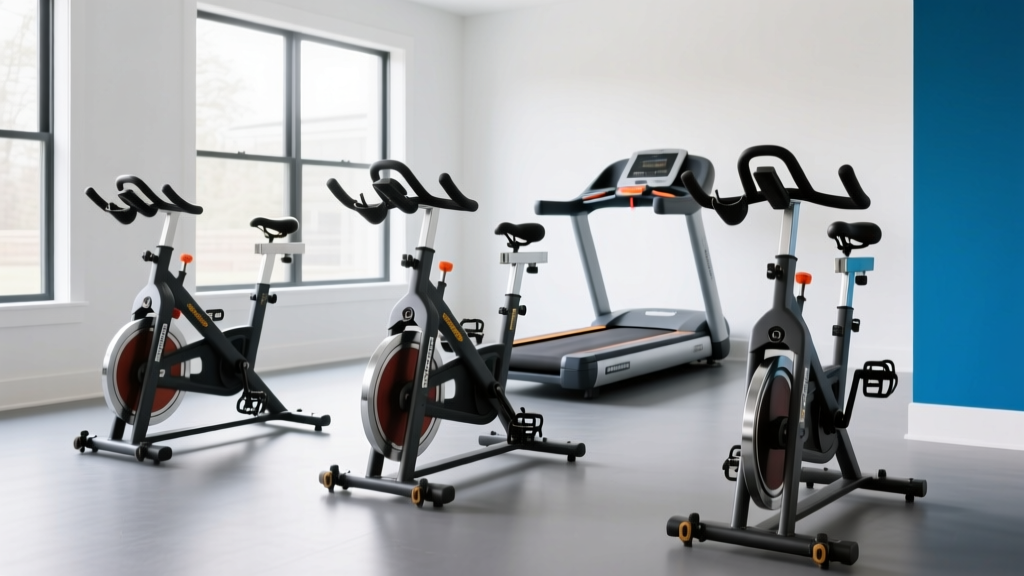
Stationary Bike Types Maintenance vs. 5 Incline on Treadmill Wear
Compare maintenance for stationary bike types (upright, recumbent, spin) against motor wear from a 5 incline on treadmill decks. Expert 2026 longevity tips.

The Biomechanical Wear Matrix: Bikes vs. Treadmills
Home gym enthusiasts frequently diversify their cardiovascular routines to prevent overuse injuries and maintain engagement. According to the American Council on Exercise (ACE), cross-training between different modalities is one of the most effective ways to sustain long-term cardiovascular health. However, alternating between the saddle and the running belt introduces a complex web of mechanical wear and tear. Understanding the distinct maintenance requirements of various stationary bike types compared to the mechanical stress of running at a 5 incline on treadmill machines is critical for maximizing equipment longevity and protecting your investment in 2026.
While a treadmill relies on high-friction belts and continuous-duty DC motors, stationary bikes utilize closed-loop drivetrains and magnetic resistance systems. This guide breaks down the specific maintenance protocols for upright, recumbent, and spin bikes, and contrasts them with the unique mechanical degradation caused by incline treadmill training.
Stationary Bike Types: Upright, Recumbent, and Spin Maintenance
Not all bikes are created equal. The mechanical architecture of your machine dictates its failure points and required maintenance intervals.
1. Spin Bikes (Indoor Cycling)
Modern indoor cycling bikes, such as the Schwinn IC4 or the Peloton Bike+, have largely abandoned friction pads in favor of electromagnetic or mechanical magnetic resistance. This eliminates the primary wear point of older models. However, the drivetrain remains a critical focus.
- Belt Drive Tension: Most premium 2026 spin bikes use Poly-V ribbed belts. Over 18 to 24 months of heavy use, these belts can stretch, resulting in a slipping sensation during high-cadence sprints. Checking belt deflection (it should yield about 1/2 inch of play when pressed midway between the crank and flywheel) is essential. Replacement belts cost between $40 and $65.
- Flywheel Bearings: Sweat drips directly onto the flywheel axle. If the bearing seals fail, moisture intrusion causes grinding. Wipe down the flywheel housing after every session with a diluted, non-corrosive cleaner.
2. Upright Bikes
Upright bikes, like the Sole B94, mimic traditional road bikes and feature adjustable seat posts and multi-grip handlebars.
⚠️ The Reverse-Threaded Pedal Trap: The most common catastrophic failure on upright bikes occurs during pedal replacement. The left-side pedal is reverse-threaded. Forcing it clockwise will strip the crank arm threads, requiring a $150+ crank replacement. Always remember: left pedals tighten counter-clockwise.- Seat Post Lubrication: The quick-release mechanisms on upright seat posts accumulate dust and oxidize. Apply a thin layer of white lithium grease to the seat post every six months to prevent it from seizing inside the frame tube.
- Console Ribbon Cables: Upright bikes often feature swiveling consoles. The internal ribbon cables can fray over time, leading to erratic heart rate monitor readings or dead screens.
3. Recumbent Bikes
Recumbent models, such as the NordicTrack Commercial R35, prioritize lumbar support and feature a step-through frame and a sliding seat rail.
- Seat Rail Rollers: The seat glides on aluminum or steel rails using nylon or steel ball-bearing rollers. Dust and pet hair wrap around these axles, causing the seat to jerk during pedaling. Vacuum the rail track weekly and apply a dry PTFE (Teflon) lubricant monthly. Avoid wet oils, which attract grit.
- Frame Weld Stress: Because recumbent bikes endure lateral torque when users push off the backrest during heavy resistance intervals, inspect the main crossbar welds near the pedal crank annually for micro-fractures.
The 5 Incline on Treadmill: Motor Stress and Deck Friction
While stationary bikes rely on human-powered momentum against magnetic drag, treadmills must actively pull the user's body weight against gravity. Setting a 5 incline on treadmill machines fundamentally alters the mechanical load on the system.
When you run at a 0% incline at 6.0 MPH, a standard 2.5 Continuous Horsepower (CHP) DC motor typically draws between 8 to 10 amps. However, maintaining a 5 incline on treadmill settings increases the amp draw by 15% to 25%. This sustained electrical resistance generates excess heat within the motor housing and the lower control board.
Deck Lubrication and Belt Degradation
The increased downward and backward force of running on an incline presses the running belt harder into the phenolic deck. This exponentially increases friction. If the deck is not properly lubricated with 100% pure silicone, the friction coefficient spikes, causing the motor to overwork, the belt to stretch, and the deck to develop permanent bald spots.
According to NHS fitness guidelines, varying your cardio intensity and incline is excellent for cardiovascular conditioning, but doing so on a poorly maintained treadmill deck will void your warranty and burn out a $400 motor in under a year.
Maintenance Cost & Interval Comparison Matrix
Use the table below to budget and schedule your 2026 home gym maintenance calendar.
| Machine Type | Primary Wear Point | Maintenance Interval | Avg. Repair/Part Cost |
|---|---|---|---|
| Spin Bike | Poly-V Drive Belt | Every 2-3 Years | $45 - $65 |
| Upright Bike | Pedal Threads / Crank | Annual Inspection | $15 - $150 (if stripped) |
| Recumbent Bike | Seat Rail Rollers | Monthly (PTFE Lube) | $12 (Lube) / $40 (Rollers) |
| Treadmill (Incline) | Deck / Belt Friction | Every 150 Miles | $15 (Silicone) / $250 (Belt) |
| Treadmill Motor | Heat / Amp Draw | Bi-Annual Dust Vacuum | $350 - $600 (Replacement) |
Sweat, Humidity, and Environmental Degradation
Human sweat is highly corrosive, with a pH level ranging from 4.5 to 7.0. When it dries on metal components, the salt crystals accelerate galvanic corrosion.
- Spin Bikes: The handlebar stems and seat post clamps are prime targets. If you do not wipe down your spin bike with a damp microfiber cloth after use, the aluminum will pit and oxidize, making height adjustments impossible within 14 months.
- Treadmills: Sweat drips onto the running belt and gets pulled under the deck, mixing with silicone lubricant to form an abrasive sludge. This sludge destroys the deck's phenolic coating. Always use a sweat guard or towel over the treadmill console and motor hood.
Expert Troubleshooting: Edge Cases and Failure Modes
The 'E1' Error Code on Incline Treadmills
If your treadmill throws an E1 or E2 error code specifically when you elevate to a 5 incline on treadmill workouts, the issue is rarely the motor itself. It is usually the incline potentiometer or the optical speed sensor. The increased vibration of incline running can shake the sensor out of alignment with the flywheel magnet. Realigning the sensor to sit exactly 2-3mm from the magnet usually resolves this without requiring a part replacement.
Spin Bike 'Clicking' at the Bottom of the Stroke
A rhythmic clicking sound on a spin bike at the 6 o'clock pedal position is rarely the bottom bracket. In 90% of cases, it is the cleat hardware on your cycling shoes. The metal bolts securing the cleats to the carbon or nylon sole loosen over time. Apply a drop of blue Loctite (threadlocker) to the cleat bolts to permanently silence this phantom drivetrain noise.
Pro-Tip for 2026 Equipment Care: Never use WD-40 on any home gym equipment. WD-40 is a solvent and water-displacer, not a long-term lubricant. It will strip existing factory grease from your recumbent bike seat rollers and treadmill incline gears, leading to metal-on-metal grinding within weeks. Always use dry PTFE for moving parts and 100% pure silicone for treadmill decks.
Final Thoughts on Cross-Training Equipment Care
Maintaining a multi-modal home gym requires understanding the unique physics of each machine. While the drivetrain of a spin bike demands occasional belt tensioning and sweat management, the sheer gravitational load of utilizing a 5 incline on treadmill machines places immense thermal and friction stress on motors and decks. By adhering to the specific maintenance intervals outlined above, you can easily extend the lifespan of your cardio fleet well past their standard 5-to-7-year warranties, ensuring your cross-training regimen remains uninterrupted for years to come.
More gear to consider
All reviews
Hamster Wheel Treadmill Noise: Curved vs Motorized Guide

NordicTrack T Series 7 Treadmill vs Portable Cardio: Value Analysis
Can You Lose Weight From Running on the Treadmill? 2026 Compact Guide

OWA Treadmill Review: Budget Folding Value for Small Spaces

Beyond the 12 3 30 Treadmill: Air Bike vs Assault Bike 2026
