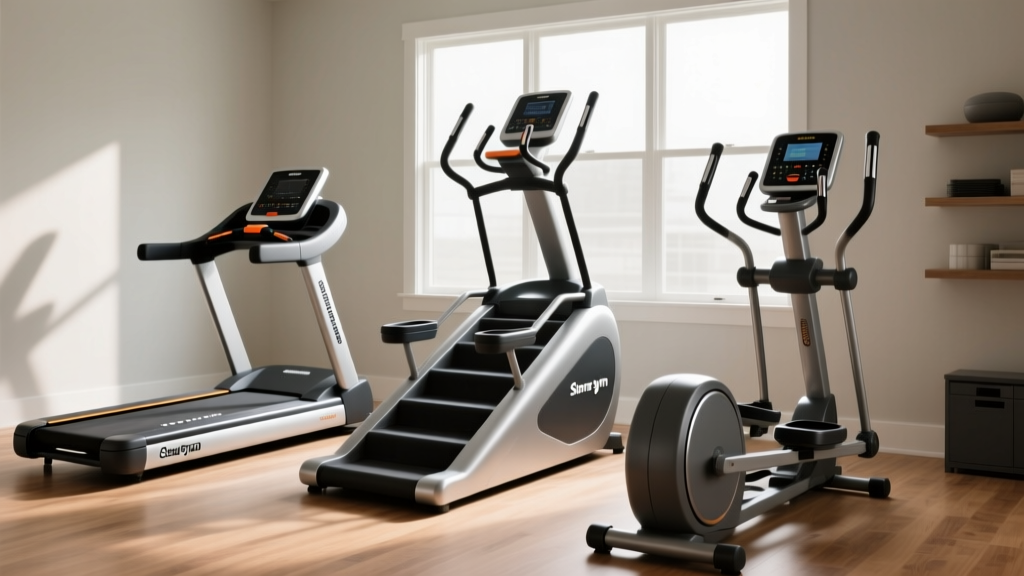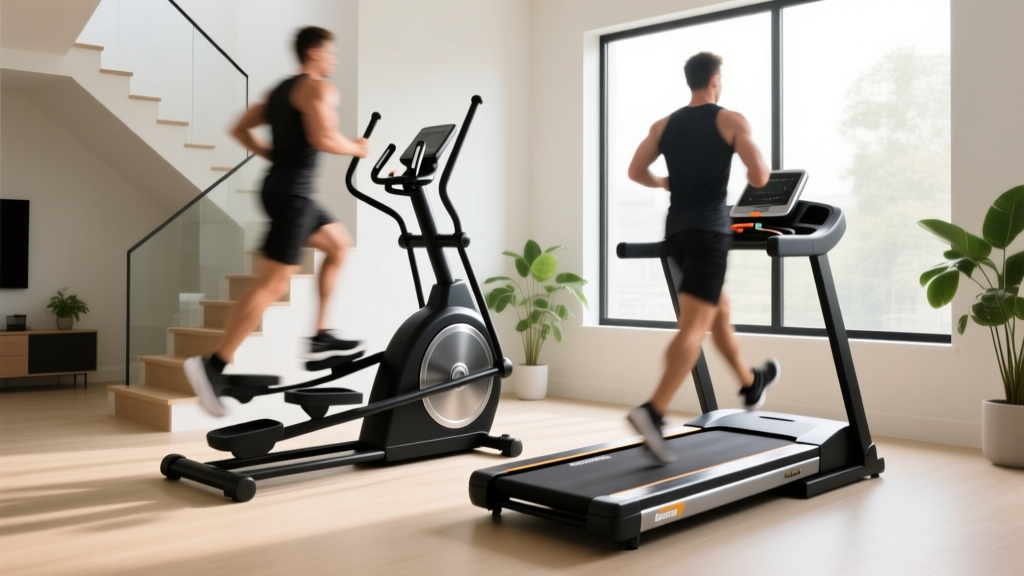
Stair Climber vs. Walk Treadmill 30 Minutes: Home Guide
Master your home stair climber with our beginner guide. Compare step rates, joint impact, and calorie burn against a walk treadmill 30 minutes routine.

Upgrading Your Home Cardio: Beyond the Basic Walk
When building a home gym, most beginners default to a familiar baseline: a standard walk treadmill 30 minutes routine. While walking is an excellent entry point for cardiovascular health, it often plateaus in terms of caloric expenditure and lower-body muscle engagement. Enter the home stair climber. In 2026, stair climbers have evolved from bulky, commercial-only monoliths into sleek, high-tech home fitness staples that deliver unmatched glute and hamstring activation.
This comprehensive, beginner-friendly guide will walk you through the biomechanics of stair climbing, help you choose the right machine for your space, and provide a step-by-step 30-day onboarding protocol to maximize your results without burning out.
Understanding the Machines: Steppers vs. StepMills
Before diving into routines, it is critical to understand that "stair climber" is an umbrella term for two distinctly different machines. Confusing them is the most common beginner purchasing mistake.
1. Pedal Steppers (Independent or Linked)
These machines feature two foot pedals that move up and down. They are generally more compact, quieter, and budget-friendly. High-end models like the Bowflex Max Trainer SE7 (retailing around $1,999) combine pedal stepping with upper-body resistance arms for a full-body interval experience.
2. StepMills (Revolving Staircases)
Often referred to by the trademarked name StairMaster, these feature a continuously revolving set of actual stairs. They demand greater balance, enforce a strict vertical step path, and closely mimic hiking or climbing real stairs. The StairMaster StepMill 5 remains a gold standard for home use, though it requires a significant financial investment (typically $2,500+) and substantial vertical clearance.
Stair Climber vs. Treadmill: The 30-Minute Data Breakdown
Why swap your treadmill walk for the stairs? The difference lies in the physics of vertical displacement. When you walk on a flat treadmill, you are primarily moving horizontally. On a stair climber, you are lifting your entire body weight against gravity with every single step.
| Metric | Stair Climber (Moderate Pace) | Treadmill Walk (3.5 mph, 0% Incline) |
|---|---|---|
| Calories Burned (155 lb person / 30 min) | ~260 - 310 kcal | ~130 - 150 kcal |
| Primary Muscle Engagement | Glutes, Hamstrings, Quads, Calves | Calves, Hip Flexors, Mild Quad |
| Joint Impact (Knees/Ankles) | Low (Continuous tension, no strike) | Low-Moderate (Heel strike impact) |
| Core Stabilization Demand | High (Requires upright balance) | Low (Predictable belt motion) |
As the data shows, a 30-minute session on a stair climber can yield nearly double the caloric output of a flat treadmill walk, making it a highly efficient choice for time-crunched home gym users.
Crucial Pre-Purchase Check: The Ceiling Height Trap
⚠️ WARNING: Measure Your Ceiling Clearance!The most frequent reason for home stair climber returns in 2026 is inadequate ceiling height. A StepMill elevates your standing height by 10 to 14 inches. If you are 6 feet tall (72 inches) and your machine adds 12 inches of step height, your total clearance requirement is 84 inches. If you have standard 8-foot ceilings (96 inches), you will have only 12 inches of headroom, which feels claustrophobic and dangerous during high-intensity intervals. Always add your height + 15 inches to ensure safe clearance.
Step-by-Step Beginner Routine: Your First 4 Weeks
Transitioning from a walk treadmill 30 minutes routine to a stair climber requires tendon adaptation and neuromuscular coordination. Follow this progressive overload schedule to build endurance safely.
Week 1: Neuromuscular Adaptation (Focus on Form)
- Frequency: 3 days per week.
- Duration: 10 to 15 minutes per session.
- Pace: 40-50 Steps Per Minute (SPM).
- Form Cue: Keep your chest up, eyes forward, and lightly rest your fingertips on the handrails for balance only. Do not grip tightly or lean your weight onto the console.
Week 2: Building the Aerobic Base
- Frequency: 3 to 4 days per week.
- Duration: 20 minutes per session.
- Pace: 55-65 SPM.
- Progression: Introduce the "skip-step" method for 30 seconds every 5 minutes to engage the gluteus maximus more deeply.
Week 3: Introducing Resistance and Intervals
- Frequency: 4 days per week.
- Duration: 25 minutes (5 min warm-up, 15 min intervals, 5 min cool-down).
- Interval Structure: 1 minute at 75 SPM (hard effort), followed by 2 minutes at 50 SPM (recovery).
Week 4: The 30-Minute Milestone
- Frequency: 4 days per week.
- Duration: 30 minutes continuous.
- Pace: Maintain a steady 60-70 SPM.
- Goal: Complete the full 30 minutes without supporting your body weight on the handrails.
Monitoring Intensity: Heart Rate Zones
To ensure you are training in the correct zone for fat oxidation and cardiovascular improvement, you must monitor your heart rate. According to the American Heart Association, your target heart rate for moderate-intensity cardio should be between 50% and 70% of your maximum heart rate (MHR).
Calculate your estimated MHR by subtracting your age from 220. For a 35-year-old beginner, the MHR is roughly 185 BPM. Therefore, the target zone for a steady-state stair climbing session would be between 92 BPM and 129 BPM. Utilize the pulse sensors on your machine's handrails or pair a Bluetooth chest strap (like the Polar H10) for clinical-grade accuracy.
Common Beginner Mistakes to Avoid
- The "Handrail Hang": Leaning heavily on the handrails reduces the caloric burn by up to 20% and shifts the biomechanical load away from your glutes, placing undue stress on your lower back. If you must hold on tightly, the step rate is too fast. Slow down.
- Shallow Stepping: Many beginners take half-steps, keeping the pedals close to the floor. Press the pedal all the way down to achieve a full range of motion, which is necessary to fully activate the hamstring and glute muscles.
- Ignoring the Cool-Down: Stopping abruptly after a high-resistance climb can cause blood to pool in the lower extremities, leading to dizziness. Always spend the last 3 to 5 minutes stepping at a very slow pace (30 SPM) to allow your heart rate to normalize.
Aligning with National Health Guidelines
The Centers for Disease Control and Prevention (CDC) recommends that adults get at least 150 minutes of moderate-intensity aerobic activity every week. By completing five 30-minute sessions on your home stair climber, you perfectly satisfy this weekly requirement while simultaneously building lower-body muscular endurance. This dual benefit—combining aerobic conditioning with resistance-like muscle engagement—is exactly why physical therapists and strength coaches frequently recommend stair climbers over traditional flat-surface walking for long-term joint health and functional fitness.
Final Thoughts on Your Home Gym Setup
Upgrading from a basic walk treadmill 30 minutes routine to a dedicated stair climbing protocol is one of the most effective decisions you can make for your home fitness journey in 2026. By respecting the learning curve, prioritizing strict upright form, and progressively increasing your step rate and duration, you will unlock superior cardiovascular health, enhanced lower-body power, and highly efficient calorie expenditure. Measure your ceiling, pick the right machine for your budget, and take that first step upward.
More gear to consider
All reviews
Horizon Fitness T101 Treadmill Review: 2026 Small Space Market Trend

Fitness Avenue FA 7966 Treadmill vs Under Desk Models: 2026 Review

0 Gravity Treadmill vs Under Desk Treadmill for Office Use Review

Space-Saving Layouts & An Exercise Routine For Treadmill Desks

Compact Portable Cardio & How to Adjust Belt on NordicTrack Treadmill