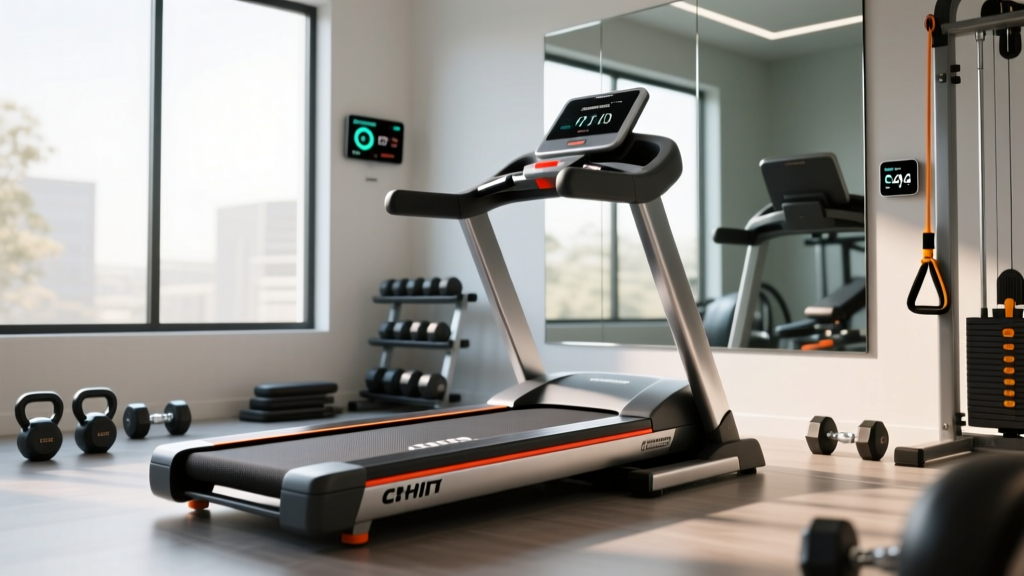
Stair Climber vs. Walking on Treadmill for an Hour: Home Gym Showdown
Compare a premium stair climber to incline walking on a treadmill for an hour. We analyze calorie burn, motor failure modes, and 2026 pricing.

The Core Debate: Stair Climber vs. Walking on Treadmill for an Hour
When building a home gym dedicated to steady-state cardiovascular health, buyers inevitably face a crossroads: should you invest in a vertical stair climber or a traditional incline treadmill? The specific routine of walking on treadmill for an hour has exploded in popularity, largely driven by fitness influencers advocating for low-impact, zone-2 cardio. However, stair climbers offer a uniquely dense muscular and cardiovascular stimulus in a fraction of the time. In this 2026 head-to-head guide, we are pitting the premium stair climber experience against the long-duration incline treadmill walk to determine which machine truly deserves your floor space, budget, and daily sweat.
Head-to-Head Product Matchup: Rogue Echo StepMill vs. Horizon 7.8
To ground this comparison in reality, we are evaluating two category leaders that represent the pinnacle of their respective designs for home use.
The Stair Climber Contender: Rogue Fitness Echo StepMill
Rogue disrupted the commercial stair climber market by bringing gym-grade durability to the home sector. The Echo StepMill (priced at approximately $3,495 in 2026) features an 8-inch step height, a heavy-duty steel frame, and a magnetic braking system that operates almost silently. It is designed for users who want the exact biomechanical feel of climbing a stadium staircase without the jarring impact of stepping down.
The Treadmill Contender: Horizon Fitness 7.8 Incline Treadmill
For the dedicated walker, the Horizon 7.8 (priced around $1,499) is a workhorse. It features a 3.5 CHP motor, a 15% power incline, and a 60-inch belt length. It is specifically engineered to handle long-duration, low-impact walking sessions, offering superior shock absorption via its Variable Response Cushioning system compared to the rigid steel steps of a climber.
Biomechanics, METs, and Caloric Expenditure
The most common question we receive is about caloric efficiency. To understand the difference, we must look at Metabolic Equivalent of Task (MET) values. According to comprehensive metabolic charts referenced by the Mayo Clinic's exercise and calorie expenditure guidelines, the energy cost of these two activities varies wildly based on intensity and incline.
| Activity Profile | MET Value | Calories Burned (180 lb person / 1 Hr) | Primary Muscle Recruitment |
|---|---|---|---|
| Walking on Treadmill (Flat, 3.0 mph) | 3.5 | ~285 kcal | Calves, Hamstrings, Core |
| Incline Walking on Treadmill (12% Incline, 3.0 mph) | 8.0 | ~650 kcal | Glutes, Quads, Achilles |
| Stair Climber (Moderate Pace, 60 steps/min) | 9.0 | ~735 kcal | Glutes, Quads, Hip Flexors |
| Stair Climber (Vigorous Pace, 90+ steps/min) | 12.0+ | ~980+ kcal | Full Lower Body, Cardiovascular |
The Takeaway: Walking on a treadmill for an hour on a flat surface is an excellent zone-2 recovery tool, but it cannot match the raw caloric and muscular output of a stair climber. However, once you introduce a 12% to 15% incline to the treadmill, the metabolic gap narrows significantly, though the stair climber still maintains a slight edge due to the constant vertical displacement of your entire body weight without the assistance of a moving belt.
The Hidden Danger: Treadmill Motor Failure Modes During Long Walks
⚠️ Expert Warning: The Slow-Walk Motor Burnout
Most consumers do not realize that walking on treadmill for an hour at a slow pace (e.g., 2.0 to 2.5 mph) is actually one of the most destructive things you can do to a sub-$2,000 treadmill motor. Why? Because the internal cooling fan on most DC treadmill motors is directly attached to the motor shaft. When you run at 7.0 mph, the fan spins rapidly, dissipating heat. When you walk slowly for an hour, the fan barely moves air, yet the continuous amperage draw from a 180 lb user walking on a high-friction belt generates massive thermal buildup. Over 6 to 12 months, this heat demagnetizes the motor's internal magnets or triggers repeated thermal shutdowns. Stair climbers completely bypass this thermal failure point by utilizing high-torque stepper motors designed specifically for high-load, low-RPM environments.
Spatial Constraints: Ceiling Height and Footprint Realities
Before purchasing either machine, you must measure your space. The spatial requirements for these two machines are drastically different, and ignoring them is the number one reason for home gym equipment returns.
- Stair Climber Footprint & Clearance: The Rogue Echo StepMill has a relatively compact footprint of 48" x 31". However, the critical metric is ceiling height. Because the user is elevated on the steps and actively moving vertically, a 6'0" user requires a minimum ceiling height of 8'4" to avoid head strikes during high-intensity climbs. If you have a basement gym with drop ceilings or standard 8-foot ceilings, a stair climber is likely a non-starter.
- Treadmill Footprint & Clearance: The Horizon 7.8 requires a massive footprint of 76" x 35", dominating the length of a room. However, because the user remains relatively close to the ground (even at a 15% incline, the deck raises only about 12 inches at the front), a standard 7'0" ceiling is perfectly adequate for almost all users.
Joint Impact and the American Heart Association Guidelines
The AHA recommends at least 150 minutes of moderate-intensity aerobic activity per week. Both machines can fulfill this requirement, but their impact on your joints differs vastly.
When walking on a treadmill for an hour, the impact is classified as low-impact, especially when utilizing modern elastomer cushioning systems. The primary risk factor for long-duration incline walking is Achilles tendonitis and plantar fasciitis, caused by the extreme dorsiflexion required when walking at a 15% grade for 60 consecutive minutes.
Conversely, stair climbers are often mistakenly labeled as "high impact." In reality, a true step-mill (where the stairs rotate down) is zero-impact because your foot never strikes a hard surface; you are simply placing your foot on a descending step. The true joint risk on a stair climber is patellofemoral pain syndrome (runner's knee) if the user relies entirely on their quads to push down rather than engaging their glutes and hamstrings to pull the step down. Proper form—keeping the chest up and driving through the heel—is mandatory for long-term joint health on a climber.
Maintenance Protocols: Belt Lubrication vs. Chain Tension
Home gym equipment requires upkeep, and the maintenance profiles of these two machines cater to different types of owners.
Treadmill Maintenance
If you commit to walking on a treadmill for an hour daily, you will accumulate roughly 150 miles a month. This requires you to apply 100% pure silicone treadmill lubricant under the belt every 4 to 6 weeks. Failure to do so increases the coefficient of friction between the belt and the deck, which directly exacerbates the motor overheating issue mentioned earlier. You must also regularly check the belt tracking to ensure it doesn't drift and fray against the side rails.
Stair Climber Maintenance
Stair climbers require less frequent but more mechanical maintenance. The primary concern is the internal drive chain or belt. Every 6 months, you should inspect the tension of the drive mechanism. Furthermore, the step pads themselves accumulate sweat and dust, which can create a severe slip hazard. Wiping down the steps with a non-slip, non-corrosive cleaner after every session is mandatory to preserve the grip texture of the pads.
Final Verdict: Which Machine Earns Your Floor Space?
Choosing between a stair climber and a treadmill ultimately comes down to your specific physiological goals, spatial limitations, and patience for maintenance.
Buy the Stair Climber (e.g., Rogue Echo) if:
- You want maximum caloric burn and glute/quad hypertrophy in under 30 minutes.
- You have high ceilings (8'4"+) and limited floor length.
- You want to avoid the motor burnout risks associated with slow, long-duration treadmill walking.
Buy the Incline Treadmill (e.g., Horizon 7.8) if:
- Your primary goal is strictly Zone-2 cardiovascular base building through the specific practice of walking on a treadmill for an hour or more.
- You have standard 8-foot ceilings but ample horizontal floor space.
- You prefer the ability to multitask (watching a screen, reading, or doing upper-body movements) while performing steady-state cardio, which is significantly easier on a treadmill than on a moving staircase.
Both machines are exceptional tools for home fitness in 2026. By understanding the hidden mechanical limitations and true metabolic outputs of each, you can invest in the machine that aligns perfectly with your daily routine and home environment.
More gear to consider
All reviews
Air Bike vs Assault Bike Guide + NordicTrack C1250 Treadmill Review

Elliptical vs Treadmill: Why Your Treadmill Trips Circuit Breaker

Curved vs Motorized Treadmills: Treadmill Animation & Biomechanics

ProForm 750 CS Treadmill Belt Maintenance in Tight Spaces
Using Incline on Treadmill to Lose Weight: Curved vs Motorized