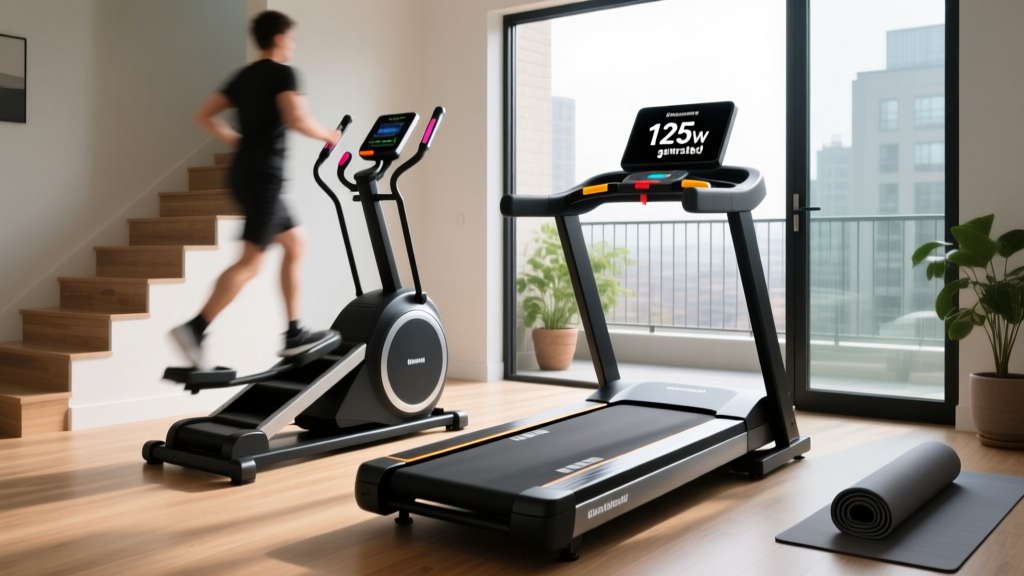
Home Stair Climber vs Treadmill That Produces Electricity
Beginner guide to home stair climbers vs. a treadmill that produces electricity. Compare costs, space, and step-by-step setup for 2026.

When building a home gym in 2026, fitness enthusiasts are increasingly torn between maximizing workout efficiency and adopting sustainable, eco-friendly technology. On one side, we have the traditional, high-calorie-burning stair climber machine for home use. On the other, the emerging trend of the eco-gym: specifically, a treadmill that produces electricity to offset your home's power grid.
If you are a beginner trying to decide between these two vastly different approaches to indoor cardio, this step-by-step guide will walk you through the biomechanics, spatial requirements, costs, and setup protocols for both. Whether you want to build glute strength or lower your carbon footprint, we have the exact specifications you need to make an informed purchase.
Step 1: Understand the Machines and the Technology
Before measuring your floors, you must understand what these machines actually do and the engineering behind them.
The Home Stair Climber
Stair climbers simulate the biomechanics of ascending stairs, engaging the glutes, hamstrings, quadriceps, and calves. According to the Cleveland Clinic, stair climbing is a highly efficient weight-bearing exercise that improves bone density and cardiovascular health simultaneously.
- Premium Pick: Bowflex Max Trainer M9 (approx. $2,299). This hybrid elliptical-stair climber features a 10-inch stride and 20 levels of magnetic resistance.
- Budget Pick: Sunny Health & Fitness SF-E3912 (approx. $249). A manual magnetic stepper with a 13-inch step height and resistance bands.
The Niche Alternative: A Treadmill That Produces Electricity
When researching a treadmill that produces electricity, you will quickly find that this is not a standard consumer item you can pick up at a big-box sporting goods store. The gold standard in this space is the SportsArt ECO-POWR Verde.
Using patented micro-inverter technology, the Verde captures the kinetic energy generated by your walking or running and converts it into utility-grade electricity. A single user can generate up to 200 watts of power, which is fed directly back into your home's electrical grid via a standard wall outlet. However, this technology comes with a premium commercial-grade price tag, typically starting around $4,500 to $6,000 for home installation.
💡 Information Gain: The Reality of Eco-PowerWhile generating 200 watts sounds impressive, it equates to roughly 0.2 kilowatt-hours (kWh) per hour of running. At the 2026 national average electricity rate of $0.17 per kWh, an hour of running offsets about $0.034. The true value of a treadmill that produces electricity is environmental impact and grid-offsetting, not immediate financial ROI.
Step 2: Space, Clearance, and Electrical Requirements
One of the most common beginner mistakes is purchasing a cardio machine without calculating vertical clearance and electrical load.
Calculating Ceiling Clearance
Stair climbers require significant overhead space because your body elevates with each step.
- Measure your height. (e.g., 70 inches)
- Add the machine's step height. (e.g., Bowflex Max Trainer adds roughly 15 inches at peak stride; traditional steppers add 8-10 inches).
- Add a 12-inch safety buffer for arm movement and ventilation.
Example: A 6-foot-tall user (72") on a machine with a 15" peak elevation needs a minimum ceiling height of 99" (8 feet, 3 inches). If you have standard 8-foot (96") ceilings, a high-stride stair climber will result in head strikes.
Evaluating Electrical Infrastructure
Standard stair climbers and motorized treadmills require a dedicated 120V, 15-amp circuit to prevent tripping breakers during peak motor draw. Conversely, a treadmill that produces electricity like the SportsArt Verde requires a specialized setup. You must plug it into an outlet connected to a grid-tied inverter system. If your home uses older wiring or off-grid solar setups without grid-tie capabilities, the electricity-generating feature will not function properly.
Step 3: Comparison Matrix
Use this data table to compare the physical and financial footprint of both machine types.
| Feature | Bowflex Max Trainer M9 (Stair Climber Hybrid) | SportsArt Verde (Eco-Treadmill) |
|---|---|---|
| Average MSRP | $2,299 | $4,500 - $6,000 |
| Footprint (L x W) | 47" x 30" | 70" x 35" |
| Power Dynamic | Consumes ~1.5 Amps | Generates up to 200 Watts |
| Min. Ceiling Height (6' User) | 8' 3" | 7' 0" |
| Primary Muscle Focus | Glutes, Quads, Calves | Full Lower Body, Core |
Step 4: Proper Setup and Safety Calibration
Once your machine arrives, follow this beginner-friendly setup protocol to ensure longevity and safety.
Setup Checklist
- Flooring: Never place heavy cardio machines directly on hardwood or carpet. Purchase a 3/8-inch thick, high-density EVA foam equipment mat (approx. $40-$60). This absorbs vibrational noise and prevents sweat corrosion on your subfloor.
- Leveling: Use a standard carpenter's level across the machine's base. Adjust the threaded leveling feet at the rear of the machine until the bubble is perfectly centered. An unlevel stair climber will cause uneven bearing wear and pedal wobble within 6 months.
- Tension Test: For manual magnetic steppers, test the resistance band tension. Ensure the carabiners are locked and the latex bands show no micro-tears before your first workout.
Step 5: Your 4-Week Beginner Stair Climbing Protocol
Stair climbing is a high-intensity, high-MET (Metabolic Equivalent of Task) activity. Stair climbing registers at roughly 9.0 METs, compared to just 3.5 METs for brisk walking. Therefore, beginners must ease in to avoid patellar tendonitis and severe delayed onset muscle soreness (DOMS).
- Week 1 (Acclimation): 10 minutes total. Alternate 2 minutes of stepping at 40 Steps Per Minute (SPM) with 1 minute of active rest (standing still, holding rails lightly). Focus on pushing through the heel to activate the glutes, rather than staying on your toes.
- Week 2 (Endurance Building): 15 minutes total. Maintain a steady 50 SPM. Remove your hands from the handrails to force core engagement and improve posture.
- Week 3 (Interval Introduction): 20 minutes total. 1 minute at 70 SPM (high intensity) followed by 2 minutes at 40 SPM (recovery).
- Week 4 (The Benchmark): 25 minutes continuous climbing at 55 SPM. Track your total floors climbed to establish a baseline for future progressive overload.
Expert Insight: "The most common failure mode for beginners on stair climbers is 'leaning.' If you are supporting more than 10% of your body weight on the handrails, you are effectively reducing the caloric burn by up to 30% and altering your spinal alignment. Keep your chest up and hands free."
Maintenance and Edge Cases
Cardio machines require routine maintenance to prevent catastrophic failure.
- Stair Climber Drive Belts: Every 6 months, inspect the internal drive belt (requires removing the side shroud). If you see fraying or black dust accumulating near the pulley, the belt tension needs adjustment via the rear tensioner bolt.
- Eco-Treadmill Inverters: If you own a treadmill that produces electricity, the micro-inverter requires adequate airflow. Ensure the rear motor hood is vacuumed monthly to prevent dust buildup, which can cause the inverter to overheat and trip its internal thermal safety switch.
Frequently Asked Questions
Can I modify my existing treadmill to produce electricity?
While DIY enthusiasts have attempted to wire alternators and DC motors to standard treadmills to create a makeshift treadmill that produces electricity, it is highly discouraged. Standard treadmill motors are not designed for regenerative braking, and feeding unregulated, fluctuating DC voltage into your home's AC grid without a certified grid-tied inverter is a severe fire hazard and violates local electrical codes.
Are stair climbers bad for your knees?
When used correctly, stair climbers are generally knee-friendly because they are low-impact (there is no foot-strike shock like in running). However, if you have pre-existing patellofemoral pain syndrome, the deep knee flexion required at the bottom of the pedal stroke can aggravate the joint. In such edge cases, a recumbent bike or an elliptical with a flatter stride path is recommended.
Which machine burns more calories?
A stair climber will generally burn more calories per minute than walking on an eco-treadmill due to the vertical displacement of your body weight against gravity. A 180 lb individual can expect to burn roughly 400-500 calories in 30 minutes on a stair climber, compared to 250-300 calories walking at a 3.5 mph pace on a treadmill.
More gear to consider
All reviews
Under Desk Treadmill Review: ProForm Treadmill Motor vs Walking Pads
Space Planning: Stationary Bike Types vs ProForm Pro 2500 Treadmill

Treadmill Sunny Health and Fitness Belt Maintenance Value Guide

Pesticide Treadmill Definition: Fixing Toxic Belt Care

Star Trac Treadmill Models & Cardio Noise: Beginner Comparison Guide
