
Stair Climber vs Treadmill Brisk Walk: 2026 Home Guide
Compare top 2026 stair climbers against the 12% incline treadmill brisk walk. Expert biomechanics, pricing, and home gym footprint analysis.

The Great Cardio Debate: Vertical Steps vs. Incline Strides
The home fitness landscape in 2026 has shifted heavily toward verticality and low-impact, high-yield cardiovascular training. As home gym owners look to maximize caloric expenditure without destroying their joints, a common dilemma emerges: Should you invest in a dedicated stair climber machine, or is a 12% to 15% incline treadmill brisk walk just as effective? Both modalities offer exceptional cardiovascular benefits, but their biomechanical demands, spatial footprints, and equipment failure modes differ drastically.
This guide cuts through the marketing noise. We will conduct a head-to-head product comparison of the top stair climbers for home use this year, and then benchmark their physiological and practical outputs directly against the increasingly popular treadmill brisk walk. Whether you are outfitting a compact apartment gym or a dedicated basement fitness studio, understanding these nuances is critical for your long-term joint health and equipment ROI.
Head-to-Head: Top 2026 Stair Climbers for Home Use
Not all stepping machines are created equal. The market is currently segmented into three distinct categories: hybrid magnetic steppers, budget hydraulic mini-steppers, and recumbent cross-trainers. Here is how the top models stack up.
1. Bowflex Max Trainer M9 (The Hybrid Powerhouse)
Price: $2,299 | Footprint: 49" L x 30.5" W | Resistance: 20 levels of magnetic resistance
The Bowflex Max Trainer M9 remains a dominant force in the hybrid stepper/climber market. Unlike traditional stairmills that use a rotating staircase, the M9 utilizes a fixed elliptical-stepper path combined with upper-body push/pull levers. This design allows for a massive caloric burn in a fraction of the space.
- Pros: Exceptional space efficiency; the Max Intelligence app provides highly adaptive, real-time resistance adjustments; near-silent magnetic braking system.
- Cons: The fixed, shorter stride length (approx. 11" vertical travel) can cause hip flexor fatigue for users over 6'2"; premium price point.
2. Sunny Health & Fitness SF-S3911 (The Budget Hydraulic Option)
Price: $89 | Footprint: 16" L x 12.5" W | Max User Weight: 220 lbs
For renters or those testing the waters with vertical cardio, the Sunny SF-S3911 mini-stepper is the undisputed budget king. It relies on dual hydraulic cylinders to provide resistance and includes attached resistance bands for upper-body engagement.
- Pros: Unbeatable price; can be stored under a bed or in a closet; zero electrical requirements.
- Cons: Critical Failure Mode: Hydraulic cylinders suffer from fluid heat degradation. Sustained use beyond 35-45 minutes causes the hydraulic fluid to thin, resulting in a sudden loss of tension and potential cylinder seal blowout.
3. StairMaster Freestep LT3 (The Recumbent Joint-Saver)
Price: $1,599 | Footprint: 65" L x 26" W | Resistance: 24 levels
The Freestep LT3 bridges the gap between a recumbent bike and a stair climber. By positioning the user in a seated, reclined posture, it entirely removes axial loading from the lumbar spine while still targeting the glutes, quads, and calves.
- Pros: Zero impact on the patellofemoral joint; excellent for rehabilitation or users with lower back pathologies; smooth, momentum-driven flywheel.
- Cons: Lower core engagement compared to standing climbers; heavy and difficult to relocate once assembled.
Biomechanics & Burn: Stair Climber vs. Treadmill Brisk Walk
To make an informed purchasing decision, we must compare the physiological output of these dedicated machines against a standard 12% to 15% incline treadmill brisk walk. According to data on metabolic equivalents (METs) and joint kinetics, the differences are highly specific to your biomechanical profile.
| Modality | MET Value | Caloric Burn (155lb user / 30 min) | Primary Joint Stress | Ceiling Clearance Required |
|---|---|---|---|---|
| Stair Climber (Standard) | 9.0 | ~315 kcal | Patellofemoral compression (knees) | User Height + 15" |
| 12% Incline Treadmill Brisk Walk (3.5 mph) | 8.5 | ~295 kcal | Achilles tendon & plantar fascia strain | Standard (8 ft) |
| 15% Incline Treadmill Brisk Walk (3.0 mph) | 9.5 | ~330 kcal | Hip flexors & lumbar shear | Standard (8 ft) |
As highlighted by Harvard Health Publishing, the caloric expenditure between a vigorous stair climber session and a steep treadmill brisk walk is remarkably similar. However, the type of muscle recruitment differs. Stair climbing demands concentric glute and quad activation with every step, whereas an incline treadmill brisk walk relies heavily on the posterior chain (calves, hamstrings, and glutes) to pull the body upward against gravity.
Expert Insight: If you suffer from Achilles tendinopathy or plantar fasciitis, avoid the steep treadmill brisk walk. The extreme ankle dorsiflexion required at a 15% grade will exacerbate the condition. Opt for a recumbent stepper like the StairMaster Freestep LT3 instead.Real-World Edge Cases & Equipment Failure Modes
When outfitting a home gym in 2026, you must look beyond the spec sheet. Equipment failure modes and spatial limitations often dictate which machine actually gets used.
The Ceiling Height Trap
The most common mistake home gym owners make with stair climbers is ignoring vertical clearance. Because your body elevates with each step, you must add at least 15 to 20 inches to your total height to determine the minimum ceiling requirement. If you are 6'0" and have standard 8-foot ceilings, a traditional StepMill will result in you hitting your head at the peak of your stride. In this scenario, a treadmill brisk walk on an incline is vastly superior, as your head remains at a static vertical level.
Treadmill Incline Motor Burnout
While a treadmill brisk walk is biomechanically excellent, it is brutal on entry-level hardware. Many sub-$1,000 treadmills advertise a "15% incline," but their internal incline motors and lifting gears are not rated for sustained loads at maximum elevation. Running or walking at a 15% grade for 45+ minutes generates immense heat in the incline actuator, frequently leading to stripped plastic gears or motor capacitor failure. If your primary goal is daily, high-incline walking, you must invest in a treadmill with a commercial-grade steel lifting actuator, or pivot to a magnetic stair climber which uses eddy-current resistance rather than a physical lifting motor.
Hydraulic Cavitation in Mini-Steppers
As mentioned with the Sunny SF-S3911, budget hydraulic steppers are strictly for short, high-intensity interval sessions (15-20 minutes). Pushing them into steady-state cardio territory causes the hydraulic fluid to cavitate and overheat, permanently ruining the resistance profile. For endurance cardio, magnetic resistance is non-negotiable.
The Verdict: Designing Your 2026 Home Gym
Choosing between a stair climber and an incline treadmill ultimately comes down to your ceiling height, joint health, and budget.
"Consistency is the ultimate driver of cardiovascular health. The best machine is the one that accommodates your specific orthopedic limitations and fits seamlessly into your physical space." — Mayo Clinic Fitness Guidelines
Buy a Stair Climber If:
- You have low ceilings (under 8 feet) but high floorspace, making a recumbent stepper like the Freestep LT3 ideal.
- You want to isolate the quads and glutes without the ankle mobility demands of a steep incline.
- You have the budget ($2,000+) for a magnetic hybrid like the Bowflex M9, ensuring silent operation and zero motor burnout.
Stick to the Treadmill Brisk Walk If:
- You prefer a natural, functional gait pattern that translates directly to outdoor hiking and walking.
- You have standard 8-foot ceilings and want to avoid the "head-bump" anxiety of vertical steppers.
- You are willing to invest in a premium treadmill (>$1,500) with a heavy-duty incline actuator capable of handling daily 12-15% grade loads without thermal throttling.
Both modalities are exceptional tools for cardiovascular conditioning and metabolic health. By matching the machine's biomechanical profile to your body's specific needs, you will secure a piece of equipment that delivers results for years to come.
More gear to consider
All reviews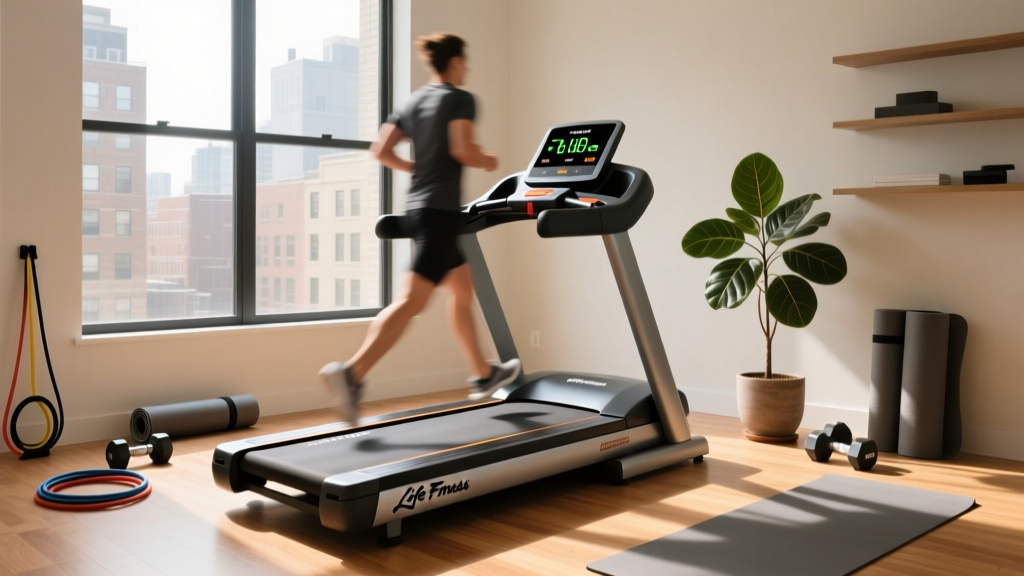
How to Turn On Life Fitness Treadmill vs Portable Cardio Trends

YPOO Treadmill Motor Size Guide: HP vs CHP Explained

Rowing Guide & Technique: ProForm Carbon TL Treadmill vs Rowers
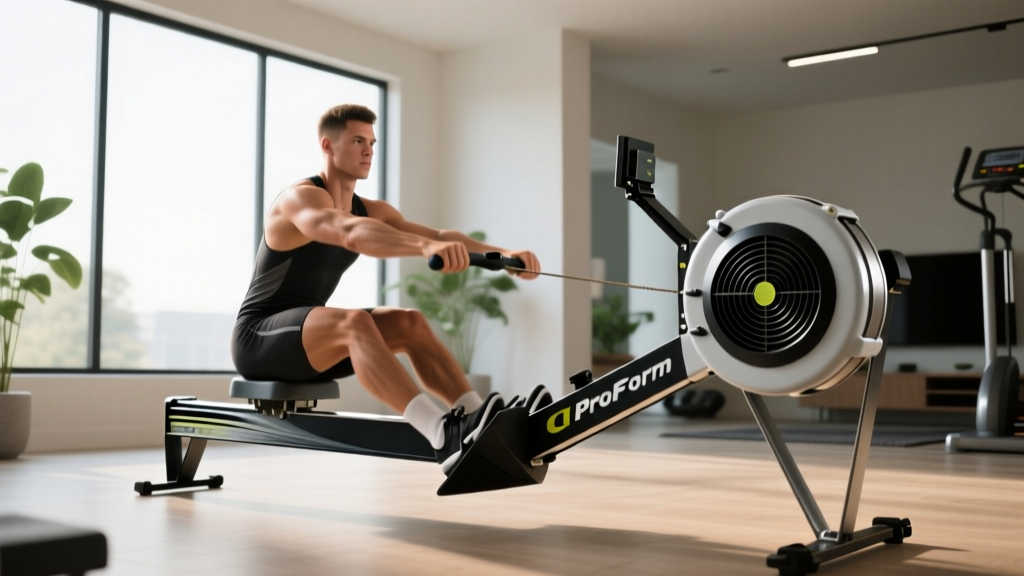
Rowing Buying Guide & Technique: ProForm Carbon T7 Treadmill Reviews

Spirit 685 Treadmill Setup & Motor Horsepower Guide
