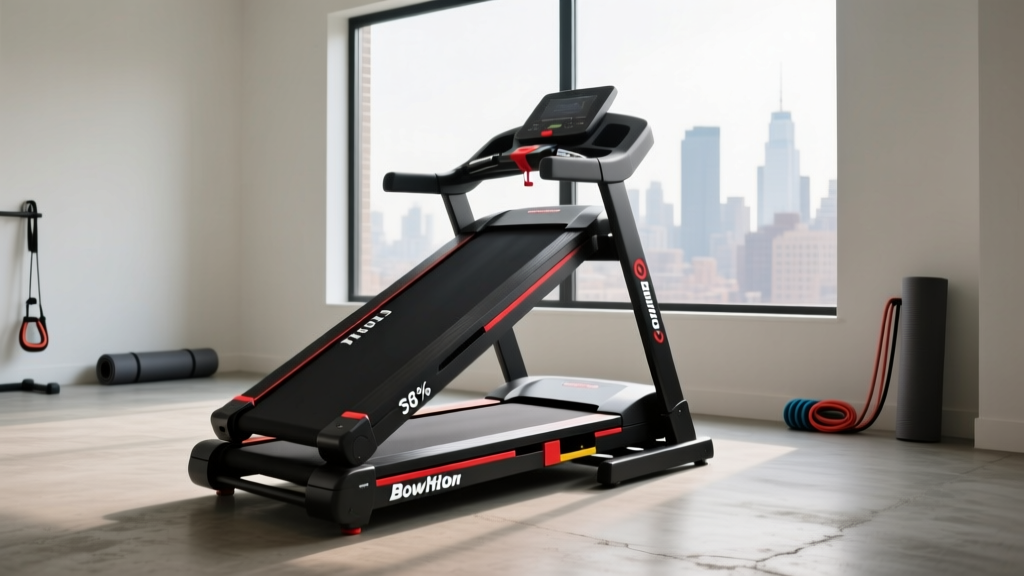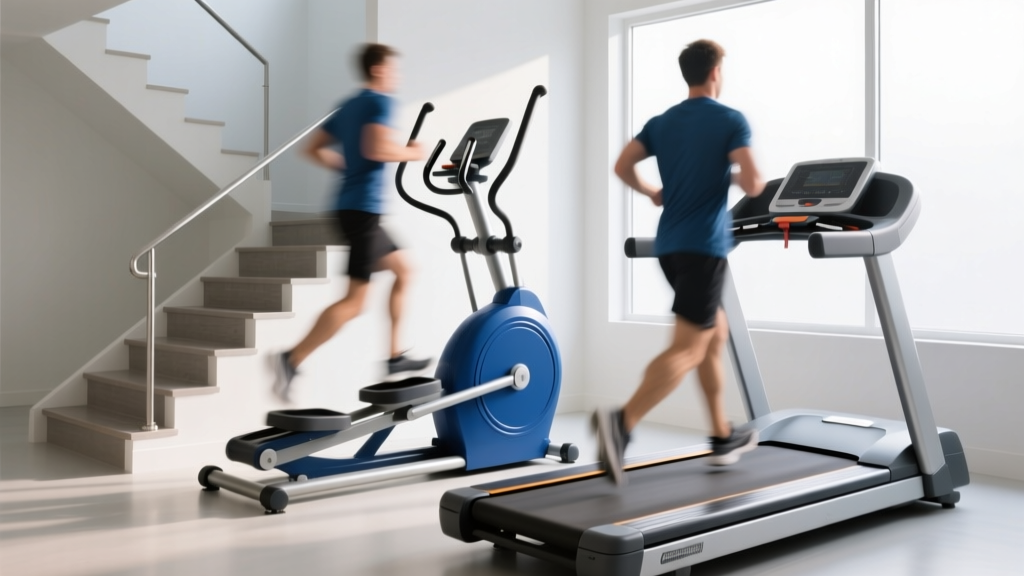
Stair Climber vs Treadmill Belt: Home Fitness Guide
Compare the biomechanics, maintenance, and joint impact of a stair climber's pedal track against a traditional treadmill belt in our home cardio guide.

The 2026 Home Cardio Dilemma: Vertical Climb vs. Horizontal Run
When outfitting a home gym in 2026, buyers are frequently torn between two dominant cardio modalities: the vertical ascent of a stair climber and the horizontal stride of a traditional treadmill. While both machines elevate heart rate and improve cardiovascular health, their mechanical operations, spatial requirements, and long-term maintenance profiles are vastly different. The core of this debate often centers on the user's interaction with the machine's primary moving surface—specifically, the independent pedal articulation of a stair climber versus the continuous, motorized loop of a treadmill belt.
This head-to-head product comparison and buyer's guide will dissect the biomechanics, maintenance realities, and flagship model specifications of both machines. Whether you are managing joint hypermobility or trying to maximize caloric burn in a compact footprint, understanding the engineering differences between a stair climber track and a treadmill belt is critical for making a smart, long-term investment.
Joint Kinetics: Pedal Articulation vs. Treadmill Belt Impact
The most significant differentiator between these two machines is Ground Reaction Force (GRF). When running or jogging, the body must absorb the impact of each footstrike. According to biomechanical data highlighted by the American Council on Exercise (ACE), running on a standard surface generates a GRF of roughly 2.5 times your body weight. While modern treadmill manufacturers utilize elastomer cushioning systems beneath the treadmill belt to reduce this shock by 15% to 30%, the repetitive eccentric loading on the knees and ankles remains a primary failure point for runners with pre-existing joint issues.
Conversely, stair climbers operate on a closed-chain kinetic movement pattern. Because your foot never leaves the pedal, the impact force is virtually eliminated, reducing GRF to approximately 1.2 times body weight. Furthermore, the biomechanical demand shifts heavily toward concentric muscle contractions, heavily targeting the gluteus maximus, quadriceps, and calves without the deceleration forces associated with a moving treadmill belt.
'For patients managing patellofemoral pain syndrome or early-stage osteoarthritis, the zero-impact nature of a stair climber provides a superior cardiovascular stimulus without the repetitive micro-trauma caused by the footstrike on a treadmill belt.' — Sports Medicine & Biomechanics Review
Head-to-Head Product Comparison: 2026 Flagship Models
To understand how these machines perform in a real-world home environment, we are pitting the industry-leading stair climbers against a premium treadmill. Below is a direct comparison of the StairMaster Gauntlet, the Bowflex Max Trainer M9, and the NordicTrack Commercial 2450 Treadmill.
| Feature | StairMaster Gauntlet (Home) | Bowflex Max Trainer M9 | NordicTrack 2450 (Treadmill) |
|---|---|---|---|
| Primary Mechanism | Rotating 8-inch step pedals | Eddy-current magnetic pedals | 20' x 60' motorized treadmill belt |
| 2026 Retail Price | $3,499 | $2,299 | $2,799 |
| Footprint (L x W) | 54' x 30' | 49' x 30' | 79' x 35' |
| Ceiling Clearance | Requires 8' minimum | Requires 7.5' minimum | Standard 8' (no step-up height) |
| Power Draw | 15A Dedicated Circuit | Standard 120V Outlet | 15A/20A Dedicated Circuit |
| Max User Weight | 300 lbs | 300 lbs | 300 lbs |
Analysis of the Moving Surfaces
The StairMaster Gauntlet utilizes a heavy-duty chain-driven sprocket system that pulls physical steps downward. The user must actively lift their foot to advance to the next step, mimicking a real staircase. The Bowflex M9 uses a stationary pedal with a magnetic resistance flywheel, which is quieter but lacks the authentic spatial stepping motion. The NordicTrack 2450 relies on a 4.0 CHP motor pulling a 2-ply, commercial-grade treadmill belt. While the treadmill offers superior versatility for walking, jogging, and sprinting, the sheer length of the treadmill belt demands a significantly larger dedicated floor space.
The Maintenance Showdown: Magnetic Resistance vs. Belt Lubrication
One of the most overlooked factors in home gym purchasing is long-term maintenance. The mechanical complexity of a motorized treadmill belt requires strict adherence to a maintenance schedule, whereas stair climbers require less frequent, but more mechanical, interventions.
⚠️ Critical Treadmill Belt Warning
Never use WD-40 or petroleum-based lubricants on your treadmill belt. Petroleum degrades the rubber and will permanently ruin the MDF deck beneath it. Only use 100% silicone-based liquid lubricant designed specifically for fitness equipment.
Treadmill Maintenance Realities
- Lubrication Cycle: A standard treadmill belt must be lubricated with 100% silicone every 130 miles or every 3 months. Failure to do so increases friction, which draws excess amperage and can burn out the drive motor or control board.
- Tension Adjustments: Over time, the belt will stretch. If the belt slips during heavy footstrikes, you must use an Allen wrench to turn the rear roller adjustment bolts exactly 1/4 turn clockwise on both sides to re-tension the track.
- Deck Warping: If the belt is run dry, the friction generates immense heat, leading to delamination and warping of the wooden deck, a $300+ replacement part.
Stair Climber Maintenance Realities
- Pivot Point Greasing: Stair climbers rely on heavy-duty pivot bearings connecting the pedal arms to the frame. These require lithium grease application every 6 months to prevent squeaking and metal-on-metal wear.
- Chain and Sprocket Care: For rotating step models like the Gauntlet, the internal drive chain must be inspected for slack and lubricated with dry PTFE chain lube annually.
- Pedal Grip Tape: The abrasive grip tape on stair climber pedals wears down after 2 to 3 years of heavy use and requires peeling and replacement to prevent foot slippage.
Spatial and Electrical Constraints in the Home
Before purchasing, you must evaluate your room's physical and electrical infrastructure. The Centers for Disease Control and Prevention (CDC) recommends consistent, accessible environments to maintain long-term exercise adherence. If your machine is difficult to access or causes electrical tripping, adherence drops significantly.
Electrical Requirements: Premium treadmills with large motors and incline mechanisms draw massive initial surge currents. Plugging a NordicTrack 2450 into a shared bedroom circuit alongside a space heater or air conditioner will almost certainly trip the breaker. A dedicated 15A or 20A circuit is mandatory. Stair climbers, particularly magnetic resistance models like the Bowflex, draw significantly less amperage and can usually share a standard household circuit.
Ceiling Clearance: Because a stair climber elevates the user's base stance by 10 to 14 inches, you must add this step-up height to the user's total height. A 6-foot-tall user on a StairMaster requires a ceiling height of at least 8 feet to prevent head strikes during high-intensity intervals. Treadmills only raise the user by 2 to 4 inches, making them safer for basement gyms with low drop-ceilings.
Final Verdict: Which Machine Wins for Your Home?
The choice between a stair climber and a treadmill ultimately depends on your biomechanical needs, spatial constraints, and willingness to perform routine maintenance. According to cardiovascular guidelines published by the American Heart Association, the best machine is the one that allows you to safely achieve 150 minutes of moderate-intensity aerobic activity per week without pain or mechanical frustration.
Choose the Stair Climber If:
- You suffer from knee, hip, or lower back pain and need a zero-impact, closed-chain cardio alternative.
- Your primary fitness goal is glute and quad hypertrophy combined with cardiovascular conditioning.
- You want to avoid the recurring maintenance of treadmill belt lubrication, tensioning, and deck replacement.
- You have a compact floor footprint but adequate ceiling height.
Choose the Treadmill If:
- You are training for outdoor road races (5K, half-marathon) and need to replicate the specific biomechanics of forward momentum and footstrike.
- You prefer walking or light jogging while consuming media, as the moving treadmill belt provides a more natural upper-body sway than the rigid posture required on a stair climber.
- You have a low basement ceiling that precludes the use of elevated step machines.
- You have access to a dedicated 20-amp electrical circuit to safely support a heavy-duty drive motor.
By weighing the mechanical reality of the treadmill belt against the articulated pedals of a climber, you can confidently select the 2026 cardio machine that aligns with your physiological goals and home infrastructure.
More gear to consider
All reviews
How to Fix a Treadmill: Maintenance & Feature Comparison
Ladder Treadmill Setup Guide & Cardio Machine Noise Comparison

Rowing Machine Guide: Technique Errors vs. Underwater Treadmills
Centr Runr Treadmill Review & Space-Saving Bike Layouts

Elliptical vs Treadmill Care: Gold's Gym 430i Treadmill Reviews