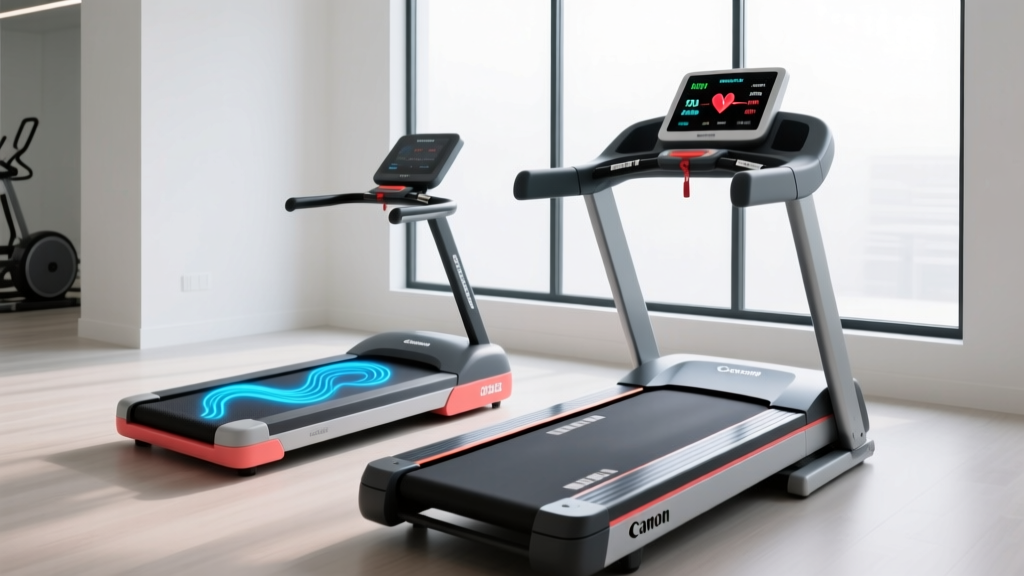
Stair Climber vs ProForm 750 Treadmill: Home Guide
Compare the best home stair climbers with the ProForm 750 treadmill. Discover which cardio machine fits your space, budget, and fitness goals in 2026.

The 2026 Home Cardio Paradigm Shift
For over a decade, the entry-level treadmill has been the undisputed anchor of the home gym. The ProForm 750 treadmill, with its accessible price point and straightforward horizontal walking mechanics, represents the quintessential budget-friendly cardio staple. However, as we navigate the fitness landscape of 2026, a massive shift toward vertical conditioning has occurred. Home gym owners are increasingly trading belt-driven treadmills for the intense, glute-focused burn of stair climbers.
But is a stair climber actually the right upgrade for your specific space, budget, and biomechanics? This in-depth buying guide and comparison matrix breaks down the real-world differences between traditional incline walking on a machine like the ProForm 750 treadmill and the vertical demands of modern home stair climbers. We will examine exact spatial requirements, maintenance realities, and physiological outcomes to help you make an informed investment.
The Biomechanical Divide: Horizontal vs. Vertical
Choosing between a treadmill and a stair climber is not just about calorie burn; it is about joint loading and muscle activation patterns. According to the American Council on Exercise (ACE), the angle of your movement dictates which muscle groups bear the brunt of the metabolic demand.
Muscle Activation and Joint Loading
The ProForm 750 treadmill features a maximum incline of 10%. While walking at a 10% grade significantly increases caloric expenditure compared to flat walking, it remains a predominantly quad- and calf-dominant movement with a heel-strike impact phase. Conversely, a true stair climber forces continuous hip extension. This movement pattern heavily recruits the gluteus maximus and hamstrings while entirely eliminating the heel-strike deceleration phase, making it a lower-impact option for the knees despite the higher muscular fatigue.
Furthermore, research highlighted by the Centers for Disease Control and Prevention (CDC) emphasizes the importance of vigorous-intensity aerobic activity for cardiovascular health. A stair climber naturally pushes users into Zone 3 and Zone 4 heart rate territories within minutes, whereas achieving those same zones on an entry-level treadmill often requires speed-walking at steep inclines, which can cause shin splints or Achilles strain over time.
2026 Equipment Matrix: Stair Climbers vs. The ProForm 750
To understand the market, we must compare the traditional budget treadmill against the three main categories of home stair climbers: the mini-stepper, the magnetic resistance climber, and the commercial-style rotating staircase. Below is a head-to-head specification breakdown.
| Feature / Spec | ProForm 750 Treadmill | Bowflex Max Trainer M9 | StairMaster SC5i (Home) |
|---|---|---|---|
| Machine Type | Motorized Belt Treadmill | Magnetic Stepper/Elliptical | Rotating Staircase |
| Approx. MSRP (2026) | $549 - $699 | $1,999 | $3,499+ |
| Footprint (L x W) | 68" x 28" | 49" x 30.5" | 55" x 29" |
| Max User Weight | 300 lbs | 300 lbs | 375 lbs |
| Min. Ceiling Req. | Standard (User Height + 6") | User Height + 15" | User Height + 18" |
| Power Source | 120V Wall Outlet | 120V Wall Outlet | 120V Dedicated Circuit |
The Spatial Reality Check: Footprints and Ceilings
The most common point of failure when purchasing a home stair climber is ignoring spatial geometry. While the ProForm 750 treadmill requires a longer floor footprint (roughly 5.5 feet in length) to accommodate a 55-inch running deck, its vertical profile is relatively low. You can easily place a budget treadmill in a basement with a 7-foot ceiling.
Stair climbers, however, introduce the vertical clearance problem. When you step up on a rotating staircase or a high-resistance magnetic climber, your body is elevated off the ground by the height of the machine's base (usually 8 to 12 inches). Add your own height, plus the natural upward bobbing motion of your stride, and you have a recipe for a head-strike.
⚠ The Ceiling Clearance Formula
Before ordering any stair climber, use this formula: User Height + Machine Step-Up Height (avg. 10") + Stride Bobbing Clearance (8") = Minimum Ceiling Height.
Example: A 6'0" (72") user needs at least 90 inches (7'6") of ceiling clearance to use a StairMaster SC5i comfortably without psychological claustrophobia or physical danger. If your home gym is in a standard 8-foot basement, a rotating staircase is likely a non-starter, making a low-profile treadmill or a mini-stepper the only viable options.
Maintenance Realities: Belts vs. Internal Drives
Every piece of cardio equipment demands maintenance, but the type of maintenance varies wildly between horizontal and vertical machines. Understanding these edge cases will save you hundreds of dollars in repair fees down the line.
Treadmill Belt Care (The ProForm 750 Profile)
The ProForm 750 treadmill relies on a friction-based belt system. The primary maintenance requirement is silicone lubrication. The Mayo Clinic and physical therapy experts frequently note that poorly maintained fitness gear can alter user biomechanics, leading to injury. If a treadmill belt dries out, friction increases, which forces the 2.25 CHP motor to draw excess amperage. This leads to overheated control boards and snapped drive belts. You must manually lift the belt and apply 100% silicone lubricant every 3 months or every 150 miles.
Stair Climber Drive Systems
True rotating stair climbers (like the StairMaster line) use internal chains, sprockets, and alternators. They do not require belt lubrication, but they do require chain tensioning and grease application every 6 to 12 months. If a chain stretches and skips a tooth on the drive sprocket, the stairs can suddenly lock or drop, creating a severe fall hazard. Magnetic resistance climbers (like the Bowflex Max series) are virtually maintenance-free regarding the drive system, as they use eddy-current magnetic braking with no physical friction parts, though their cooling fans and console electronics remain potential failure points.
Software and Ecosystems: iFIT vs. JRNY
In 2026, the hardware is only half the equation. The ProForm 750 treadmill is heavily integrated with the iFIT ecosystem. iFIT excels at global GPS mapping and instructor-led scenic walks, automatically adjusting the treadmill's 0-10% incline to match real-world terrain. This is highly engaging for users who suffer from treadmill boredom.
Conversely, high-end stair climbers often utilize platforms like JRNY (Bowflex) or proprietary commercial OS (StairMaster). These platforms focus less on scenic routes and more on biometric tracking, heart-rate zone gamification, and high-intensity interval training (HIIT) protocols. If your goal is steady-state Zone 2 cardio while watching a tablet, the ProForm 750 treadmill's horizontal walking mechanic is far more conducive to reading or multitasking than the intense, balance-demanding nature of a stair climber.
The Final Decision Framework
Do not buy based on trends; buy based on your architectural constraints and physiological goals. Use this framework to finalize your 2026 cardio purchase:
- Choose the ProForm 750 Treadmill if: You have low ceilings (under 8 feet), you are recovering from lower-back or hip-flexor issues that make high-step climbing painful, you prefer steady-state Zone 2 walking while consuming media, or your budget is strictly under $800.
- Choose a Magnetic Stair Climber (e.g., Bowflex Max M9) if: You have limited floor space (under 15 square feet), you want high-intensity glute and hamstring activation without the joint impact of running, and you prefer a maintenance-free magnetic drive system.
- Choose a Rotating Staircase (e.g., StairMaster SC5i) if: You have a dedicated room with 9-foot ceilings, a budget exceeding $3,000, and a primary goal of athletic conditioning, vertical power generation, and maximum caloric expenditure per minute.
Summary
The ProForm 750 treadmill remains a highly capable, budget-conscious tool for horizontal endurance and daily step-count goals. However, if your home gym's ceiling height permits, transitioning to a stair climber offers unparalleled lower-body muscular endurance and cardiovascular efficiency. Evaluate your spatial geometry, commit to the required maintenance schedule, and select the machine that aligns with your long-term biomechanical health.
More gear to consider
All reviews
Folding Treadmill Review: Top Heart Rate Monitor for Treadmill Tech
Pro Form Crosswalk Treadmill Belt Maintenance & Care Guide

Air Bike vs Assault Bike Comparison & E 07 Treadmill Care

TR3000i Treadmill vs Under Desk Models: Office Use & Care
Your First Treadmill Speed Workout: Feature Guide