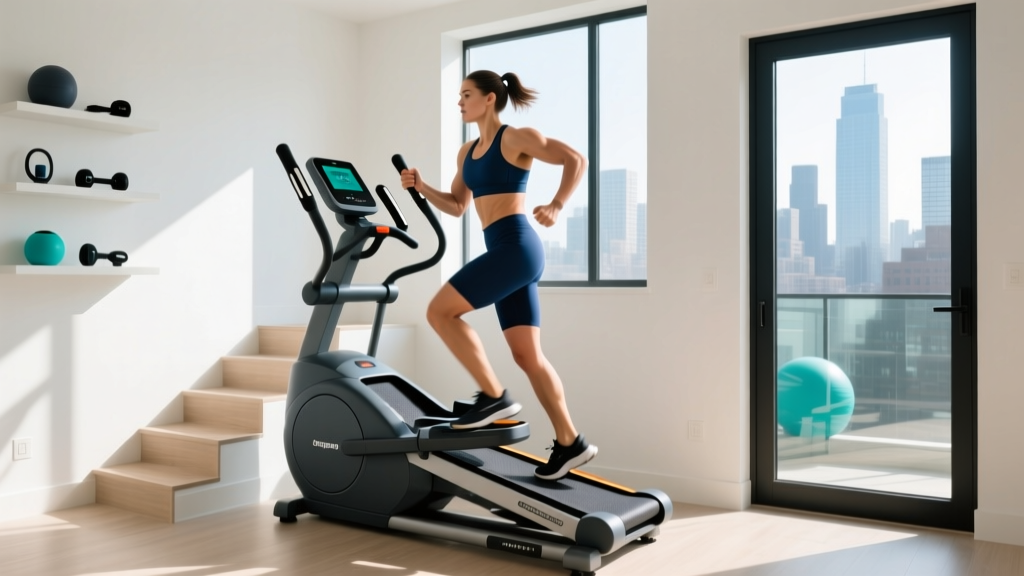
Home Stair Climber Guide: Cadence R 5.2 Treadmill Alternative
Discover the best home stair climbers for 2026. We compare vertical climbers to the Cadence R 5.2 treadmill for space, calorie burn, and joint health.

The Vertical Shift: Rethinking Home Cardio in 2026
When outfitting a home gym, the default choice for decades has been the treadmill. Budget-conscious buyers often gravitate toward compact, magnetic-resistance models like the Cadence R 5.2 treadmill, which offers a quiet, space-saving solution for daily walking and light jogging. However, as fitness science evolves and home real estate becomes more precious, a massive shift toward vertical cardio has taken over the industry. Stair climbers and vertical stepping machines are no longer just commercial gym staples; they are the premier choice for high-yield, low-impact cardiovascular conditioning.
This in-depth buying guide explores the best stair climbers for home use in 2026, breaks down the biomechanical advantages of vertical stepping, and provides a direct, no-nonsense comparison against the popular Cadence R 5.2 treadmill to help you make the most informed equipment investment possible.
Expert Insight: The Metabolic Multiplier
Vertical movement forces your body to work against gravity with every single step. According to the American Heart Association, incorporating vigorous-intensity aerobic activity is crucial for cardiovascular health. Stair climbing elevates your heart rate into the vigorous zone up to 40% faster than horizontal walking at the same perceived exertion level, making it a superior tool for time-efficient metabolic conditioning.
Top Home Stair Climbers: 2026 Market Breakdown
The home stair climber market is currently segmented into three distinct tiers: manual magnetic steppers, alternating vertical climbers, and commercial-grade stepmills. Below is a comparison of the top-performing models available this year.
| Model | Type | Price (2026) | Footprint | Max User Weight |
|---|---|---|---|---|
| Bowflex Max Trainer M9 | Alternating Climber | $1,999 | 49' L x 30' W | 300 lbs |
| Sunny Health SF-E3881 | Manual Magnetic Stepper | $349 | 27' L x 18' W | 250 lbs |
| NordicTrack FS14i | FreeStride Climber | $2,499 | 58' L x 29' W | 375 lbs |
| XTERRA Fitness FS1.5 | Elliptical Stepper | $799 | 54' L x 25' W | 250 lbs |
Head-to-Head: Stair Climber vs. Cadence R 5.2 Treadmill
To understand why a homeowner might upgrade from or choose a stair climber over a budget treadmill, we must look at the specific engineering and physiological differences. The Cadence R 5.2 treadmill is a highly popular entry-level machine. It relies on magnetic resistance rather than a high-horsepower motor, making it exceptionally quiet and affordable (typically ranging from $350 to $420). However, it operates strictly on a horizontal plane with a fixed, relatively short stride length.
1. Muscle Activation and Joint Loading
When using the Cadence R 5.2 treadmill, the primary movers are the calves, hamstrings, and hip flexors, with moderate quad engagement. Because it is a magnetic model, the belt can sometimes exhibit slight friction stuttering if the user's stride overpowers the magnetic flywheel, which can cause minor repetitive stress on the Achilles tendon over long sessions.
Conversely, a stair climber forces the user into a continuous state of hip extension. According to biomechanical analyses referenced by the Mayo Clinic, low-impact, weight-bearing exercises that target the gluteus maximus and quadriceps are essential for maintaining bone density and functional mobility as we age. Stair climbers isolate the glutes and quads with up to 65% more activation than flat treadmill walking, while the smooth, guided pedals eliminate the heel-strike impact associated with treadmills.
2. The Space Equation: Footprint vs. Vertical Clearance
This is where the Cadence R 5.2 treadmill traditionally wins for apartment dwellers. The R 5.2 has a compact footprint and can often be folded or slid under a bed. A stair climber, however, demands vertical real estate.
The Golden Rule of Stair Climber Installation: Never measure just the floor space. You must calculate ceiling clearance. Take the user's height, add the maximum pedal elevation of the machine (usually 12 to 15 inches), and add a 6-inch safety buffer. If you are 6'0' tall, you need a ceiling height of at least 7'9' to use a vertical climber safely without head-strike anxiety.
Drive Systems and Real-World Failure Modes
When investing in cardio equipment, understanding how the machine generates resistance will dictate its lifespan. Here is what you need to know about the internal mechanics of modern stair climbers compared to budget magnetic treadmills.
- Magnetic Resistance (Found in Cadence R 5.2 & Budget Steppers): Uses a magnet positioned near a metal flywheel. Failure Mode: The tension cable connecting the resistance dial to the magnet bracket frequently snaps or stretches after 18-24 months of heavy use, resulting in a machine stuck on a single resistance level.
- Alternator/Generator Drives (Found in Bowflex & NordicTrack): The user's kinetic energy powers an internal generator, creating electromagnetic resistance. Failure Mode: Control board overheating. If placed in a room without adequate airflow or direct sunlight, the PCB (Printed Circuit Board) can fail, requiring a $250+ replacement part.
- Friction Belt Drives (Older/Cheaper Steppers): Uses a physical brake pad on a flywheel. Failure Mode: The belt glazes over time, leading to a slipping sensation and a high-pitched squealing noise that requires manual sanding or belt replacement.
Who Should Buy What? The 2026 Decision Framework
Choosing between a stair climber and a horizontal treadmill like the Cadence R 5.2 ultimately comes down to your specific physiological goals and spatial constraints.
Choose a Stair Climber If:
- Your primary goal is glute hypertrophy and lower-body endurance.
- You suffer from plantar fasciitis or shin splints and need zero heel-strike impact.
- You want to achieve a target heart rate of 140+ BPM in under 5 minutes.
- You have ceilings higher than 8 feet.
Stick with the Cadence R 5.2 If:
- You are strictly focused on Zone 2 steady-state walking while working at a standing desk.
- Your ceiling clearance is under 7'5'.
- You are on a strict sub-$400 budget.
- You prefer the biomechanics of a natural walking gait over a fixed vertical stepping motion.
Frequently Asked Questions
Can a stair climber replace strength training for legs?
No. While a stair climber provides excellent muscular endurance and stimulates the glutes and quads, it does not provide the progressive overload necessary for maximal strength gains. It should be paired with traditional squats and deadlifts for a complete lower-body regimen.
Is the Cadence R 5.2 treadmill motorized?
The Cadence R 5.2 is generally known as a manual or magnetic-resistance treadmill, meaning the belt is driven by the user's foot strike rather than an electric motor. This makes it highly energy-efficient and quiet, but it requires the user to maintain momentum, which can alter natural walking biomechanics compared to motorized alternatives.
How do I maintain the rails on a vertical climber?
The vertical guide rails on machines like the Bowflex Max series require monthly maintenance. Wipe them down with a microfiber cloth and apply a 100% silicone-based lubricant. Never use WD-40 or petroleum-based oils, as these will attract dust, degrade the nylon carriage wheels, and cause the machine to jerk during high-intensity intervals.
More gear to consider
All reviews
ProForm iFIT Treadmill Belt Maintenance: Cost & Value Breakdown

Compact Cardio: Post-Treadmill Stress Test Echocardiogram Layouts

Echelon Stride Sport Treadmill: 2026 Compact Cardio Market Trends
Troubleshoot Noise: A Good Treadmill Workout to Lose Weight at Home

2026 Techno Treadmill Showdown: Myrun vs. Skillrun
