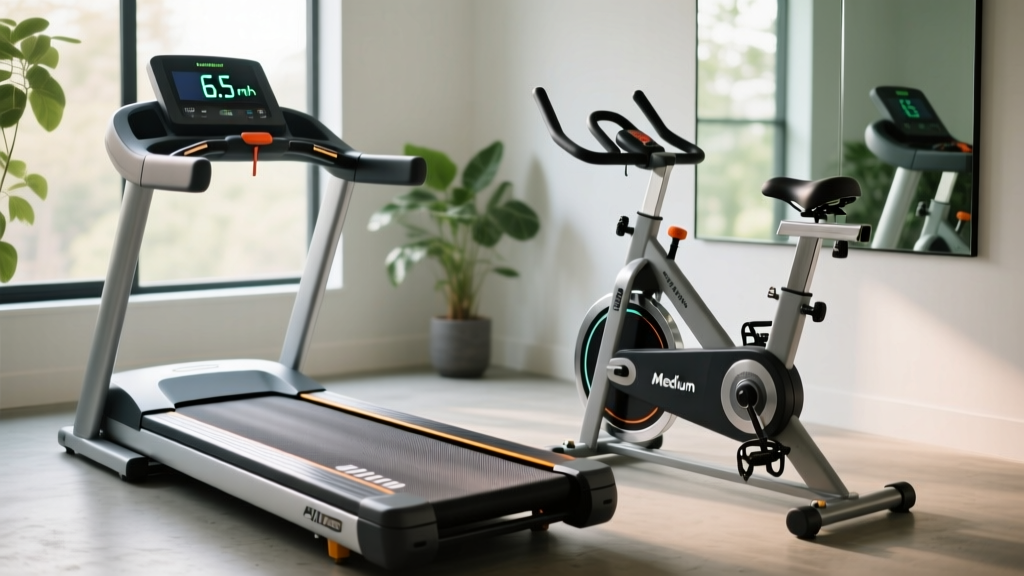
Sole Treadmill F80 vs F85 Setup: Curved vs Motorized Installation
Master your home gym installation. We compare the setup of motorized units like the Sole F80 vs F85 against curved manual treadmills.

The Reality of Heavy Cardio Equipment Delivery and Setup
Designing a home gym in 2026 requires more than just measuring floor space; it demands a rigorous understanding of structural loads, electrical circuits, and mechanical calibration. When buyers debate the merits of a curved manual treadmill vs motorized treadmill, the conversation almost exclusively revolves around biomechanics and joint impact. However, as installation specialists, we know the real battle is won or lost during the unboxing and setup phase. Getting a 300-pound machine into your basement and ensuring it operates without destroying your flooring or tripping your breakers is a complex logistical challenge.
This complete setup and installation walkthrough breaks down the physical and electrical requirements of heavy-duty motorized units—specifically analyzing the Sole treadmill F80 vs F85—against the unique structural demands of curved manual treadmills. Whether you are dealing with the high-torque startup of a 4.0 CHP motor or the dead-weight leveling of a slat-belt curve, this guide provides the exact specifications, tools, and troubleshooting frameworks you need.
Motorized Installation Walkthrough: Sole Treadmill F80 vs F85
When evaluating the Sole treadmill F80 vs F85 for your space, the installation footprint and electrical draw are your primary hurdles. Both are exceptional, heavy-duty folding treadmills, but their internal architectures dictate vastly different setup protocols.
Electrical Requirements and Circuit Allocation
The most common installation failure mode for motorized treadmills is improper circuit allocation. According to the National Fire Protection Association (NFPA) guidelines for residential electrical loads, high-draw fitness equipment requires dedicated circuits to prevent voltage drops that can fry control boards.
- Sole F80 (3.5 CHP Motor): Requires a standard 15-amp dedicated circuit (NEMA 5-15R). The assembled weight is approximately 262 lbs. While it can technically share a circuit with low-draw devices, a dedicated line prevents the E1 (speed sensor) or E2 (voltage) error codes caused by micro-fluctuations when a refrigerator compressor kicks on in the same room.
- Sole F85 (4.0 CHP Motor): Demands a 20-amp dedicated circuit (NEMA 5-20R). The F85 weighs in at a massive 310 lbs. The 20-amp receptacle features a unique prong configuration (one blade turned 90 degrees). Never use a cheater plug or adapter to force an F85 into a 15-amp outlet. The startup surge of the 4.0 CHP motor will instantly trip a 15-amp breaker and poses a severe fire hazard.
Physical Assembly and Wiring Harness Risks
Unboxing the F85 requires two people and a minimum of 120 minutes. The critical failure point during the upright assembly is the console wiring harness. The F85 features a larger, heavier 10.1-inch console and thicker uprights. When bolting the uprights to the deck frame, you must use a magnetic parts tray to secure the M10 hex bolts. Pinching the delicate data cable between the steel upright and the frame bracket will result in a dead console upon first power-up, requiring a complete teardown to replace the harness.
The Curved Manual Alternative: Setup Without the Spark
Transitioning to the other side of the curved manual treadmill vs motorized treadmill debate, curved units like the TrueForm Trainer or AssaultRunner Elite eliminate the electrical headache entirely. There is no outlet required, no surge protector to buy, and no motor to calibrate. However, the physical setup is arguably more brutal due to the sheer dead-weight and the precision required for the slat-belt tracking system.
Dead-Weight Logistics and Slat Belt Tensioning
A premium curved manual treadmill weighs between 330 lbs and 350 lbs. Unlike a motorized treadmill where the belt is driven by a front roller, a curved treadmill relies on a gravity-assisted slat belt running on dozens of sealed ball bearings. During assembly, the rear axle must be tensioned perfectly.
- Initial Alignment: Place the chassis on a perfectly level surface before tightening the rear axle bolts.
- Torque Specifications: Use a calibrated torque wrench. Over-tensioning the belt creates excessive friction, making the treadmill feel like you are running in wet sand and causing premature bearing burnout. Under-tensioning allows the belt to slip laterally during explosive sprints.
- The Spin Test: Spin the belt by hand. It should rotate smoothly and coast for at least 4 to 5 seconds. If it stops abruptly, the tension is too high or the guide wheels are misaligned.
Head-to-Head Installation Matrix
Below is a comparative breakdown of the spatial, electrical, and assembly requirements for these distinct cardio machines, based on current manufacturer specifications from Sole Fitness and industry standards.
| Metric | Sole F80 (Motorized) | Sole F85 (Motorized) | Curved Manual (e.g., TrueForm) |
|---|---|---|---|
| Assembled Weight | 262 lbs | 310 lbs | 330+ lbs |
| Electrical Requirement | 15-Amp Dedicated | 20-Amp Dedicated | None |
| Floor Leveling Tolerance | 1/2 inch over 6 feet | 1/2 inch over 6 feet | 1/4 inch over 6 feet (Critical) |
| Assembly Time (2 People) | 90 Minutes | 120 Minutes | 60 Minutes |
| Primary Setup Tool Needed | Allen Wrenches, Socket Set | Allen Wrenches, Socket Set | Torque Wrench, Machinist Level |
Step-by-Step Floor Protection and Structural Loading
According to fitness facility guidelines outlined by the American Council on Exercise (ACE), protecting your subfloor and managing acoustic vibration is non-negotiable for heavy cardio equipment. The dynamic load of a 200-pound runner on a 300-pound treadmill creates impact forces exceeding 1,000 pounds per square inch upon foot strike.
Selecting the Right Equipment Mat
Do not use cheap PVC foam puzzle mats. They will compress permanently under the static weight of the F85 or a curved treadmill, leading to an unlevel machine. You must invest in a high-density vulcanized rubber mat that is at least 3/8-inch (9.5mm) thick. This provides the necessary shock absorption to prevent the machine's leveling feet from punching through into drywall or softwood subfloors.
Shimming and Leveling Protocol
Curved manual treadmills are hyper-sensitive to floor gradients. If your floor slopes more than 1/4 inch over a 6-foot span, the slat belt will naturally drift toward the lower side, grinding against the chassis frame. Pro-Tip: Use a 4-foot machinist level across the running surface. If the bubble is off-center, use heavy-duty composite shims under the treadmill's adjustable leveling feet. Never use cardboard or wood, as these will compress and rot from sweat drippings over time.
Post-Installation Calibration and Failure Modes
Once the machine is assembled, plugged in (if motorized), and leveled, the final step is dynamic calibration. This is where you identify edge-case failure modes before your first intense workout.
"The first five minutes on a newly installed treadmill should never be a sprint. It is a diagnostic window. Listen for the rhythmic thumping of a misaligned belt, the high-pitched whine of dry rollers, or the clicking of a loose drive motor hood."
Motorized Belt Tracking and Tension
For the Sole F80 and F85, run the belt at 3.0 MPH without stepping on it. Observe the rear roller. If the belt drifts left, tighten the left rear adjustment bolt by exactly one-quarter turn. If it drifts right, tighten the right. Never adjust both sides simultaneously unless you are re-tensioning a slipping belt. To test for slip, step on the belt at 2.0 MPH and stomp firmly. If the belt stops but the front roller keeps spinning, increase the tension on both sides by one-quarter turn.
Curved Treadmill Bearing Break-In
Curved treadmills require a 2-hour break-in period for the sealed ball bearings and the rubber slat guides. During your first few runs, you may hear a slight squeaking. This is normal as the factory-applied silicone lubricant distributes across the guide track. If the squeaking persists after 10 miles of use, apply a 100% pure silicone treadmill lubricant specifically designed for slat-belt tracks—never use WD-40 or petroleum-based oils, which will degrade the rubber compounds and void your warranty.
Ultimately, choosing between a curved manual treadmill vs motorized treadmill extends far beyond the workout experience. By understanding the distinct electrical demands of the Sole F85, the spatial realities of the F80, and the rigorous leveling tolerances of a curved manual unit, you ensure your 2026 home gym is built on a foundation of safety, precision, and long-term durability.
More gear to consider
All reviews
Elliptical vs Treadmill: Do You Need an LA Fitness Treadmill?

Curved vs Motorized: Top Treadmill Exercises for Abs

Evolution Treadmill vs Stationary Bikes: Upright, Recumbent, Spin
Rowing Machine Guide: Technique vs Walking Barefoot on Treadmill

Cardio Treadmill Workouts: 2026 Belt Maintenance & Lubrication Guide