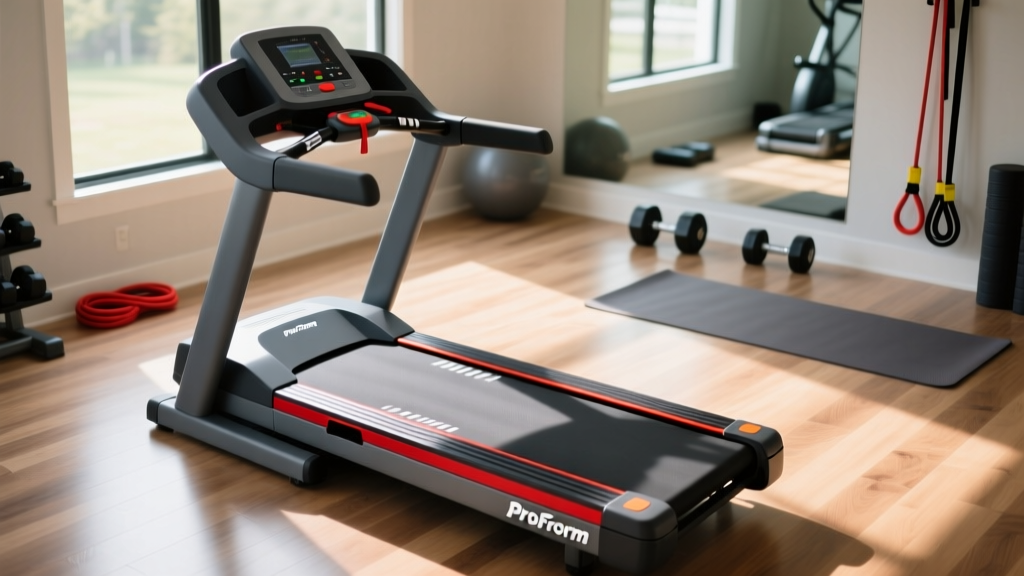
ProForm Treadmill Maintenance & Cardio Noise Level Comparison
Compare cardio machine noise levels and master ProForm treadmill maintenance to keep your home gym quiet. Expert data, decibel charts, and buying tips.

The Decibel Dashboard: Cardio Machine Noise Level Comparison
When designing a home gym in 2026, acoustic impact is just as critical as the equipment's physical footprint. Whether you live in a multi-story apartment or share a home with light sleepers, understanding the baseline noise output of different cardio machines is essential. Noise in fitness equipment generally falls into two categories: airborne noise (motor hum, wind resistance, fan blades) and impact noise (structural vibration transferred through the floor). According to the World Health Organization's Guidelines for Community Noise, continuous indoor noise levels should ideally remain below 45 decibels (dB) to prevent sleep disturbance and cognitive interference.
Below is a comprehensive comparison of average operational noise levels across the most popular home cardio machines, measured at a standard 3-foot distance during moderate-intensity use.
| Machine Type | Average dB Level | Impact Noise | Motor/Airborne Noise | Apartment Friendly? |
|---|---|---|---|---|
| Treadmill (Running) | 70 - 85 dB | High | Medium (65 dB motor) | No (Ground floor only) |
| Treadmill (Walking) | 55 - 65 dB | Medium | Medium | With isolation mat |
| Elliptical Cross-Trainer | 45 - 55 dB | Low | Low (Magnetic) | Yes |
| Magnetic Spin Bike | 40 - 50 dB | None | Minimal | Yes (Bedrooms OK) |
| Air Bike (Assault/Echo) | 75 - 90 dB | Low | High (Wind shear) | No (Garage/Basement) |
| Rowing Machine (Water) | 55 - 65 dB | Low | Medium (Water swoosh) | Yes (Living areas) |
| Rowing Machine (Magnetic) | 45 - 55 dB | Low | Low | Yes |
Why Treadmills Are the Loudest (And How Impact Noise Works)
Treadmills inherently generate the most noise due to the biomechanics of running. Every footstrike generates a ground reaction force equal to 2 to 3 times your body weight. On a treadmill, this kinetic energy transfers through the belt, into the deck, down the steel frame, and directly into your floor joists. This creates low-frequency structural vibration, which travels easily through walls and ceilings.
While magnetic ellipticals and spin bikes operate in near silence, treadmills require continuous belt friction and a powerful DC or AC motor. However, poor ProForm treadmill maintenance can easily add 10 to 15 decibels to the machine's baseline output. A dry belt, misaligned rollers, or accumulated dust in the motor compartment will force the drive system to work harder, resulting in excessive whining, squeaking, and thumping.
Expert Insight: The 3-Inch Lift Rule
Before assuming your ProForm motor is failing, check your belt tension. With the machine off, reach under the center of the running belt and lift. You should achieve exactly 2 to 3 inches of clearance from the deck. If it lifts higher, the belt is too loose (causing slipping and thumping). If it won't lift, it is over-tightened, which places massive lateral stress on the roller bearings and motor drive, artificially inflating noise levels.
ProForm Treadmill Maintenance: The Ultimate Noise-Reduction Protocol
ProForm remains one of the most popular home fitness brands in 2026, with models like the ProForm Carbon TL (approx. $599) and the premium ProForm Pro 9000 (approx. $1,199) dominating the market. To keep these machines operating at their factory-rated decibel levels, strict adherence to a maintenance schedule is required. The National Institute for Occupational Safety and Health (NIOSH) notes that prolonged exposure to noise above 70 dB can cause fatigue and stress; keeping your equipment well-maintained protects both your hearing and your machine's warranty.
1. Belt Lubrication (Every 3 Months or 130 Miles)
Friction between the belt and the phenolic-coated deck is the primary cause of treadmill squeaking and motor strain. You must use a 100% silicone-based treadmill lubricant (brands like Spot On or Impresa, typically $12-$15 for a 4oz bottle). Never use WD-40 or petroleum-based products, as these will dissolve the deck's phenolic coating and void your ProForm warranty.
- Application: Loosen the rear roller bolts by three full turns. Lift the belt and apply a zig-zag pattern of silicone across the center third of the deck.
- Distribution: Retighten the bolts, turn the machine on to 3 MPH, and walk on the belt for 3 minutes to distribute the silicone evenly.
2. Motor Hood Vacuuming (Monthly)
The motor compartment relies on a cooling fan attached to the flywheel. In homes with pets or carpets, static electricity pulls hair and dust into the motor hood. This debris clogs the fan blades, causing a loud rattling noise and leading to premature motor overheating. Unplug the machine, remove the three to four Phillips-head screws on the motor hood, and use a shop-vac with a brush attachment to clear the chassis.
3. Roller Bearing Inspection (Annually)
If your ProForm treadmill emits a rhythmic grinding or clicking sound that speeds up with the belt, the roller bearings are likely failing. According to Treadmill Doctor, a leading authority on fitness equipment repair, worn bearings cannot be lubricated; they must be replaced. Replacement front and rear rollers for most ProForm models cost between $40 and $85 and can be swapped with a standard socket wrench set in under 45 minutes.
Troubleshooting Common ProForm Treadmill Noises
Use this diagnostic matrix to identify the exact source of your machine's acoustic anomalies:
| Noise Type | Probable Cause | Required Fix | Estimated Cost |
|---|---|---|---|
| High-Pitched Squeak | Dry belt/deck friction | Apply 100% silicone lubricant | $12 |
| Rhythmic Thumping | Belt seam passing over roller or loose belt | Re-tension belt or replace warped belt | $0 - $60 |
| Loud Whining/Grinding | Failing drive motor bearings or worn roller | Replace front/rear roller or motor | $60 - $250 |
| Clunking on Footstrike | Loose frame bolts or degraded deck cushioning | Tighten all frame hardware; inspect ProShox | $0 |
Buying Guide: Acoustic Isolation for Shared Spaces
If you are committed to buying a treadmill but live in a shared space, machine selection and floor isolation are non-negotiable. When shopping in 2026, prioritize treadmills with advanced elastomer cushioning systems. For example, ProForm's ProShox cushioning absorbs up to 15% more impact than standard outdoor asphalt, reducing the low-frequency thud transferred to the floor.
However, the machine itself is only half the battle. You must invest in a high-density acoustic mat.
Warning: Avoid Cheap PVC Mats
Do not use thin, flexible PVC puzzle mats under a treadmill. They compress entirely under the 150+ lb weight of the machine, offering zero acoustic isolation. You must purchase a 3/8-inch thick vulcanized rubber mat (such as the SuperMats Heavy Duty Equipment Mat, approx. $75-$90). Vulcanized rubber absorbs kinetic energy and prevents the treadmill's leveling feet from acting as acoustic spikes against hardwood or laminate flooring.
Frequently Asked Questions
How often should I lubricate my ProForm treadmill belt?
ProForm officially recommends lubricating the belt every 3 months or every 130 miles, whichever comes first. If you live in a dry, arid climate or run the machine at high inclines frequently, check the friction levels monthly. You can test this by walking on the belt at 2 MPH; if you feel the belt 'stick' or hesitate under your foot, immediate lubrication is required.
Can I use an elliptical in an upstairs apartment without noise complaints?
Yes. Ellipticals generate virtually zero impact noise because your feet never leave the pedals. The only noise generated is the magnetic resistance flywheel and the pivot joints, which typically peak around 50 dB (equivalent to a quiet conversation). Applying a drop of white lithium grease to the pedal arm pivot points every six months will keep the machine entirely silent.
What causes a high-pitched whine in my treadmill motor?
A high-pitched whine usually indicates that the motor's internal bearings are drying out, or the drive belt (on older belt-driven models) is glazed and slipping. In modern direct-drive ProForm models, a whine can also stem from the PWM (Pulse Width Modulation) motor controller board struggling to deliver consistent voltage due to a clogged motor compartment causing thermal throttling. Clean the motor hood first before considering a $150 control board replacement.
Final Thoughts on Home Gym Acoustics
Managing noise in a home gym requires a dual approach: selecting the right equipment for your living situation and committing to rigorous, proactive maintenance. While magnetic bikes and ellipticals offer inherent acoustic advantages, a well-maintained ProForm treadmill on a proper vulcanized rubber mat can still be a viable option for residential spaces. By tracking your mileage, adhering to silicone lubrication schedules, and monitoring belt tension, you will not only protect your home's acoustic environment but also extend the lifespan of your investment well past its standard warranty period.
More gear to consider
All reviews
Curved vs Motorized Treadmill: Belt Care & Treadmill Oil (Walmart)
NordicTrack T5 Zi Treadmill: Motor HP & Troubleshooting Guide
NordicTrack T 5.7 Treadmill & Compact Portable Cardio Value

Prison Treadmill vs Stationary Bike Types: 2026 Market Analysis
UREVO 2-in-1 Folding Walking Pad Treadmill & Stationary Bike Care
