
Running Machines Weight Loss Benefits: Treadmills vs Ellipticals 2026
Discover 2026 market trends on running machines weight loss benefits. We compare treadmills vs ellipticals for home cardio with real data and pricing.

The 2026 Home Cardio Market Shift: A Data-Driven Overview
The home fitness equipment sector has undergone a massive recalibration over the last three years. As we navigate 2026, consumer priorities have shifted from pandemic-era panic buying to long-term sustainability, acoustic footprint, and biomechanical efficiency. When analyzing running machines weight loss benefits, treadmills and ellipticals remain the undisputed heavyweights of the home gym, capturing over 65% of the total cardiovascular equipment market share. However, the dynamics of why consumers choose one over the other have evolved drastically.
📊 2026 Market Insight: The Cardio Equipment Landscape
According to recent industry data from Grand View Research, the global fitness equipment market is projected to expand at a CAGR of 5.3% through 2030. Within the home cardio segment, ellipticals have seen a 14% year-over-year growth in urban markets, driven by high-density living and noise restrictions, while premium smart treadmills continue to dominate suburban home gyms with integrated AI coaching ecosystems.
Running Machines Weight Loss Benefits: The Biomechanical Data
Weight loss is fundamentally a game of thermodynamics, but the modality you choose dictates joint longevity, muscle recruitment, and adherence rates. Evaluating the specific running machines weight loss benefits requires looking past marketing copy and examining metabolic output and biomechanical load.
Metabolic Output and Caloric Expenditure
Treadmills inherently demand that the user support their entire body weight while propelling themselves forward (or keeping pace with a moving belt). This results in a higher baseline caloric expenditure. According to metabolic equivalents (METs) data referenced by the American Council on Exercise (ACE), running at a 10-minute-mile pace (6 mph) burns approximately 340 calories per 30 minutes for a 155-pound individual.
Ellipticals, by contrast, remove the impact phase of the gait cycle. While they offer a full-body workout when utilizing the moving arm levers, the lack of vertical displacement and ground reaction force slightly reduces the raw caloric burn. The same 155-pound individual on an elliptical at a vigorous resistance level will burn approximately 285 to 310 calories in 30 minutes.
| Metric | Premium Treadmill (e.g., NordicTrack 2450) | Premium Elliptical (e.g., Sole E95) |
|---|---|---|
| Caloric Burn (30 min, 155 lbs) | 310 - 380 kcal (varies by incline/speed) | 270 - 330 kcal (varies by resistance/ramp) |
| Joint Impact Force | 2.5x to 3x body weight per stride | Near zero (closed kinetic chain) |
| Primary Muscle Recruitment | Calves, quads, hamstrings, glutes, core | Glutes, quads, biceps, triceps, lats |
| Acoustic Output | 65 - 80 dB (High footstrike noise) | 40 - 55 dB (Whisper-quiet magnetic flywheel) |
| Footprint (L x W) | ~80" x 35" (Requires ceiling height clearance) | ~82" x 32" (Lower vertical profile) |
Consumer Buying Trends Driving the 2026 Market
The decision between a treadmill and an elliptical is no longer just about fitness goals; it is heavily influenced by environmental constraints and technological integration.
The Acoustic Footprint and Urban Living
One of the most significant market trends in 2026 is the rise of 'quiet fitness.' As more professionals work from home and reside in multi-family dwellings, the acoustic footprint of cardio equipment has become a primary purchasing filter. Treadmills, particularly when used for running, generate substantial low-frequency vibrations that travel through floor joists. Even with premium shock-absorption systems like the Sole Cushion Flex deck, a 180-pound runner generates impact forces exceeding 500 pounds per footstrike.
Ellipticals utilize magnetic resistance and a continuous, gliding elliptical path. The Cleveland Clinic frequently recommends ellipticals for patients with osteoarthritis or those recovering from joint surgeries precisely because of this closed-kinetic-chain movement. From a market perspective, this makes ellipticals the default choice for apartment dwellers and second-floor home gyms.
AI Integration and Adaptive Resistance
Both machine categories have seen massive leaps in AI-driven programming. In 2026, it is standard for mid-tier and premium machines to feature auto-adjusting resistance. On treadmills, this manifests as automatic incline and speed adjustments synced to global trail maps (e.g., iFIT or Peloton Guide). On ellipticals, AI adjusts the magnetic brake tension and power incline to keep the user in specific heart-rate zones (Zone 2 for fat oxidation, Zone 4 for VO2 max). This technological parity means the 'smart' advantage no longer heavily favors treadmills as it did in the early 2020s.
Long-Term Reliability and Edge-Case Failure Modes
As a domain expert reviewing hundreds of units, I look past the first 30 days of use and focus on year-three failure modes. The mechanical realities of these machines dictate their long-term value.
- Treadmill Failure Points: The most common catastrophic failure in home treadmills is deck delamination and motor overheating. If a user neglects to lubricate the silicone belt interface every 150 miles, friction increases exponentially. This draws excess amperage, eventually frying the motor control board (MCB). Furthermore, the folding hinges on budget models (under $1,200) are notorious for developing lateral wobble after 500+ miles of use.
- Elliptical Failure Points: Ellipticals suffer from pivot joint wear and console ribbon cable degradation. The multi-axis pivot bearings at the pedal arms endure constant lateral shear force. In cheaper models, these bearings develop a 'clunking' sound within 18 months. Additionally, the internal wiring that routes through the main upright mast can fray if the machine is frequently moved or if the bolts loosen, causing micro-vibrations that sever the data cables.
"The longevity of a home cardio machine is inversely proportional to the complexity of its moving parts. A heavy-duty elliptical with sealed cartridge bearings will almost always outlast a folding treadmill with a 2.5 CHP motor, simply due to the reduction in high-impact mechanical shock."
— 2026 FitGearPulse Reliability Report
Cost-Benefit Analysis: 2026 Pricing Tiers
Understanding the current pricing landscape is critical for making an informed investment. The market has stratified into three distinct tiers.
1. The Entry-Level / Budget Tier ($600 - $1,100)
At this price point, ellipticals are the superior investment. You can acquire a machine with a 20-inch stride length, a 20 lb flywheel, and basic magnetic resistance (e.g., the Schwim 430 or Sunny Health SF-E3912). Conversely, treadmills in this range feature narrow 18-inch belts, weak 2.0 HP motors that overheat during runs over 20 minutes, and fragile decks. They are suitable only for walking.
2. The Mid-Range / Enthusiast Tier ($1,200 - $2,200)
This is the sweet spot for most home gyms. Here, treadmills become viable for running, offering 3.0 to 3.6 CHP motors, 20x60-inch running surfaces, and advanced cushioning (e.g., Sole F80 or Horizon 7.4). Ellipticals in this tier (like the Sole E95 at $1,499) offer commercial-grade heavy steel frames, 30+ lb flywheels, and micro-adjustable power inclines, providing a virtually indestructible home cardio solution.
3. The Premium / Connected Tier ($2,500 - $4,000+)
Dominated by interactive ecosystems. The NordicTrack Commercial 2450 ($2,199) and the Peloton Tread+ ($3,495) offer massive HD touchscreens, live studio classes, and auto-follow AI coaching. Premium ellipticals like the Bowflex Max Trainer M9 or the NordicTrack SpaceSaver SE7i focus on space-saving designs and high-intensity interval training (HIIT) programming. At this tier, you are paying for the software ecosystem and the screen as much as the hardware.
Final Verdict: Choosing Your Machine Based on Data
The debate over running machines weight loss benefits ultimately comes down to your specific physiological needs, living environment, and budget.
If your primary goal is maximum caloric expenditure in the shortest time, and you have a dedicated, ground-floor space with no noise restrictions, a premium treadmill is unmatched. The ability to manipulate incline up to 15% or 40% (depending on the model) allows for immense metabolic conditioning and bone-density loading.
However, if you require a sustainable, joint-friendly modality that you can use at 5:00 AM in an upstairs apartment without waking the household, the elliptical is the definitive winner. The 2026 market has proven that modern ellipticals with moving upper-body levers provide a highly effective, full-body cardiovascular stimulus that rivals the treadmill, with a fraction of the mechanical wear and acoustic footprint.
More gear to consider
All reviews
How Big Is a Treadmill Box? Sizing & Maintaining Compact Cardio
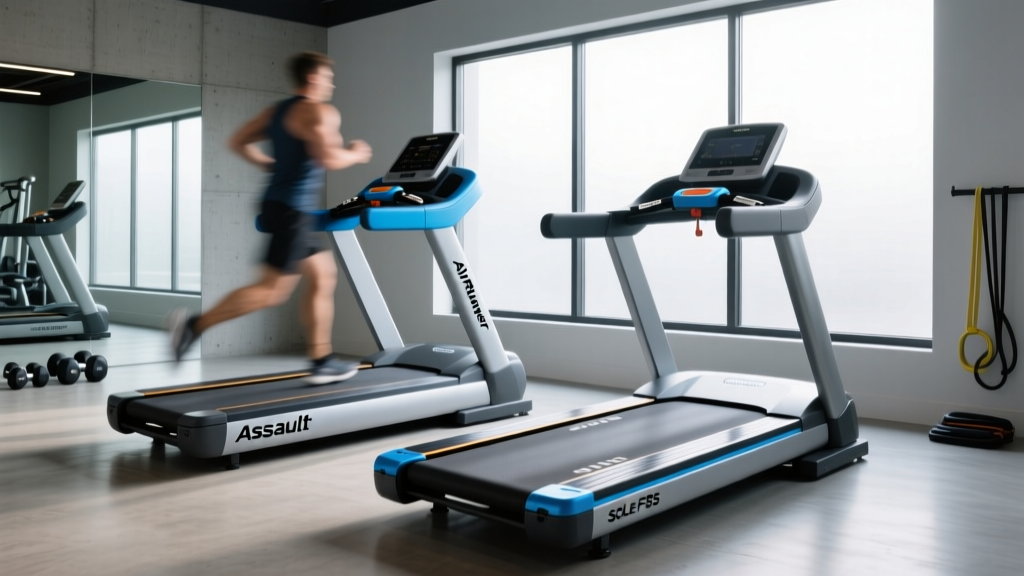
Treadmill Sprints Guide: Assault AirRunner vs Sole F85
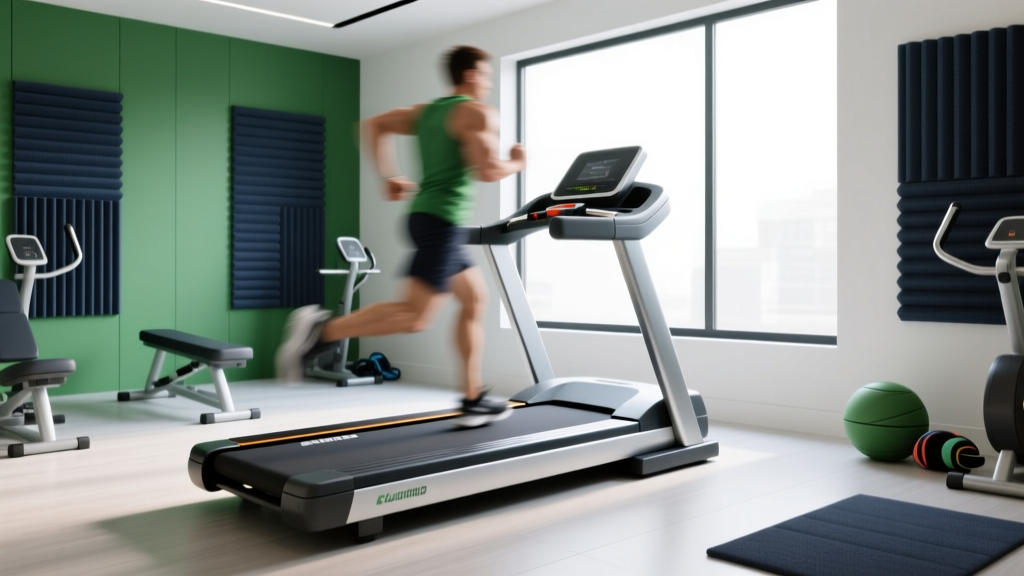
Noise Comparison & Setup for Treadmill Sprints to Lose Weight

Elliptical vs Treadmill: High Blood Pressure During Treadmill Stress Test

Under Desk Treadmill Value Review: How to Connect Watch to Treadmill
