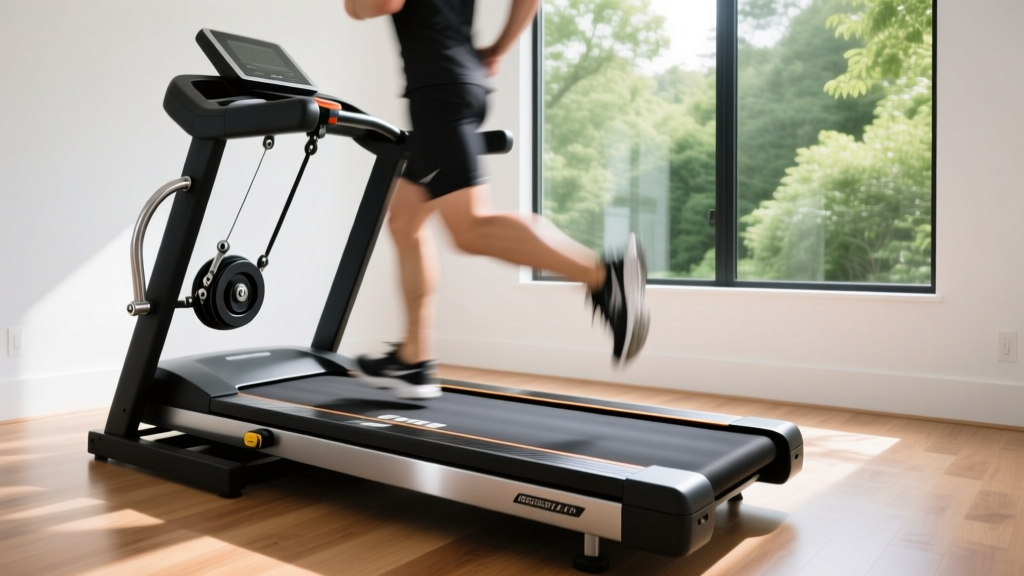
Motor Guide for a Treadmill 400 Pound Weight Capacity
Learn how to size the motor for a treadmill 400 pound weight capacity. Our step-by-step beginner guide covers CHP, flywheels, and top heavy-duty models.

Shopping for heavy-duty cardio equipment can feel like navigating a maze of confusing specifications and misleading marketing jargon. When you specifically need a treadmill 400 pound weight capacity, the stakes are significantly higher. A machine that barely supports your weight will lead to a stuttering belt, premature motor burnout, and a frustrating workout experience. The absolute most critical component to evaluate on any heavy-duty treadmill is the motor assembly. According to the American Council on Exercise (ACE), matching the motor's continuous output to the user's biomechanical load is the single biggest factor in long-term equipment durability.
This beginner-friendly, step-by-step guide will demystify treadmill motor sizing, helping you confidently select a machine that delivers smooth, reliable performance for heavier users in 2026.
Step 1: Decode the Horsepower (HP vs. CHP) Marketing Trap
The first mistake most beginners make is looking at the "Peak HP" number on the box. Peak Horsepower measures the absolute maximum output the motor can achieve for a few seconds before overheating. It is a largely useless metric for actual workouts.
Instead, you must look for Continuous Duty Horsepower (CHP). CHP measures the power the motor can sustain indefinitely during a normal workout without degrading. For a treadmill 400 pound weight capacity, a high Peak HP with a low CHP is a guaranteed recipe for a dead machine within six months.
Beginner Rule of Thumb: Ignore any treadmill that only advertises "HP" or "Peak HP." If the manufacturer hides the "CHP" rating in the fine print, it is almost certainly undersized for a 400 lb user.Step 2: Calculate Your Required CHP
Motor requirements scale based on two variables: the user's weight and the intensity of the activity. Running generates significantly more downward force and belt friction than walking, requiring the motor to work much harder to maintain speed. Consumer Reports consistently notes that heavier users must add at least 0.5 to 1.0 CHP to the baseline recommendation to account for the extra torque required to turn the deck rollers under heavy loads.
| Activity Level | User Weight (Up to 400 lbs) | Minimum CHP Required | Ideal CHP for Longevity |
|---|---|---|---|
| Walking (Under 4 mph) | 300 - 400 lbs | 3.0 CHP | 3.5 CHP |
| Jogging (4 - 6 mph) | 300 - 400 lbs | 3.5 CHP | 4.0 CHP |
| Running (6+ mph) | 300 - 400 lbs | 4.0 CHP | 4.5+ CHP |
Step 3: Factor in Motor Physical Size and Cooling
Horsepower is only half the equation; the physical dimensions of the motor matter just as much. A 3.0 CHP motor can be engineered with a small 2.5-inch diameter casing or a massive 3.5-inch casing.
For a treadmill 400 pound weight capacity, you want the largest physical motor casing possible. Larger casings contain more copper windings and larger magnets, which inherently run cooler. Furthermore, heavy-duty treadmills should feature internal cooling fans and advanced thermal overload switches. If a motor runs too hot, the internal insulation melts, causing a short circuit. Always check if the manufacturer uses a brushless DC motor, which reduces friction, eliminates carbon dust buildup, and significantly extends the lifespan of the drive system under heavy loads.
Step 4: The Hidden Variable: Flywheel Mass and Belt Momentum
Here is an industry secret that most buying guides miss: the motor doesn't pull the belt directly. The motor turns a front roller via a drive belt, and that roller turns the running belt. Attached to the end of the front roller is the flywheel.
When a 400 lb user strikes the deck, it creates a massive momentary braking force. If the flywheel is light (e.g., 8 to 10 lbs), it will instantly decelerate upon foot strike, causing the belt to "stutter" or jerk, even if the motor is powerful. You need a heavy flywheel (15 lbs or more) to store rotational kinetic energy. This momentum carries the belt through the heavy foot strike, allowing the motor to maintain a steady, smooth pull. When evaluating heavy-duty models, always look for specs mentioning a heavy-duty roller and flywheel assembly.
Step 5: Evaluate 2026 Heavy-Duty Models and Pricing
To put this guide into practice, let's look at three specific treadmills currently on the market that cater to heavier users, comparing their motor specs and actual 2026 retail pricing.
1. Sole F85 (The Heavy-Duty Benchmark)
- Motor: 4.0 CHP Brushless DC
- Weight Capacity: 400 lbs
- Price: ~$1,999
- Expert Take: The Sole F85 is widely considered the gold standard for home users needing a treadmill 400 pound weight capacity. Its 4.0 CHP motor is paired with heavy 2.5-inch steel rollers that prevent the belt slip commonly seen on cheaper models. According to Sole Fitness official specifications, the F85 also includes a lifetime warranty on the motor and frame, signaling high manufacturer confidence in its durability.
2. LifeSpan TR5000-DT3 (The Premium Upgrader)
- Motor: 4.0 HP Continuous Duty
- Weight Capacity: 500 lbs
- Price: ~$2,499
- Expert Take: If you are on the upper edge of the 400 lb mark and want extra headroom, the TR5000-DT3 offers a 500 lb capacity. The motor runs exceptionally quiet and cool, though the premium price tag reflects its commercial-grade deck cushioning and advanced console telemetry.
3. Matrix T7xe (Commercial Grade for Home)
- Motor: 4.0 CHP AC Motor (Alternating Current)
- Weight Capacity: 400 lbs
- Price: ~$3,800+
- Expert Take: Matrix uses an AC motor rather than the standard DC motor found in most home treadmills. AC motors are what you find in commercial gym treadmills; they are incredibly powerful, virtually immune to overheating, and require zero maintenance, justifying the steep investment.
Step 6: Identify Undersized Motor Failure Modes
What actually happens if you ignore this guide and buy a 2.5 CHP treadmill while weighing 380 lbs? Understanding the mechanical failure points will help you avoid wasting thousands of dollars.
- Control Board Frying (PWM Failure): Treadmill speed is regulated by a Pulse Width Modulation (PWM) controller. When a heavy user walks on a weak motor, the motor draws excessive amperage (often spiking past 15 amps) to maintain belt speed. This massive electrical draw generates intense heat, eventually melting the MOSFET transistors on the control board. A replacement board costs $250 to $400.
- Drive Belt Stretching and Snapping: An undersized motor will struggle to turn the front roller under heavy weight. This causes the motor's drive belt to slip against the pulley, generating friction heat that glazes, stretches, and eventually snaps the belt.
- Thermal Shutoff Interruptions: Modern treadmills have thermal breakers. If you are running at 6 mph and the motor overheats due to the 400 lb load, the machine will abruptly shut off mid-stride to prevent a fire hazard. This is not just annoying; it is a serious fall risk.
Summary Checklist for Your Purchase
Before you click "checkout" on any heavy-duty cardio equipment, verify these final data points:
- [ ] The motor is explicitly rated in CHP (Continuous Duty Horsepower), not just Peak HP.
- [ ] The CHP rating is at least 3.5 for walking and 4.0 for running.
- [ ] The stated weight capacity is at least 400 lbs (ideally 450 lbs for a safety buffer).
- [ ] The rollers are at least 2.5 inches in diameter to prevent belt slip.
- [ ] The warranty covers the motor for Lifetime and parts/labor for at least 2 to 3 years.
Investing in a treadmill 400 pound weight capacity is a significant commitment to your long-term cardiovascular health. By prioritizing a robust, high-CHP motor and heavy-duty physical components over flashy touchscreens, you will secure a machine that delivers safe, smooth, and reliable workouts for years to come.
More gear to consider
All reviews
ProForm XP 650e Treadmill vs Rowing: Buying Guide

High Intensity Treadmill: Folding Small Space Review & Care

Air Bike vs Assault Bike & How to Turn On Pro Form Treadmill
Beyond Treadmill vs Elliptical for Cardio: Air Bike vs Assault Bike

2026 Under Desk Treadmill Office Review & Market Shift