
Recumbent Bike vs Treadmill Upkeep: Air vs Assault Bike Care
Compare recumbent bike vs treadmill upkeep with our deep-dive Air Bike vs Assault Bike maintenance guide for maximum home gym longevity.

When outfitting a home gym for long-term cardiovascular health, the recumbent bike vs treadmill debate usually dominates conversations about joint impact, footprint, and basic upkeep. Treadmills demand relentless belt lubrication and eventual motor brush replacements, while recumbent bikes sit quietly with their sealed magnetic flywheels requiring almost zero mechanical intervention. But for athletes and fitness enthusiasts seeking high-output metabolic conditioning and infinite wind-resistance curves, fan bikes are the undisputed gold standard.
If you are stepping up from the predictable maintenance of a recumbent or the belt-sanding reality of a treadmill, you are likely looking at the heavyweights of the fan-bike arena: the Air Bike (notably the Rogue Echo and Schwinn Airdyne lines) and the Assault Bike (Assault Fitness Classic and Elite). While both deliver brutal, full-body cardio, their internal engineering dictates vastly different maintenance protocols. This comprehensive 2026 Air Bike vs Assault Bike comparison guide focuses strictly on mechanical longevity, failure modes, and the exact care required to keep your investment out of the garage graveyard.
The Upkeep Divide: Where Fan Bikes Fit In
To understand fan bike maintenance, we must first contextualize it against standard cardio machines. A high-end treadmill requires $20 silicone lubricants every 150 miles and a $300 belt replacement every 3 to 5 years. A recumbent bike requires little more than occasional dusting of the magnetic resistance housing. Fan bikes, however, operate on a completely different mechanical principle: direct wind resistance via a massive front fan, coupled with a drivetrain that translates human wattage into rotational force. This means your drivetrain—whether chain or belt—is under immense lateral and rotational stress during sprint intervals.
Drive Systems: Belt vs. Chain Longevity
The most critical divergence in the Air Bike vs Assault Bike comparison lies in the drivetrain. The method used to transfer power from the pedals to the fan dictates 80% of your long-term maintenance workload.
Gates Carbon Drive Belt Systems
As of 2026, the Rogue Echo Bike V2 (retailing around $995) and the Assault Fitness Elite (approximately $1,199) both utilize the Gates Carbon Drive belt system. This is a massive leap in longevity over traditional chains.
- Maintenance Requirement: Zero lubrication. Belts do not require oil, grease, or PTFE sprays.
- Tensioning: Over time, the rear axle may shift. You must check belt deflection monthly. Apply 10 lbs of pressure to the center of the belt span; it should deflect exactly 1/2 inch. Use an 18mm wrench to adjust the rear axle tensioners if it feels loose.
- Failure Mode: Debris ingestion. Because the belt relies on precise tooth engagement, a buildup of pet hair, dust, or carpet fibers in the sprocket grooves will cause the belt to skip or snap. Use a stiff nylon brush and compressed air to clean the sprockets every 90 days.
Heavy-Duty Chain Systems
The Assault Fitness Classic (often priced around $999) and older Schwinn Airdyne models rely on a heavy-duty steel chain. While incredibly robust and capable of handling thousands of watts of peak power, chains demand active chemical maintenance.
- Maintenance Requirement: You must apply a PTFE-based dry chain lube (such as Finish Line Dry) every 3 to 4 months. Wet lubes attract dust and create a grinding paste that accelerates sprocket wear.
- Chain Stretch: Chains do not actually stretch; the pins and bushings wear down, increasing the pitch. Use a $10 chain wear indicator tool annually. If the tool drops past the 0.75% wear mark, replace the chain immediately to prevent catastrophic damage to the front chainring.
Warning: The WD-40 Trap
Never use standard WD-40 to clean or lubricate a fan bike chain or bottom bracket. WD-40 is a solvent and water-displacer, not a long-term lubricant. It will strip the factory grease from your sealed bearings and leave the chain bone-dry, leading to rapid rust and metal-on-metal grinding.
Bearing Failure Modes and Bottom Bracket Care
Unlike the recumbent bike vs treadmill comparison—where treadmill roller bearings usually fail due to high RPMs and heat—fan bike bearings fail due to extreme lateral torque and sweat corrosion. When you perform a 20-calorie sprint, you are applying massive sideways force to the pedal cranks.
Both Rogue and Assault utilize sealed cartridge bottom brackets (typically a 73mm BSA threaded standard). While 'sealed' implies protection, the microscopic gaps around the spindle are vulnerable to highly saline human sweat. Over 2 to 3 years, sweat drips down the crank arm, pools at the bottom bracket cup, and slowly corrodes the seal.
How to Diagnose Bearing Failure
- The Lateral Wiggle Test: Grab the pedal cranks and push/pull them laterally (side-to-side, not in the direction of pedaling). If you feel a 'clunk' or more than 1mm of play, your bottom bracket bearings are compromised.
- The Acoustic Test: Spin the cranks backward by hand. A healthy bike is silent save for the fan spooling down. A failing bottom bracket emits a gritty, crunching sound, similar to walking on gravel.
The Fix: Replacing a bottom bracket requires a specialized bottom bracket tool (like the Park Tool BBT-9) and a 15mm pedal wrench. Replacement cartridges cost between $35 and $60. It is a 20-minute job that will make a 5-year-old bike feel brand new.
Air Bike vs Assault Bike: 2026 Maintenance Matrix
Below is a structured comparison of the ongoing maintenance requirements for the top models in the space.
| Maintenance Task | Rogue Echo V2 (Belt) | Assault Elite (Belt) | Assault Classic (Chain) |
|---|---|---|---|
| Drivetrain Lubrication | Never | Never | Every 3-4 Months |
| Belt/Chain Tension Check | Monthly | Monthly | Bi-Annually |
| Bottom Bracket Inspection | Annually | Annually | Annually |
| Fan Blade Dusting | Quarterly | Quarterly | Quarterly |
| Sweat Wipe-Down | After Every Use | After Every Use | After Every Use |
| Estimated 5-Year Upkeep Cost | ~$60 (Bearings) | ~$60 (Bearings) | ~$140 (Chain, Lube, Sprockets) |
Console and Electronics Preservation
While mechanical parts can be swapped with standard tools, the LCD console is often the first casualty of a neglected fan bike. The American Council on Exercise (ACE) frequently notes that equipment downtime in commercial and home gyms is overwhelmingly tied to electronic failures rather than mechanical ones.
The massive fan on an Air Bike or Assault Bike generates a vortex of air that rapidly evaporates sweat. However, the saline residue is left behind, often settling directly onto the console arm and the ribbon cables connecting the display to the internal wattage sensor.
The Silicone Shield Method
To protect the console arm and the frame's powder coating from sweat-induced oxidation:
- Wipe the frame down immediately after use with a damp microfiber cloth (water only, no harsh chemical degreasers).
- Once a month, apply a light coat of silicone-based protectant (like 303 Aerospace Protectant) to the frame and console arm. This creates a hydrophobic barrier that causes sweat to bead up and roll off rather than eating into the metal and plastic.
- Never spray cleaner directly onto the LCD screen. Spray it onto the cloth first to prevent liquid from seeping into the bezel and shorting the PCB.
Final Verdict on Longevity
If your primary goal is zero-maintenance, low-impact cardio, the recumbent bike remains the undisputed king of longevity. If you want weight-bearing bone density benefits and are willing to perform bi-annual motor and belt care, a treadmill is the right choice. But if you are chasing the ultimate metabolic stimulus, fan bikes are unparalleled.
Between the two major contenders, the Rogue Echo V2 and Assault Elite win the long-term longevity war due to their Gates Carbon Drive belt systems and robust bottom bracket housings. The Assault Classic remains a phenomenal, budget-friendly workhorse, provided you are willing to commit to a strict chain-lubrication and tensioning schedule. By treating your fan bike with the same mechanical respect you would give a high-end road bicycle, you will easily extract a decade or more of brutal, watt-crushing intervals from your investment.
More gear to consider
All reviews
High Intensity Cardio Treadmill vs Upright, Recumbent & Spin Bikes

Treadmill Motor HP: Treadmill Lever System Strain & Troubleshooting

Adjusting Treadmill Belt Tension: Sole F80 vs Horizon 7.4 Compared

Stair Climber vs 12 Incline on Treadmill in Degrees: Home Guide
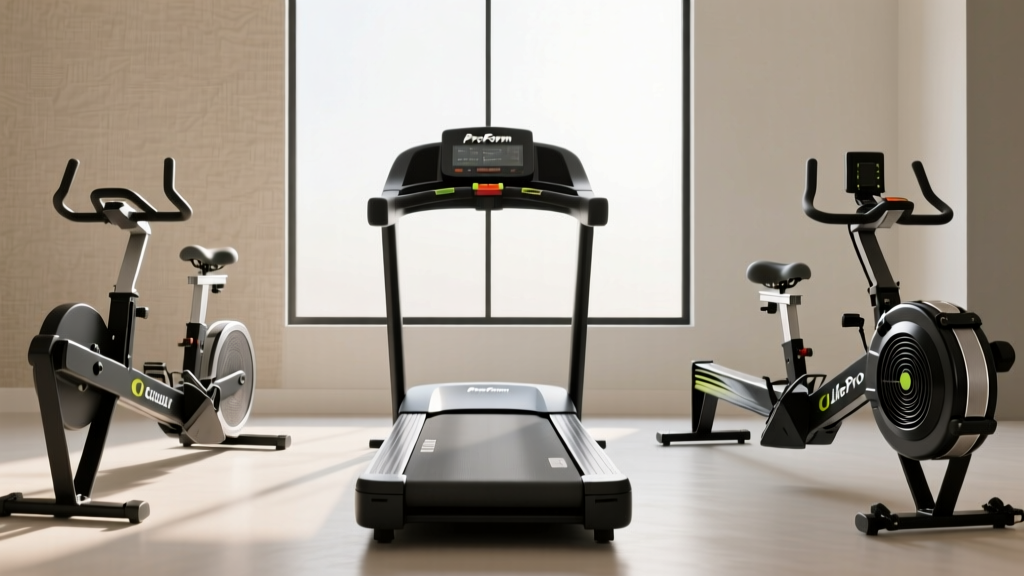
Assault Air Bike Comparison Guide & ProForm XP550E Treadmill Care
