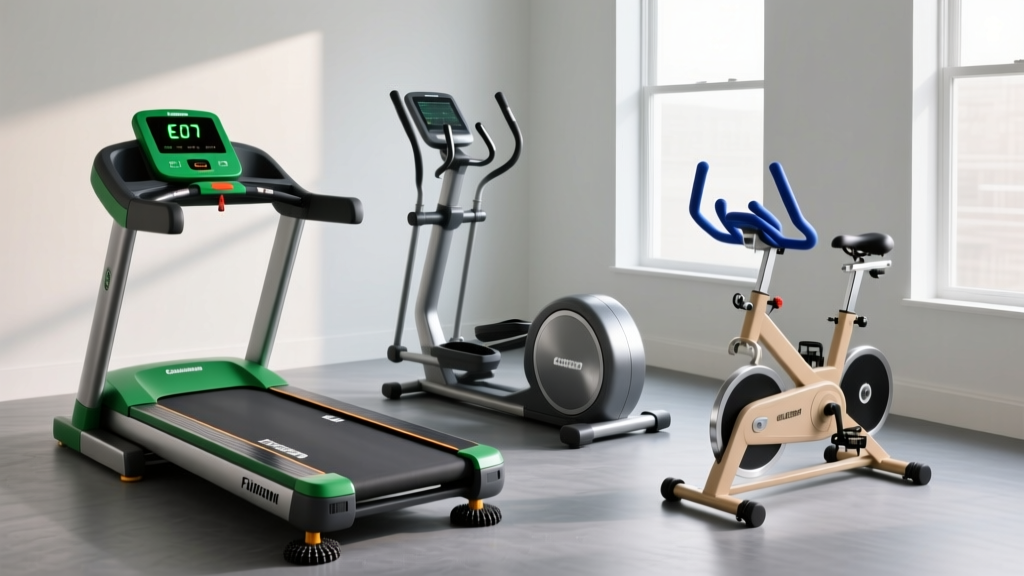
Under Desk Treadmill vs T 6.5 S Treadmill: Office Layout Guide
Compare the under desk treadmill for office use against the T 6.5 S treadmill footprint. Discover space optimization layouts and ergonomic clearances.

The WFH Space Dilemma: Traditional Folders vs. Under-Desk Units
As hybrid work models solidify in 2026, the home office has evolved from a temporary desk in the corner to a permanent, highly optimized productivity zone. For fitness-conscious professionals, integrating cardio into the workday is no longer a luxury; it is a necessity for combating sedentary fatigue. However, spatial constraints often force a compromise between full-scale workout capability and functional office ergonomics. This brings us to a common spatial showdown: the traditional folding treadmill, benchmarked here by the legacy T 6.5 S treadmill, versus the modern under-desk treadmill for office use.
While the NordicTrack T 6.5 S treadmill has long been praised as a budget-friendly, space-saving folding option for living rooms, its application in a dedicated home office reveals significant layout friction. Conversely, under-desk treadmills prioritize seamless integration with standing desks but sacrifice high-intensity running capabilities. In this comprehensive space optimization guide, we will review the under-desk treadmill experience, contrast its physical footprint with the T 6.5 S treadmill, and provide actionable layout frameworks for your office.
Layout Pro-Tip: The 'Folded' Fallacy
Never plan your office layout based solely on a machine's 'folded' dimensions. A traditional folder like the T 6.5 S treadmill requires an additional 30 inches of clearance for the user to safely step off and fold the deck, effectively doubling its operational footprint during the transition phase.
Dimensional Showdown: T 6.5 S Treadmill vs. Top Under-Desk Models
To understand space optimization, we must look at the raw geometry of the equipment. The T 6.5 S treadmill features a 50-inch by 18-inch running surface, which is adequate for jogging but requires a massive outer shell to house the 2.6 HP continuous duty motor and the hydraulic folding lift. Below is a spatial comparison matrix contrasting the T 6.5 S treadmill with two leading 2026 under-desk models.
| Feature / Dimension | NordicTrack T 6.5 S Treadmill | WalkingPad R2 (Under-Desk) | UREVO Strol 2E |
|---|---|---|---|
| Unfolded Footprint | 70" L x 26" W (12.7 sq ft) | 57" L x 25" W (9.8 sq ft) | 53" L x 20" W (7.3 sq ft) |
| Folded Footprint | 55" L x 26" W (Vertical) | 57" L x 25" x 5" (Flat) | 53" L x 20" x 6" (Flat) |
| Unit Weight | 135 lbs | 62 lbs | 55 lbs |
| Max User Speed | 10.0 MPH | 7.6 MPH | 7.6 MPH |
| Desk Clearance Needed | N/A (Freestanding) | 5.5 inches minimum | 6.0 inches minimum |
| Approx. 2026 Price | $499 - $599 (Used/Refurb) | $499 | $279 |
Under Desk Treadmill for Office Use Review: The 2026 Reality
When evaluating the under desk treadmill for office use, the primary metrics shift from top speed and incline to acoustics, belt width, and sub-desk ergonomics. Let us break down the critical performance factors that dictate whether an under-desk unit will actually be used, or if it will become a $300 clothes hanger.
Motor Acoustics and the 'Zoom Call' Test
The most frequent failure mode for office treadmills is noise pollution. A traditional T 6.5 S treadmill generates between 70 and 75 decibels (dB) at a moderate jogging pace—roughly equivalent to a vacuum cleaner. This is entirely incompatible with open-mic virtual meetings. Modern under-desk treadmills, like the UREVO Strol 2E, utilize smaller, high-torque 1.25 HP motors tuned for low-RPM walking. At 2.0 MPH, these units operate at roughly 50 to 55 dB, which is easily masked by the ambient white noise of an HVAC system or a standard computer cooling fan. However, once you push an under-desk motor past 4.0 MPH, the whine of the belt friction increases exponentially, making walking-pace (1.5 - 3.0 MPH) the acoustic sweet spot.
Ergonomic Clearance and Desk Height Math
According to the Cornell University Ergonomics Web, proper standing desk height is calculated by measuring the user's elbow height at a 90-degree angle. For an average 5'9" user, the desk surface should be approximately 43 to 45 inches from the floor. If your under-desk treadmill deck is 5 inches thick, and your feet add another 1 inch of elevation, your effective standing height increases by 6 inches. You must ensure your standing desk has a motorized lift column capable of reaching at least 50 inches to maintain ergonomic neutrality. If your desk maxes out at 48 inches, you will be forced to hunch your shoulders while typing, leading to cervical strain.
Research highlighted by the Mayo Clinic demonstrates that Non-Exercise Activity Thermogenesis (NEAT)—the energy expended for everything we do that is not sleeping, eating, or sports-like exercise—can vary by up to 2,000 calories per day between individuals. Incorporating low-impact walking at 1.5 MPH during administrative tasks can burn an additional 100 to 150 calories per hour without triggering the fatigue associated with dedicated cardio sessions.
The Belt Width Limitation
Space optimization requires trade-offs. The T 6.5 S treadmill offers an 18-inch wide belt, allowing for natural lateral arm swing and slight pacing deviations. Under-desk treadmills typically max out at 15.7 to 16.5 inches of usable belt width. This narrower corridor demands focused, linear walking. If you are easily distracted or tend to pace laterally while on phone calls, the narrow belt of an under-desk unit will result in frequent foot-strikes on the side rails, which is both jarring and disruptive to your workflow.
Office Layout Design: Zoning Your Cardio Workspace
Integrating cardio equipment into a home office requires deliberate spatial zoning. Attempting to force a traditional folder like the T 6.5 S treadmill into a 10x10 foot office usually results in a claustrophobic environment where the machine dominates the visual field, increasing cognitive load and reducing focus. Instead, utilize the following layout frameworks:
- The 'Slide-and-Hide' Configuration (Best for Under-Desk): Position your standing desk against a wall or floating in the center of the room. Ensure there is a 60-inch clear path behind the desk. When finished walking, simply slide the 5-inch thick under-desk treadmill backward, leaving it hidden beneath the desk footprint. This maintains a clean, uncluttered visual environment for deep work sessions.
- The 'Dual-Zone' Split (Best for Traditional Folders): If you absolutely require the 10 MPH speed and 10% incline of a traditional machine (and are willing to accept the T 6.5 S treadmill's massive spatial footprint), you must zone the room. Place your desk in the 'Quiet Zone' near natural light, and position the treadmill in the 'Active Zone' near a window or media screen. Use a room divider or an open bookshelf to visually separate the workout space from the workspace, preventing the treadmill from becoming a psychological distraction during emails.
- Cable Management and Power Routing: Under-desk treadmills require power cords that run across the floor to the nearest wall outlet. In a layout where the desk is floated in the center of the room, this creates a severe tripping hazard. Always route power cables through a floor cord cover or install a flush-mount floor outlet directly beneath the desk's planned footprint during the layout design phase.
Final Verdict: Optimizing Your Square Footage
The choice between a traditional folding unit and an under-desk model ultimately hinges on your primary fitness objective and your office's square footage. If your goal is vigorous cardiovascular conditioning, interval training, or running, the T 6.5 S treadmill (or its modern 2026 equivalents) remains necessary, but it demands a dedicated 25-square-foot operational footprint and a room layout that accommodates its vertical storage height and acoustic output.
However, if your goal is to combat sedentary behavior, increase daily step counts, and leverage NEAT without sacrificing the aesthetic and functional integrity of your home office, the under desk treadmill for office use is the undisputed champion of space optimization. Units like the UREVO Strol 2E or WalkingPad R2 disappear into the architecture of your workspace, allowing you to seamlessly transition between deep work and active recovery without ever leaving your desk.
More gear to consider
All reviews
Curved vs Motorized: Treadmill Exercises for Beginners Compared

What Happens During a Treadmill Stress Test vs Bike Types
LiveStrong LS8.0T Treadmill Setup & Walking Pad Comparison
Treadmill Removal to Rowing: Buying Guide & Technique Mistakes

Air Bike Comparison: Does Running on a Treadmill Make You Faster?