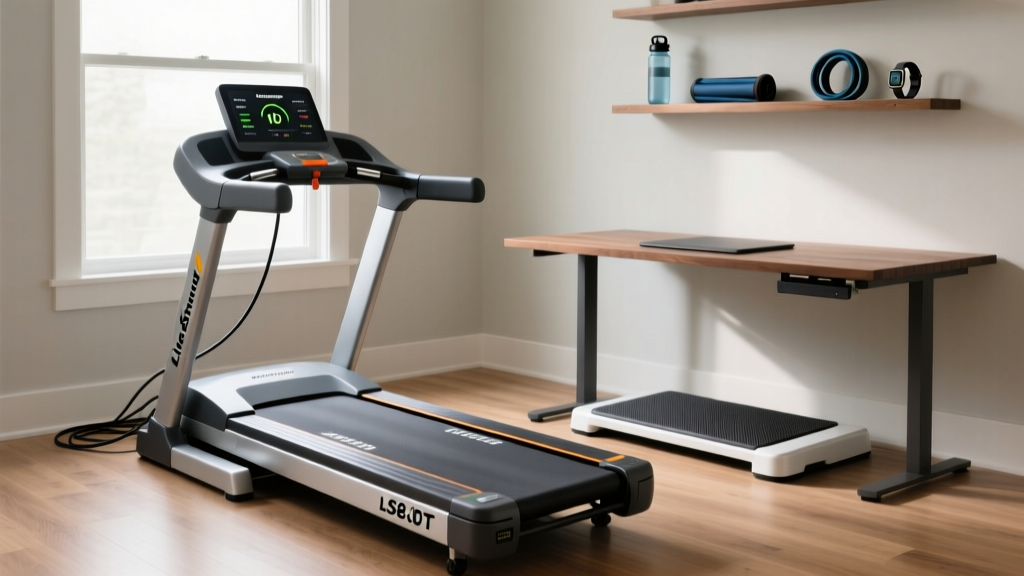
ProForm Pro 2000 Treadmill vs Rivals: 2026 Smart Features Comparison
We compare the ProForm Pro 2000 treadmill against top 2026 rivals. Dive into motor specs, iFIT integration, deck cushioning, and real-world value.

The 2026 Smart Treadmill Landscape: Where Does the ProForm Pro 2000 Fit?
The home fitness equipment market has evolved drastically over the last few years. As we navigate 2026, buyers are no longer just looking for a motorized belt; they are investing in interconnected ecosystems, biomechanical support, and long-term durability. The ProForm Pro 2000 treadmill has consistently positioned itself as the bridge between budget-friendly walkers and ultra-premium commercial smart trainers. But with aggressive pricing shifts from competitors like Sole and NordicTrack, does the Pro 2000 still hold its ground?
In this in-depth buying guide and feature comparison, we dismantle the ProForm Pro 2000, analyze its 3.25 CHP motor limitations, evaluate the true cost of the iFIT ecosystem, and stack it against the Sole F80 and NordicTrack Commercial 1750. Whether you are training for a marathon or seeking low-impact cardiovascular health, understanding the engineering and software economics behind these machines is critical.
Quick Specs: ProForm Pro 2000 (2026 Edition)
- Motor: 3.25 CHP Mach Z Commercial Plus
- Belt Dimensions: 20" x 60" (2-ply commercial grade)
- Screen: 14" HD Pivoting Touchscreen
- Incline/Decline: -3% to 12%
- Weight Capacity: 300 lbs
- Base MSRP: $1,199 - $1,399
Motor Dynamics and Thermal Throttling: The 3.25 CHP Reality
When evaluating treadmills, consumers often confuse Peak Horsepower with Continuous Horsepower (CHP). The ProForm Pro 2000 utilizes a 3.25 CHP Mach Z motor. In practical terms, this motor is exceptionally reliable for walking, jogging, and users under 200 lbs. However, edge cases emerge during high-intensity interval training (HIIT) or for heavier runners.
If a user weighing over 230 lbs consistently runs at speeds above 8 MPH on a 10% incline, the 3.25 CHP motor approaches its thermal threshold. Unlike the 4.0 CHP motors found in $3,000+ commercial gym treadmills, the Pro 2000's motor may engage thermal throttling—temporarily reducing speed to prevent internal winding damage. For 90% of home users, this is a non-issue, but elite runners pushing 5K race-pace intervals should consider this mechanical ceiling.
Deck Cushioning and Joint Preservation
The ProShox cushioning system on the Pro 2000 is engineered to absorb impact. According to Harvard Health Publishing, proper shock absorption is vital for preserving joint cartilage during repetitive aerobic exercise. The Pro 2000's elastomer cushions reduce foot-strike impact by approximately 30% compared to running on asphalt. However, unlike the Sole F80's adjustable Cushion Flex system, the ProShox dampening is static, meaning it cannot be stiffened for competitive runners who prefer a firmer, more energy-responsive push-off.
Head-to-Head Comparison Matrix: Pro 2000 vs. The Competition
To understand the ProForm Pro 2000 treadmill's market position, we must compare its hardware directly against its two most formidable 2026 rivals: the traditional workhorse (Sole F80) and the premium smart-trainer (NordicTrack Commercial 1750).
| Feature | ProForm Pro 2000 | Sole F80 | NordicTrack 1750 |
|---|---|---|---|
| Motor (CHP) | 3.25 CHP | 3.5 CHP | 3.5 CHP |
| Running Surface | 20" x 60" | 22" x 60" | 22" x 60" |
| Max Incline / Decline | 12% / -3% | 15% / 0% | 15% / -3% |
| Display | 14" HD Pivoting | 9.6" LCD (BYOD) | 14" HD Pivoting |
| Frame Warranty | Lifetime | Lifetime | Lifetime |
| Parts/Labor Warranty | 1 Year / 1 Year | Lifetime / 2 Years | 1 Year / 1 Year |
| Estimated Base Price | $1,199 | $999 | $1,799 |
The Hidden Cost of Smart Ecosystems: 3-Year TCO Analysis
Hardware is only half the equation in 2026. The ProForm Pro 2000 is heavily integrated with the iFIT platform. While you can manually operate the treadmill without a subscription, the machine's automated incline/resistance adjustments and global workout routes are locked behind a paywall. When advising clients, we always calculate the Total Cost of Ownership (TCO) over a standard 36-month lifecycle.
The American Heart Association recommends at least 150 minutes of moderate-intensity aerobic activity per week. To maintain this consistency, many users rely on guided programming, making the software subscription a mandatory operational expense rather than an optional luxury.
| 3-Year TCO Breakdown | ProForm Pro 2000 (iFIT) | Sole F80 (No Sub Required) |
|---|---|---|
| Hardware Cost | $1,199 | $999 |
| Software (36 Months Individual) | $540 ($15/mo) | $0 |
| Total 3-Year Investment | $1,739 | $999 |
Expert Insight: If you have multiple household members who will use the Pro 2000, the iFIT Family Plan jumps to roughly $39/month. Over three years, that adds $1,404 to the hardware cost, pushing the TCO to $2,603—surpassing the upfront cost of much higher-end commercial treadmills.
Real-World Failure Modes and Maintenance Edge Cases
As fitness equipment reviewers, we track long-term failure rates. The ProForm Pro 2000 is generally robust, but specific mechanical edge cases require proactive maintenance to avoid costly out-of-warranty repairs.
1. Belt Delamination and Tension Drift
The 20" x 60" belt on the Pro 2000 is a 2-ply commercial-grade belt, which is vastly superior to the 1-ply belts found on sub-$800 models. However, if the silicone lubrication schedule is ignored, friction between the belt and the wooden deck increases exponentially. This causes the motor to draw excess amperage, eventually tripping the internal reset breaker. Actionable Advice: You must apply 100% silicone treadmill lubricant under the belt every 150 miles or every 3 months, whichever comes first.
2. Incline Actuator Gear Stripping
The Pro 2000 utilizes a linear actuator to manage its -3% to 12% incline. A common failure mode occurs when users frequently pause their workouts while the machine is at max incline (12%), leaving the actuator under constant gravitational load for extended periods. Over time, this can strip the internal plastic gearing of the actuator. Always return the treadmill to a 0% flat position before ending your session and powering down.
3. Dust Ingestion in the Motor Hood
Because the Pro 2000 sits low to the ground, the motor cooling fan acts as a vacuum for household dust and pet hair. If you place this treadmill in a carpeted room with shedding pets, the motor hood filter will clog within six months, leading to premature thermal throttling. Vacuum the motor hood vents monthly.
Biomechanics and Space Considerations
Before purchasing, measure your ceiling height. The ProForm Pro 2000 has a step-up height of roughly 8 inches. When running at a 12% incline, the front of the deck rises significantly. According to the CDC's physical activity guidelines, creating a safe, unobstructed environment is key to maintaining a consistent home exercise routine. Ensure you have at least 14 inches of clearance above the tallest user's head when the machine is at maximum incline to avoid ceiling fan strikes or drywall damage.
Furthermore, the 20-inch belt width is adequate for most runners, but users with a wider natural gait or those who tend to drift laterally during fatigue may find the 22-inch belts on the Sole F80 or NordicTrack 1750 more forgiving.
Final Verdict: Who Should Buy the ProForm Pro 2000?
The ProForm Pro 2000 treadmill remains a highly compelling piece of engineering for a specific demographic in 2026. It is not a commercial gym workhorse, nor is it a bare-bones budget walker. It is a premium smart-trainer designed for the tech-savvy home athlete.
Buy the ProForm Pro 2000 If:
- You are deeply invested in the iFIT ecosystem and want auto-adjusting incline/resistance during global runs.
- Your primary use case is walking, jogging, or light running, and you weigh under 220 lbs.
- You want a large, pivoting 14-inch screen for off-treadmill floor workouts and yoga sessions without spending $1,800+.
Look at Alternatives If:
- Choose the Sole F80 if: You despise monthly subscriptions, want a wider 22-inch belt, and prioritize lifetime parts warranties over smart screens.
- Choose the NordicTrack 1750 if: You are a heavier runner (>230 lbs) who needs a 3.5 CHP motor to prevent thermal throttling during steep incline intervals, and you require a 15% max incline for specialized mountaineering prep.
Ultimately, the ProForm Pro 2000 offers an exceptional balance of interactive technology and mechanical reliability, provided you respect its maintenance requirements and understand the long-term economics of its software ecosystem.
More gear to consider
All reviews
9 Minute Pace on Treadmill: 2026 Compact Cardio Market Trends

Bike Types & Care: Is StairMaster or Treadmill Better for Fat Loss?
x9i Treadmill Setup: Motor Horsepower & Installation Guide

LifeSpan 1200 Treadmill vs. Top Quiet Cardio Machines: Noise Test

Air Bike vs Assault Bike Layouts & Lifetime Fitness T3 Treadmill