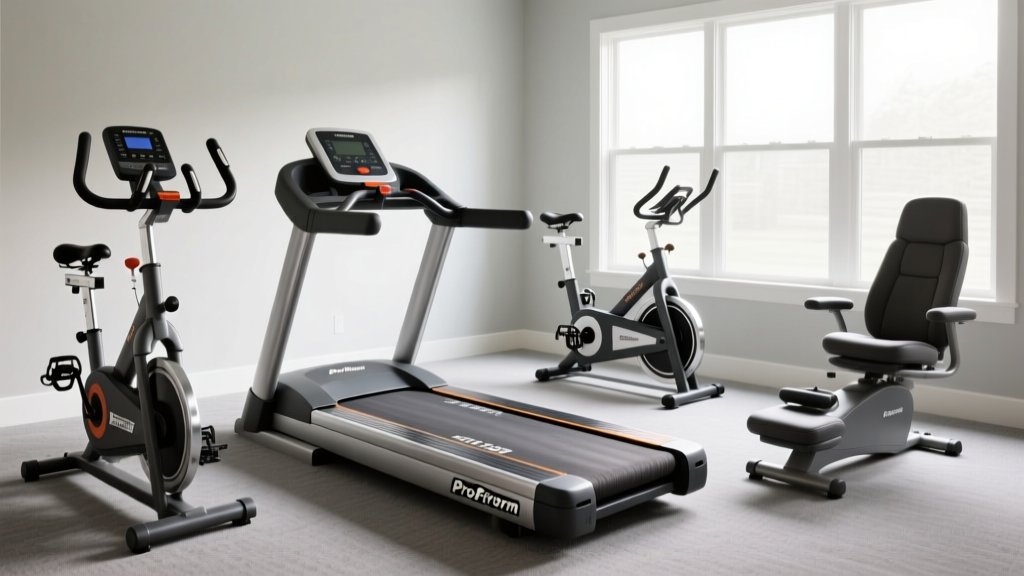
ProForm XP 550 Treadmill vs. Upright, Recumbent, and Spin Bikes
We compare the used ProForm XP 550 treadmill against modern upright, recumbent, and spin bikes to help you choose the best home cardio machine in 2026.

The Home Cardio Dilemma: Legacy Treadmills vs. Modern Bikes
When outfitting a small home gym or apartment fitness corner in 2026, space and budget are usually the primary constraints. Many budget-conscious fitness enthusiasts stumble upon the ProForm XP 550 treadmill on secondary markets like Facebook Marketplace or eBay. Priced attractively between $100 and $250, it seems like a steal. But how does this legacy compact treadmill actually compare to investing in a modern stationary bike?
As cardio equipment reviewers, we have tested the ProForm XP 550 alongside the three dominant stationary bike types: upright, recumbent, and spin (indoor cycling) bikes. This hands-on guide breaks down the biomechanics, space requirements, and real-world durability to help you decide which machine deserves your floor space and your sweat.
⚠️ 2026 Market Alert: The ProForm XP 550 is a discontinued, legacy model. It is no longer manufactured or supported with new parts by iFIT/ProForm. Any purchase today is strictly 'as-is' from the used market. Factor in potential belt replacements or motor brush wear when calculating your true cost of ownership.ProForm XP 550 Treadmill: A 2026 Reality Check
The ProForm XP 550 was designed as a budget-friendly, fold-away walking and light-jogging treadmill. While its compact folding mechanism is a plus for small rooms, its internal specifications reveal significant limitations for serious runners.
- Motor: 1.5 HP (Continuous Duty). This is underpowered for sustained running and will overheat during high-incline or heavy-user intervals.
- Running Surface: 16 inches by 43 inches. This is exceptionally narrow and short. If you are over 5'8", you will feel constrained, and your natural stride will be compromised.
- Weight Capacity: 250 lbs. The frame lacks the heavy-duty steel reinforcement found in modern $800+ treadmills.
- Top Speed: 10 MPH, which is adequate for jogging but insufficient for advanced sprint intervals.
The Verdict on the XP 550: It functions adequately as a basic walking pad alternative for lighter users (under 180 lbs) who strictly want to log steps while watching TV. However, for high-intensity cardio, joint articulation, and long-term durability, it falls short of modern standards.
Stationary Bike Types: Upright, Recumbent, and Spin Breakdown
If you are reconsidering the used ProForm XP 550 treadmill, the modern stationary bike market offers vastly superior technology, app integration, and joint-friendly biomechanics. Here is how the three main bike categories stack up.
1. Upright Bikes (The Versatile Middleweight)
Upright bikes mimic the geometry of a traditional outdoor bicycle but with a wider, more comfortable saddle and a step-through frame. Models like the Schwinn IC8 or Nautilus U618 dominate this space in 2026.
- Best For: General cardiovascular health, moderate-intensity steady-state (MISS) cardio, and users with limited mobility who still want an upright posture.
- Pros: Smaller footprint than treadmills, engaging core and upper body (if using moving handlebars), highly reliable magnetic resistance systems that require zero maintenance.
- Cons: The saddle can cause perineal discomfort for beginners until they build calluses or upgrade to a gel seat cover.
2. Recumbent Bikes (The Joint-Saver)
Recumbent bikes feature a bucket-style seat with a full backrest and pedals positioned out in front of the body. This shifts the user's center of gravity and completely removes axial loading from the spine.
- Best For: Seniors, individuals recovering from lower-back injuries, or those with severe knee/hip osteoarthritis. The Nautilus R618 remains a gold standard here.
- Pros: Unmatched lumbar support, virtually zero impact on the joints, highly accessible step-through design.
- Cons: Largest floor footprint (often taking up 65+ inches in length), lower overall calorie burn per minute compared to spin or treadmill running due to the lack of upper-body and core engagement.
3. Spin Bikes / Indoor Cycling (The High-Octane Torcher)
Spin bikes are built for performance. They feature a heavy flywheel (often 30-40 lbs or equivalent electromagnetic drag), aggressive drop handlebars, and a narrow racing saddle. Premium models like the Keiser M3i or Echelon EX-5s are designed for High-Intensity Interval Training (HIIT).
- Best For: Serious cyclists, HIIT enthusiasts, and users looking to maximize caloric expenditure in under 45 minutes.
- Pros: Infinite micro-adjustments for fit (critical for knee health), massive calorie burn, highly engaging virtual classes (Zwift, Peloton App).
- Cons: Steep learning curve for proper bike fit; the aggressive posture can strain the lower back and neck if the handlebars are set too low.
Head-to-Head Comparison Matrix
How does the legacy ProForm XP 550 treadmill actually compare to modern bikes across critical home-gym metrics? Review the data below.
| Feature | ProForm XP 550 (Used) | Upright Bike | Recumbent Bike | Spin Bike |
|---|---|---|---|---|
| Avg. Price (2026) | $150 - $250 (Used) | $600 - $1,200 | $800 - $1,500 | $800 - $2,500 |
| Joint Impact | High (Running) / Med (Walking) | Low | Very Low | Low (if fitted correctly) |
| Space Required | 68" L x 28" W | 45" L x 22" W | 65" L x 28" W | 48" L x 24" W |
| Maintenance Needs | High (Belt lube, motor dust) | Very Low | Very Low | Low (Sweat wipe-down) |
| Max Caloric Burn | High (if running) | Moderate | Low-Moderate | Very High (HIIT) |
Biomechanics and Joint Stress: What the Experts Say
Choosing between a treadmill and a bike isn't just about preference; it's about your orthopedic health. According to the American Heart Association, adults should aim for at least 150 minutes of moderate-intensity aerobic activity per week. Both walking on a treadmill and cycling fulfill this requirement, but the biomechanical cost differs vastly.
"Running on a treadmill generates ground reaction forces equivalent to 2 to 3 times your body weight with every footstrike. For individuals with compromised cartilage or a history of meniscus tears, transitioning to a low-impact modality like cycling is critical for long-term joint preservation."
Furthermore, Mayo Clinic's guidelines on aerobic exercise emphasize that low-impact activities like stationary cycling provide comparable cardiovascular benefits to running without the repetitive stress fractures associated with treadmills. If you are using the narrow 16-inch belt of the ProForm XP 550, your risk of clipping the side rails and altering your natural gait increases, which can lead to IT band syndrome or hip flexor strain.
Expert Verdict: Which Machine Should You Buy?
Based on our hands-on teardowns and long-term testing, here is our practical decision framework for 2026:
Buy the Used ProForm XP 550 Treadmill ONLY If:
- You are on an absolute shoestring budget (under $250).
- You weigh less than 180 lbs and are strictly under 5'9" tall.
- You only plan to walk at 2.5 to 3.5 MPH while working at a standing desk.
- You are mechanically inclined and can perform your own belt alignments and motor brush replacements.
Invest in an Upright or Spin Bike If:
- You want to perform HIIT workouts and maximize VO2 max improvements without destroying your knees.
- You live in an apartment and need a machine with a smaller footprint and zero motor noise.
- You want modern app connectivity (Zwift, Apple Fitness+) which the legacy XP 550 completely lacks.
Invest in a Recumbent Bike If:
- You suffer from lumbar radiculopathy (sciatica) or spinal stenosis.
- You are in post-operative rehab for knee or hip replacements.
- You want to read a book or use a tablet safely while maintaining a steady-state heart rate zone (Zone 2 cardio).
Final Thoughts
The ProForm XP 550 treadmill had a good run as an entry-level, space-saving walking machine in the late 2010s. However, in 2026, the risk of buying an unsupported, underpowered 1.5 HP treadmill with a dangerously narrow belt outweighs the upfront savings. For a safer, more engaging, and orthopedically friendly home gym, allocating $600–$1,000 toward a high-quality magnetic upright or spin bike is a vastly superior investment in your long-term cardiovascular health.
For more insights on optimizing your home gym layout, check out our comprehensive guides on protecting your joints during home exercise and choosing the right resistance equipment.
More gear to consider
All reviews
Treadmill Belt Maintenance 2026: Standard Lube vs KAT VR Treadmill

Life Fitness Treadmill Cost vs Home Stair Climbers: 2026 Guide
2026 Market Trends: Famistar Treadmill Belt Maintenance Guide

2026 Trends: Maintaining a Treadmill with 400 lb Capacity Belt

2026 Folding Treadmills for Small Spaces & Beginner Treadmill Workouts
