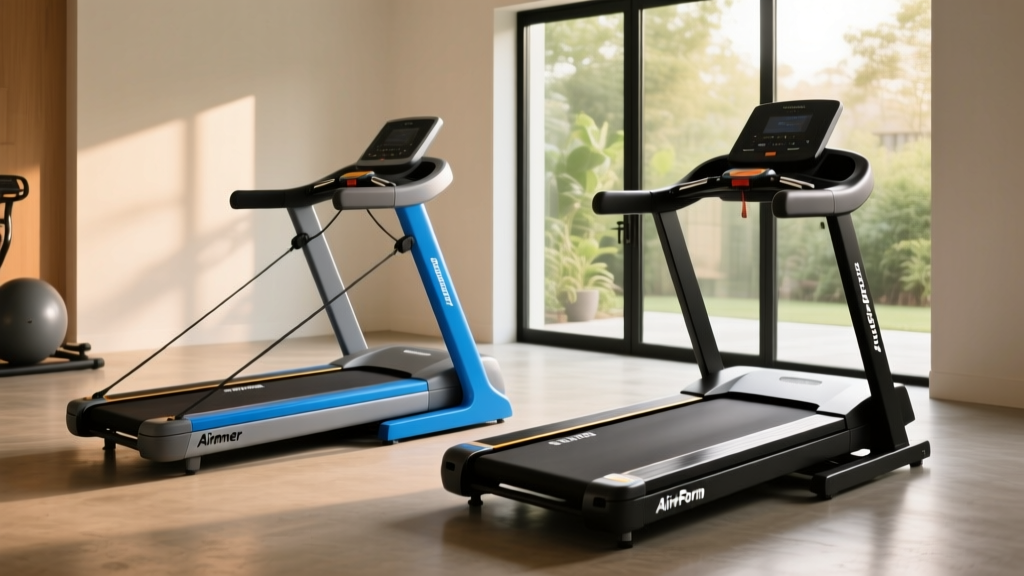
ProForm Carbon TLX Treadmill Details: Motor HP Troubleshooting
Master treadmill motor sizing and troubleshoot common HP issues using real ProForm Carbon TLX treadmill details, AMP draw tests, and error codes.

When evaluating home cardio equipment, buyers often fixate on touchscreen dimensions and interactive programming, glossing over the most critical component: the drive motor. The motor is the heart of your machine, dictating longevity, performance under load, and overall safety. To understand motor dynamics, we are going to use a highly popular mid-range benchmark. By examining specific ProForm Carbon TLX treadmill details, we can decode the realities of Continuous Horsepower (CHP), expose common consumer mistakes, and provide a masterclass in motor troubleshooting.
The CHP Illusion: Decoding ProForm Carbon TLX Treadmill Details
The ProForm Carbon TLX is equipped with a 3.0 CHP Mach Z Commercial Plus motor. But what does that actually mean for your daily workouts? The fitness equipment industry is notorious for inflating motor specs using 'Peak Horsepower'—a measurement that only reflects the motor's maximum output for a fraction of a second before the windings overheat and the internal breaker trips.
Peak HP vs. Continuous HP (CHP)
Peak HP: The absolute maximum power the motor can generate for a brief moment. It is a marketing metric, not a performance metric.
Continuous HP (CHP): The power the motor can sustain indefinitely during a normal workout without overheating. The Carbon TLX's 3.0 CHP rating means it can continuously deliver 3.0 horsepower to the drive belt, making it suitable for sustained running.
According to Consumer Reports, a true 3.0 CHP motor is the gold standard for home runners. Anything less than 2.5 CHP will struggle to maintain speed when a user's foot strikes the deck, causing micro-stutters that lead to joint discomfort and premature motor burnout.
Motor Sizing Framework: Weight, Speed, and Duty Cycles
A motor's lifespan is directly tied to the 'duty cycle'—the amount of work it must do to move the user's mass against the friction of the deck. A 250-pound user walking at 3.0 mph places a vastly different thermal load on a 3.0 CHP motor than a 150-pound user running at 7.0 mph. Below is the definitive sizing matrix for home treadmills in 2026.
| User Weight | Primary Activity | Minimum Required CHP | Carbon TLX (3.0 CHP) Suitability |
|---|---|---|---|
| Under 180 lbs | Walking / Light Jogging | 2.0 - 2.25 CHP | Excellent (Runs cool, minimal wear) |
| 180 - 220 lbs | Jogging / Interval Running | 2.75 - 3.0 CHP | Optimal (Matches design specifications) |
| 220 - 275 lbs | Sustained Running (6+ mph) | 3.5 - 4.0 CHP | Marginal (Requires strict maintenance) |
| 275+ lbs | Heavy Walking / Incline | 4.0+ CHP (Commercial) | Not Recommended (High failure risk) |
Top 3 Motor Mistakes & Troubleshooting the Carbon TLX
Even a robust 3.0 CHP Mach Z motor will fail if subjected to poor maintenance or environmental stressors. Here are the most common mistakes owners make, and how to troubleshoot them using professional diagnostic methods.
Mistake 1: Ignoring Belt Friction (The Silent Motor Killer)
The number one cause of treadmill motor failure is not manufacturing defects; it is walking belt friction. As the deck dries out, the coefficient of friction increases. The motor must draw more amperage to force the belt over the deck, eventually melting the internal windings or blowing the IGBT (Insulated-Gate Bipolar Transistor) on the lower control board.
- The AMP Draw Test: You need a clamp multimeter. Remove the motor hood and clamp the meter around the red (positive) wire leading to the drive motor.
- Baseline Measurement: Have a user walk at 3.0 mph. A healthy, well-lubricated Carbon TLX should draw between 2.0 and 4.0 Amps.
- The Danger Zone: If the AMP draw consistently exceeds 6.0 Amps while walking, or spikes above 10.0 Amps while running, the deck requires immediate silicone lubrication. If lubrication does not drop the AMPs below 6.0, the walking belt and deck are permanently worn and must be replaced.
Mistake 2: Misdiagnosing Motor Lag vs. Drive Belt Slip
Users frequently report that the treadmill 'hesitates' or 'slips' when their foot strikes the deck, assuming the motor is failing. In 80% of cases, the motor is fine, but the drive belt (the small ribbed belt connecting the motor flywheel to the front roller) is loose or glazed.
- Diagnostic Step: Unplug the machine and remove the motor hood. Press down on the drive belt midway between the motor pulley and the roller pulley.
- Proper Tension: The belt should have exactly 1/2 inch of deflection. If it presses down more than 3/4 inch, it is too loose.
- The Fix: Loosen the motor mounting bolts, slide the motor slightly away from the front roller to increase tension, and retighten. If the belt is shiny or cracked, replace it (Part cost: ~$25).
Mistake 3: Overlooking Electrical Grounding and AMP Spikes
Treadmills are highly sensitive to voltage fluctuations. Plugging a 3.0 CHP treadmill into a shared 15-amp household circuit with an air conditioner or refrigerator will cause voltage drops. When voltage drops, the motor draws more amps to maintain power (Watts = Volts x Amps), leading to thermal overload.
Expert Insight: According to repair technicians at Treadmill Doctor, sharing a circuit is a leading cause of lower control board failures. Always use a dedicated 15-amp or 20-amp circuit with a proper ground. Never use an extension cord, as the wire gauge will cause a voltage drop before the current even reaches the machine.
ProForm Error Codes: Motor-Specific Diagnostics
When the Carbon TLX detects a motor or sensor anomaly, the console will halt the belt and display an error code. Understanding these codes prevents unnecessary part replacements.
- E1 (Speed Sensor Error): The control board is sending power to the motor, but the optical speed sensor is not reading the flywheel ticks. Fix: Clean the sensor lens with compressed air and ensure it is aligned within 2mm of the flywheel target.
- E2 / ERR 2 (Incline Motor Fault): The main drive motor is fine, but the incline lift motor is jammed or the potentiometer is failing. Fix: Calibrate the incline by pressing and holding the speed up and incline up buttons simultaneously to enter engineering mode.
- E0 / LUBE (Friction Warning): Modern ProForm models monitor AMP draw at the board level. If the board detects sustained high amperage, it triggers this code to protect the drive motor. Fix: Apply 100% pure silicone treadmill lube and reset the console.
When to Replace vs. Repair: 2026 Cost Analysis
If your diagnostics confirm a catastrophic drive motor or control board failure, you must weigh the repair costs against the machine's residual value. Here is the current 2026 pricing landscape for ProForm Carbon series replacements:
| Component | Estimated Part Cost | Labor / DIY Difficulty | Failure Symptom |
|---|---|---|---|
| Lower Control Board | $150 - $220 | Easy (4 screws, 5 wire harnesses) | Console turns on, belt won't move, or belt jerks to max speed instantly. |
| Drive Motor (3.0 CHP) | $350 - $450 | Moderate (Heavy, requires belt tensioning) | Burning electrical smell, loud humming without movement, tripped internal breaker. |
| Walking Belt & Deck Kit | $120 - $160 | Hard (Requires disassembling side rails) | High AMP draw, visible grooves in the MDF deck, belt slipping despite tensioning. |
By understanding the true meaning behind the ProForm Carbon TLX treadmill details, you can transition from a passive consumer to an informed equipment manager. Regular AMP testing, strict adherence to dedicated circuit requirements, and prompt belt lubrication will ensure your 3.0 CHP motor delivers a decade of reliable, stutter-free cardio.
More gear to consider
All reviews
XT185 Treadmill Installation & Motor Horsepower Guide
Under Desk Treadmill vs Motorless Curved Treadmill: Office Review

Does a Treadmill Work Glutes? 2026 Incline Models Compared

Under Desk Treadmill Review: Smooth Fitness 5.65 Alternative
Under Desk Treadmill Review & Care vs NordicTrack 6.5 Treadmill