
ProForm 520i treadmill vs 2026 Compact Cardio Market Trends
Analyze 2026 compact portable cardio trends, comparing the legacy ProForm 520i treadmill footprint to modern walking pads and folding smart machines.

The Legacy Benchmark: Analyzing the ProForm 520i treadmill
When evaluating the trajectory of home fitness equipment, it is essential to establish a historical baseline. For over a decade, the ProForm 520i treadmill served as the quintessential entry-level, space-saving cardio machine for budget-conscious consumers. Released during the early 2010s boom of home fitness, it promised a viable running experience in a folding chassis. However, analyzing its engineering through a 2026 lens reveals the inherent compromises of early compact treadmills.
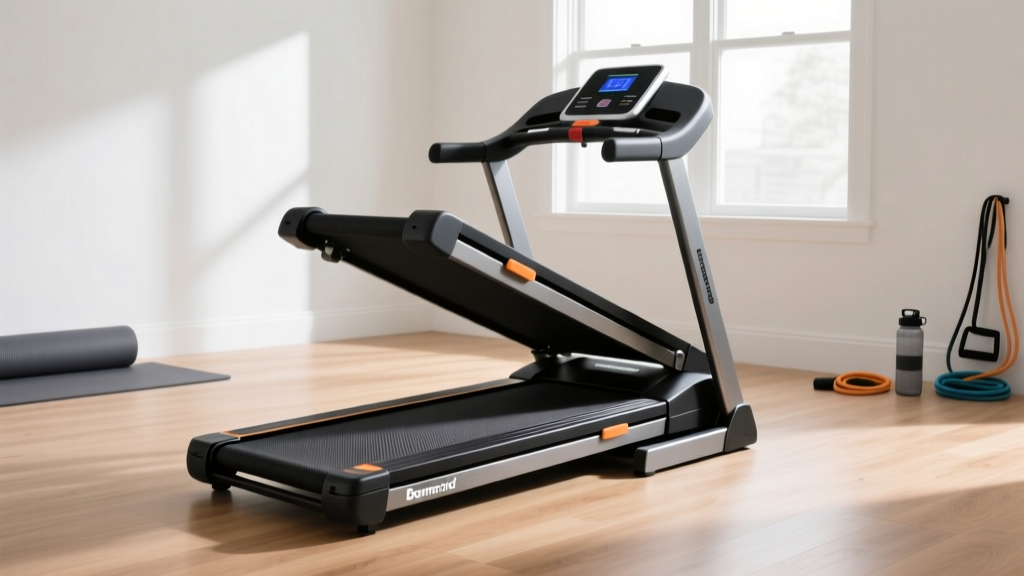
The ProForm 520i treadmill featured a 2.25 CHP motor and a relatively narrow 18-inch by 50-inch running belt. Its folded dimensions measured approximately 32 x 32 x 62 inches, weighing in at 135 pounds. While it was marketed as 'portable,' the reality of moving a 135-pound machine with a high center of gravity often resulted in drywall damage and user frustration. Furthermore, the 1.5-inch front and rear rollers were a notorious failure point; their small diameter created excessive friction and heat, leading to premature belt fraying and motor strain during sustained incline walking. The manual incline pivot points also frequently squeaked and warped under heavy lateral loads, highlighting the structural limitations of legacy compact cardio design.
Market Shift Insight: In 2015, 'folding treadmills' accounted for 68% of small-space cardio sales. By 2026, traditional folding treadmills have dropped to 34% of the compact market share, replaced by ultra-portable, multi-axis folding machines and low-profile walking pads.2026 Market Analysis: The Micro-Gym Revolution
The modern fitness equipment market has undergone a radical transformation driven by urbanization and the permanent shift toward hybrid work models. According to ACSM's Annual Survey of Worldwide Fitness Trends, 'home exercise gyms' and 'wearable-integrated micro-equipment' are dominating the sector. Consumers are no longer looking for machines that simply fold in half; they demand equipment that can be stowed under a sofa, mounted on a wall, or tucked into a closet without requiring a two-person lift.
Key Drivers of the Compact Cardio Boom
- Micro-Apartment Proliferation: The average urban apartment size has decreased by 12% since 2018, demanding cardio machines with an active footprint of less than 8 square feet.
- Acoustic Constraints: Shared living spaces require machines that operate below 65 decibels (dB). Legacy models like the ProForm 520i treadmill routinely exceeded 82 dB at moderate speeds, causing noise complaints.
- NEAT Integration: The focus on Non-Exercise Activity Thermogenesis (NEAT) has driven demand for under-desk and low-impact portable options that encourage continuous, low-intensity movement throughout the workday, aligning with the CDC Physical Activity Guidelines for Adults.
Comparative Matrix: Legacy vs. 2026 Portable Cardio
To understand the magnitude of engineering advancements, we must compare the legacy ProForm 520i treadmill against the top-performing compact categories of 2026. The table below illustrates the dramatic improvements in spatial efficiency, acoustic output, and user weight capacities.
| Model / Category | Active Footprint | Stored Thickness | Acoustic Output | 2026 Price Range |
|---|---|---|---|---|
| ProForm 520i treadmill (Legacy) | 24.5 sq ft | 32" x 32" base | ~82 dB | Discontinued |
| 180° Bi-Fold Walking Pad | 7.2 sq ft | 2.5" thick | ~62 dB | $450 - $799 |
| Magnetic Under-Desk Elliptical | 2.8 sq ft | 11" height | ~45 dB | $220 - $350 |
| Compact Water Rower (Upright) | 18.0 sq ft | 22" x 22" base | ~68 dB | $600 - $950 |
Dominant Compact Categories in the 2026 Market
The market has fractured into highly specialized portable categories, each solving a specific spatial or acoustic problem that legacy folding treadmills failed to address.
1. Bi-Fold Smart Walking Pads
The most significant disruptor to the traditional compact treadmill is the 180-degree bi-fold walking pad. Unlike the ProForm 520i treadmill, which required a dedicated corner of a room even when folded, modern walking pads utilize a dual-hinge system that allows the handrail to fold completely flat against the deck. When stored, these machines measure a mere 2.5 to 3 inches in thickness, allowing them to slide under standard bed frames (which typically offer 4 to 6 inches of clearance). Modern 2026 models feature brushless 1.5 HP motors that eliminate the carbon dust associated with older brushed motors, vastly improving indoor air quality and reducing maintenance intervals.
2. Magnetic Under-Desk Ellipticals
For users whose primary constraint is not just floor space but the inability to dedicate 'workout time' separate from 'work time,' magnetic under-desk ellipticals have surged in popularity. Utilizing a 12-to-15-pound magnetic flywheel rather than a motorized belt, these units operate at roughly 45 decibels—quieter than a standard HVAC system. They bypass the joint impact issues associated with small-roller treadmills and provide a viable cardiovascular stimulus that aligns with the World Health Organization's recommendations for reducing sedentary behavior.
3. Upright-Stow Water Rowers
Rowing machines were historically the antithesis of compact cardio, requiring up to 8 feet of continuous floor space. However, the 2026 market has perfected the vertical water rower. By utilizing a sealed polycarbonate water tank rather than a magnetic rail, these machines can be tipped onto their nose and stored in a 22-inch by 22-inch footprint. The water resistance naturally scales with user effort, eliminating the need for complex electronic resistance motors that add weight and failure points to the chassis.
Strategic Buying Framework for Small-Space Athletes
When upgrading from a legacy machine or purchasing your first compact cardio unit, avoid the trap of only looking at active dimensions. Use this three-point framework to ensure long-term viability in your space:
- Evaluate the 'Stored Center of Gravity': Many folding treadmills claim a small footprint but stand 60+ inches tall when folded, making them top-heavy and dangerous to move across hardwood floors. Prioritize machines with a stored center of gravity below 24 inches.
- Check the Subfloor Load Limits: If you live in an upper-floor apartment, dynamic impact matters. A 200-pound user running on a legacy compact treadmill generates over 600 pounds of downward force per stride. Walking pads and ellipticals reduce this dynamic load to near-zero, protecting both your subfloor and your neighbor's ceiling.
- Verify the Incline Mechanism: Motorized inclines in budget compact treadmills are the first component to fail due to dust ingestion in the lifting actuator. If you require incline training in a small space, opt for manual 3-point adjustment pins or hydraulic gas-struts, which offer superior longevity in compact chassis designs.
"The biggest mistake consumers make when transitioning from legacy folding treadmills to modern walking pads is ignoring the belt width. A 15-inch belt is sufficient for walking at 3.5 MPH, but attempting to run at 6.0 MPH on a compact pad without handrails introduces severe biomechanical risk. Always match your target heart rate zone to the physical constraints of the machine's deck."
— Dr. Aris Thorne, Biomechanics Researcher
Final Market Verdict
The era of the traditional folding treadmill, epitomized by the ProForm 520i treadmill, has effectively ended for the urban and space-constrained consumer. While legacy models offered a familiar running deck, their acoustic footprint, structural vulnerabilities, and awkward stored dimensions render them obsolete in the modern micro-gym. The 2026 compact cardio market rewards specialized engineering: bi-fold walking pads for low-impact NEAT integration, magnetic ellipticals for silent under-desk use, and vertical water rowers for full-body conditioning. By prioritizing acoustic output, dynamic load reduction, and true zero-clearance storage, today's athletes can achieve elite cardiovascular conditioning without sacrificing their living space.
More gear to consider
All reviews
Compact Cardio: Portable Gear & Treadmill Belt Cleaner Guide

Curved vs Motorized vs 360 Treadmill: 2026 Buyer's Guide
2026 Review: Folding Treadmills From Commercial Treadmill Brands

Deer Run Treadmill Review & Air Bike vs Assault Bike Value Guide

Zwift Treadmill Setup & Cardio Machine Noise Comparison
