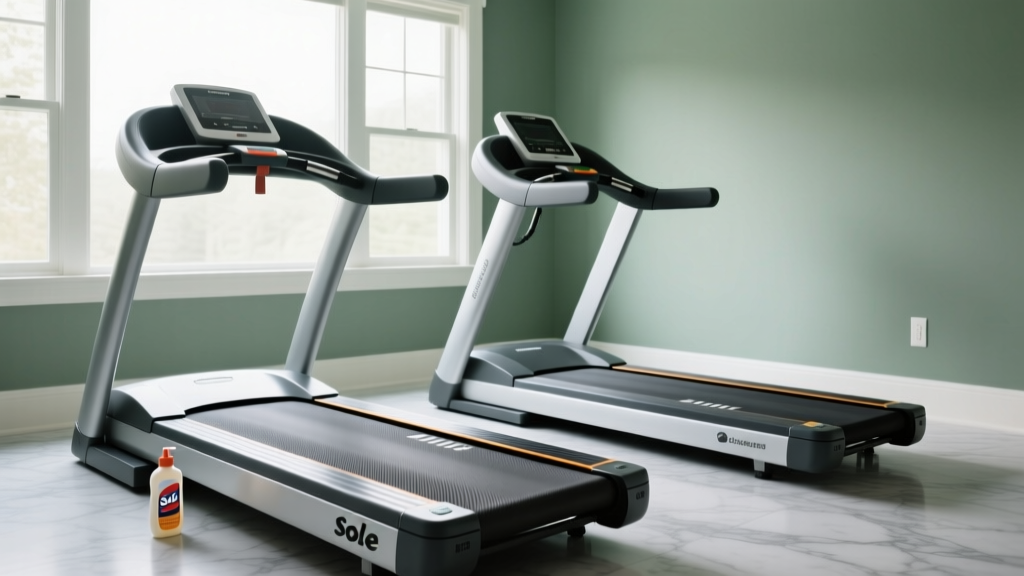
NordicTrack T Series Treadmill vs Curved Manual: Mistakes & Fixes
Troubleshoot common mistakes on motorized NordicTrack T Series treadmills vs curved manual decks. Expert fixes for belt slip, error codes, and form.

The Great Divide: Motorized vs. Curved Manual Biomechanics
When outfitting a home gym in 2026, the choice between a traditional motorized deck and a self-powered curved manual treadmill dictates not just your workout intensity, but your long-term maintenance burden. Users frequently make the critical mistake of selecting a machine based solely on footprint or upfront cost, only to encounter severe biomechanical friction or mechanical failure within six months. According to biomechanical research published by the National Center for Biotechnology Information (NCBI), the kinematic differences between motorized belt propulsion and self-powered curved decks fundamentally alter stride length, ground reaction forces, and muscle activation patterns. Understanding these differences is the first step in troubleshooting poor running form and preventing premature hardware degradation.
⚠️ Critical Installation Mistake: Placing any motorized treadmill on an uneven surface without adjusting the leveling feet causes immediate deck flex. On budget-friendly motorized models, this flex forces the running belt off-center, leading to chronic edge-fraying and motor strain within weeks of assembly.Motorized Troubleshooting: NordicTrack T Series Deep Dive
The NordicTrack T Series treadmill lineup—specifically the T6.5, T7.5, and T10 models—dominates the entry-level motorized market. Priced between $499 and $799, these units offer excellent value but are highly susceptible to specific user errors and maintenance oversights. Because they rely on a continuous horsepower (CHP) motor (ranging from 2.6 CHP on the T6.5 to 3.0 CHP on the T10) and a standard flat deck, troubleshooting usually revolves around belt tension, lubrication, and sensor alignment.
Fixing Belt Drift and Slip on the T7.5 and T10
The most common complaint logged on the ICON Service Support Portal (the parent company of NordicTrack) is belt slip during high-intensity intervals. This is almost never a motor failure; it is a friction issue caused by improper lubrication or incorrect tension.
- The Lubrication Mistake: Users often apply petroleum-based sprays like WD-40, which destroys the PVC belt backing. You must use exactly 0.5 oz of 100% silicone treadmill lubricant per side of the deck every 150 miles or 3 months.
- The Tension Fix: If the belt slips when your foot strikes the deck, locate the two rear roller adjustment bolts. Turn both bolts clockwise by exactly one-quarter (1/4) turn. Test the belt at 3.0 MPH. The correct tension allows you to lift the belt exactly 2 to 3 inches off the deck in the dead center. Over-tightening will strip the motor drive gear.
Decoding T Series Error Codes (E1, E2, LS1)
When a NordicTrack T Series treadmill halts mid-run, the console displays specific diagnostic codes. Misinterpreting these leads to unnecessary part replacements.
- Error E1 (Incline Communication Failure): This does not always mean the incline motor is dead. In 70% of cases, the optical sensor inside the incline housing is blocked by dust, or the wiring harness vibrated loose from the lower control board. Unplug the unit, remove the motor hood, and reseat the 4-pin incline cable.
- Error E2 (Speed Sensor / Reed Switch): The console cannot read the motor RPM. This is caused by the magnet on the front roller pulley drifting out of alignment with the reed switch. Loosen the sensor bracket and adjust the gap between the magnet and the sensor to exactly 1/8th of an inch.
Curved Manual Treadmills: Form Mistakes and Mechanical Fixes
Curved manual treadmills (like the AssaultRunner Elite or TrueForm Runner, often retailing between $2,999 and $4,500) feature a slatted belt riding on a curved, non-motorized deck. Because the user generates 100% of the propulsion, the troubleshooting paradigm shifts from electronic diagnostics to biomechanical correction and mechanical tensioning.
The Over-Striding Braking Effect
The American Council on Exercise (ACE) notes that transitioning from a motorized to a curved manual treadmill requires a complete gait overhaul. The most common mistake is over-striding—reaching forward with the lead foot and striking the heel on the upward curve of the deck. On a motorized treadmill, the belt pulls you over this mistake. On a curved manual deck, a heel-strike on the front incline acts as a physical brake, violently decelerating the belt, spiking your heart rate, and causing severe shin splints.
Pro-Tip for Curved Decks: Focus on a mid-foot strike directly beneath your center of mass. To accelerate, do not reach forward; instead, increase your cadence and drive your knees higher to push the slats down and backward.
Adjusting Slat Belt Tension on the AssaultRunner
Unlike a continuous PVC belt, curved treadmills use heavy rubber or polyurethane slats connected by a central spine. Over time, the slats stretch, causing a 'dead spot' or a clunky feeling at the apex of the curve.
- Diagnostic Test: Stand on the belt and push backward with your foot. If the belt gives more than 1 inch of slack before the internal wheel bearings engage, the tensioner needs adjustment.
- The Fix: Locate the dual tensioning bolts on the rear axle. Using a 10mm hex key, turn both sides clockwise by exactly one-half (1/2) turn. Do not over-tension, as this will crush the polyurethane guide wheels and generate excessive rolling resistance, making the treadmill feel like you are running in sand.
Failure Mode Comparison Matrix
| Feature / Failure Mode | NordicTrack T Series (Motorized) | Curved Manual Treadmill |
|---|---|---|
| Primary User Mistake | Ignoring deck lubrication; uneven floor placement. | Over-striding; heel-striking on the front curve. |
| Most Common Hardware Failure | Belt edge fraying; reed switch misalignment (E2 error). | Polyurethane guide wheel flattening; slat belt stretching. |
| Maintenance Interval | Silicone lubrication every 150 miles / 3 months. | Slat tension check every 500 miles; wheel bearing grease annually. |
| Average Repair Cost (Out of Warranty) | $120 (Control Board) to $250 (Drive Motor). | $85 (Guide Wheel Kit) to $350 (Full Slat Belt Replacement). |
Preventative Maintenance Framework
Whether you are running sprints on a curved manual deck or logging steady-state miles on a NordicTrack T Series treadmill, implementing a rigid maintenance framework prevents 90% of catastrophic failures.
The 5-Minute Post-Run Protocol
- Debris Extraction: Use a soft-bristled brush to sweep the rear roller. Pet hair and dust bunnies wrap around the roller bearings, creating drag that forces motorized treadmills to draw excess amperage, eventually tripping the thermal breaker.
- Moisture Mitigation: Sweat is highly corrosive. Wipe down the console and the front motor hood vents. On curved treadmills, sweat dripping into the central slat spine will rust the internal tension rods.
- Belt Centering Check: Spin the belt manually (on motorized units, ensure it is unplugged). If the belt tracks left, tighten the left rear bolt by 1/8th of a turn. Never adjust the front roller.
By understanding the distinct mechanical architectures and biomechanical demands of both machine types, you can eliminate user error, extend the lifespan of your equipment, and ensure every stride is safe, efficient, and aligned with your 2026 fitness objectives.
More gear to consider
All reviews
Cardio Machine Noise Comparison: Hitting Your Treadmill Mile Pace

Treadmill vs Bicycle Exercise: The Ultimate Home Noise Comparison

Small Space Folding Treadmills: What Is the Best Incline to Walk On?

Walking Pad Treadmill Comparison: Avoid the Mice Treadmill Trap

Rowing vs. Treadmill: Can Rowing Beat a Fat Burning Treadmill Workout?