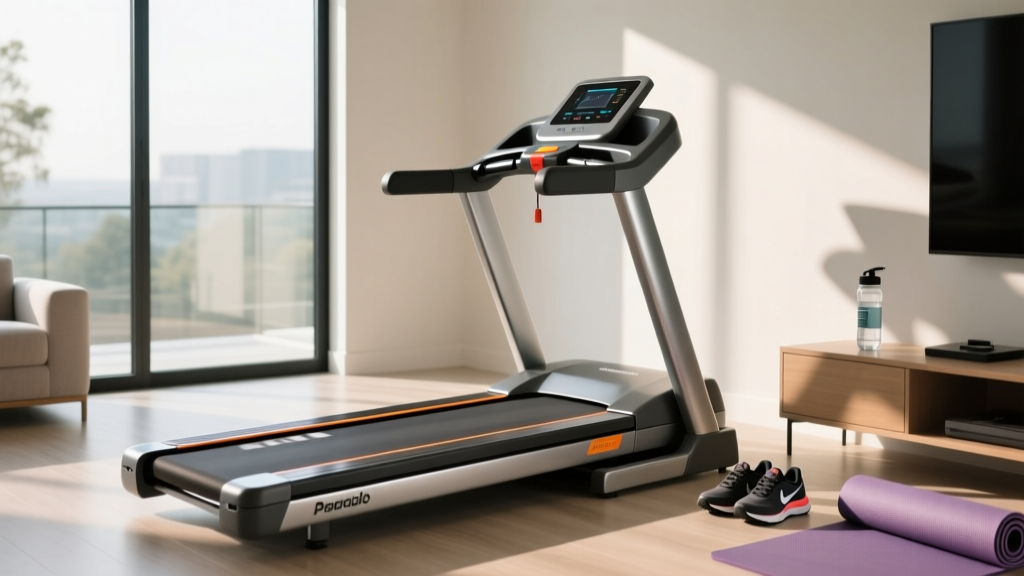
Does the Nike Running App Work on Treadmills? Setup & Noise Guide
Discover if the Nike Running app works on treadmills. Plus, a complete setup walkthrough and cardio machine noise level comparison for quiet home gyms.

The Home Gym Dilemma: Tracking Your Miles Without Waking the House
Building a home cardio sanctuary in 2026 requires balancing two conflicting goals: seamless digital integration and acoustic discretion. Whether you are installing a folding treadmill in a second-floor apartment or setting up a dedicated basement gym, the mechanical realities of indoor running present unique challenges. Two of the most common questions we receive at FitGearPulse revolve around digital tracking and acoustic impact: How do I minimize structure-borne noise? and Does the Nike Running app work on treadmills?
This comprehensive setup and installation walkthrough will guide you through the acoustic physics of cardio machines, provide a step-by-step noise-dampening installation protocol, and definitively answer how to bridge your indoor miles to the Nike Run Club (NRC) ecosystem.
Cardio Machine Noise Level Comparison: What to Expect
Before unboxing your equipment, it is critical to understand the difference between airborne noise (the sound of the motor and belt moving through the air) and structure-borne noise (the low-frequency impact of your footfalls traveling through floor joists). According to guidelines on occupational and environmental acoustics, prolonged exposure to noise above 70 decibels (dB) can cause fatigue, making a quiet gym environment essential for mental endurance source: OSHA Noise Standards.
| Machine Type | 2026 Benchmark Model | Airborne Noise (dB) | Structure-Borne Impact | Primary Noise Culprit |
|---|---|---|---|---|
| Treadmill (Running 7mph) | NordicTrack EXP 10i | 70 - 82 dB | High (Severe) | Footfall impact & motor hum |
| Treadmill (Walking 3mph) | WalkingPad R2 | 55 - 62 dB | Low (Moderate) | Belt friction |
| Elliptical (Magnetic) | Bowflex Max Trainer M9 | 40 - 50 dB | Negligible | Drive belt squeak (if unmaintained) |
| Rowing Machine (Air) | Concept2 RowErg | 65 - 80 dB | Low | Wind resistance fan |
| Air Bike | AssaultBike Pro X | 75 - 90 dB | Moderate | Air displacement fan |
As the data illustrates, treadmills are inherently the loudest cardio machines due to the kinetic energy of a runner's body weight striking the deck. Mitigating this requires a specialized installation approach.
Step-by-Step Installation Walkthrough for a Whisper-Quiet Treadmill
To achieve a professional-grade, noise-dampened treadmill installation, follow this exact sequence. Skipping these steps will result in motor strain, premature belt wear, and inevitable noise complaints from downstairs neighbors.
Step 1: Subfloor Preparation and Mass Loading
Do not place a treadmill directly on hardwood, laminate, or thin carpet. The vibration will act as a sounding board.
- Layer 1 (Base): Lay down a sheet of Mass Loaded Vinyl (MLV). MLV is a dense, flexible acoustic barrier that blocks low-frequency structure-borne noise. A 1lb per square foot MLV roll costs roughly $1.50 per sq ft.
- Layer 2 (Surface): Place a 3/8-inch thick, high-density EVA foam treadmill mat over the MLV. Avoid cheap PVC mats; they compress over time and lose their acoustic dampening properties. Expect to invest $60 to $90 in a premium mat.
Step 2: Precision Frame Leveling
An unlevel treadmill deck causes the running belt to track off-center, rubbing against the side rails. This friction forces the motor to draw excess amperage, creating a loud, low-frequency hum. Use a torpedo level on the side rails. Adjust the threaded leveling feet on the rear stabilizer until the bubble is perfectly centered. Lock the nuts tightly against the frame to prevent vibration loosening.
Step 3: Belt Tension and Lubrication
Out of the box, treadmill belts are often over-tensioned to prevent shipping slips. Over-tensioning increases the load on the motor bearings. Perform the 'lift test': you should be able to lift the center of the belt roughly 2 to 3 inches off the deck. If it is tighter, loosen the rear tension bolts by a quarter-turn on each side. Finally, apply 1 ounce of 100% pure silicone treadmill lubricant under the belt. Never use petroleum-based products like WD-40, which will destroy the belt backing.
Pro-Tip: The Coin Drop Test
To test your acoustic dampening setup, drop a heavy metal washer or coin onto the treadmill deck from waist height while the machine is off. If you hear a sharp 'ping', your matting is insufficient. If you hear a dull 'thud', your structure-borne isolation is successful.
Tech Integration: Does the Nike Running App Work on Treadmills?
With your machine acoustically isolated and mechanically optimized, it is time to address digital tracking. The short answer to the most frequently asked question—does the Nike Running app work on treadmills?—is no, not natively via direct Bluetooth connection.
Unlike platforms such as Zwift or Kinomap, which utilize the Bluetooth FTMS (Fitness Machine Service) protocol to pull live speed and incline data directly from the treadmill's console, the Nike Run Club (NRC) app was fundamentally designed for outdoor GPS tracking. When you open NRC on your smartphone and select an 'Indoor Run', the app relies entirely on your phone's internal accelerometer to estimate cadence and distance, which is notoriously inaccurate on a moving treadmill belt.
Method 1: The Apple Watch GymKit Bridge (Recommended)
If you own an Apple Watch and a modern treadmill equipped with NFC GymKit (such as select Peloton, NordicTrack, or Technogym models), you can bypass the phone entirely. Tap your Apple Watch to the NFC reader on the treadmill console. The watch will pull exact telemetry (speed, incline, heart rate) directly from the machine's motherboard and sync the completed workout to Apple Health. Because NRC pulls indoor distance data from Apple Health, your miles will accurately populate in the NRC ecosystem post-run source: Nike Run Club App.
Method 2: The Stryd Footpod Ecosystem
For treadmills lacking GymKit, elite runners use a Stryd footpod. Stryd clips to your shoe and uses advanced wind and motion sensors to calculate exact pace and power, completely ignoring the unreliable phone accelerometer. While Stryd does not sync live to NRC, it syncs flawlessly to Strava and Apple Health. You can run using the Stryd app, and the highly accurate data will cascade into your NRC profile via Apple Health integration.
Method 3: Native App API Bridging
If your treadmill requires a proprietary subscription (like iFIT or JRNY) to operate the screen, record your run using the manufacturer's native software. Once the workout is saved, ensure your manufacturer account is linked to Strava. From Strava, use a third-party API bridge (like RunGap) to push the activity into Nike Run Club. It is a multi-step workaround, but it preserves your exact split data and elevation gains.
'The future of indoor fitness tracking isn't about forcing legacy apps to talk to new hardware; it's about leveraging open health APIs like Apple Health and Google Fit as the central hub for your biometric data.' — Fitness Technology Analysis, American Council on Exercise (ACE) source: ACE Fitness
Ongoing Maintenance to Preserve Low Noise Levels
Even the best installation will degrade if the machine is neglected. To keep your treadmill operating below 70 dB, implement this bi-annual maintenance checklist:
- Vacuum the Motor Hood (Every 3 Months): Dust acts as an insulator on the motor's internal components and the drive belt. A clogged motor runs hotter, louder, and draws more electricity. Remove the plastic motor hood (usually 4 to 6 Phillips-head screws) and use a vacuum hose to clear the debris.
- Inspect the Drive Belt (Annually): The ribbed belt connecting the motor to the front roller can glaze over time, causing a high-pitched squeal during heavy acceleration. If the belt looks shiny, remove it, clean it with isopropyl alcohol, and apply a specialized rubber belt dressing.
- Re-lubricate the Deck (Every 150 Miles):Friction is the enemy of silence. Set a recurring calendar reminder to apply 1oz of silicone lube every 150 miles. If you run 15 miles a week, this means lubricating your deck roughly every 10 weeks.
Final Verdict: Building the Ultimate Indoor Running Hub
Creating a premium home cardio environment requires looking beyond the manufacturer's brochure. By understanding the acoustic realities of structure-borne noise and utilizing Mass Loaded Vinyl alongside high-density EVA foam, you can run at a 7:00/mile pace without disturbing the household. Furthermore, while the Nike Running app does not natively support direct Bluetooth FTMS treadmill connections, leveraging Apple Watch GymKit or API bridging via Strava ensures your indoor grind is accurately logged, analyzed, and celebrated in your NRC dashboard. Invest the time in proper setup, and your treadmill will remain a whisper-quiet workhorse for years to come.
More gear to consider
All reviews
Treadmill Motor Size Guide: York Millennium Treadmill HP Analysis
Air Bike vs Assault Bike: Space Guide & Treadmill Screening Alts
Curved vs Motorized & Troubleshoot NordicTrack Treadmill

2026 Portable Cardio Trends: Treadmill Speed to Pace Chart Guide

Are Wellfit Treadmills Good? Walking Pad Setup & Review