Schwinn 810 Treadmill Review: Belt Maintenance Guide
Read our Schwinn 810 treadmill review maintenance guide. Learn exact belt lubrication steps, tension adjustments, and deck care to extend machine life.

Beyond the Basics: Schwinn 810 Belt and Deck Longevity
When consumers read a standard Schwinn 810 treadmill review, the focus is usually on its 2.0 Continuous Horsepower (CHP) motor, 20-inch by 55-inch running surface, and budget-friendly footprint. However, as fitness equipment technicians know, the true lifespan of any entry-level treadmill is dictated almost entirely by friction management. The Schwinn 810 utilizes a phenolic-coated MDF (Medium-Density Fiberboard) deck paired with a multi-ply rubber belt. Without meticulous maintenance, the 2.0 CHP motor will overwork, leading to premature lower control board failure—a repair that costs between $140 and $185 in 2026.
This guide bypasses the basic assembly instructions and dives deep into the exact, millimeter-precise maintenance protocols required to keep the Schwinn 810 running silently and efficiently for years.
⚠️ Critical Warning: The WD-40 Myth
Never use WD-40, 3-in-One oil, or any petroleum-based distillates on your Schwinn 810. Petroleum products will chemically break down the phenolic coating on the MDF deck and dissolve the adhesive binding the belt layers, resulting in catastrophic delamination within weeks. Only use 100% pure silicone treadmill lubricant.
The Anatomy of the Schwinn 810 Friction Zone
To maintain the machine, you must understand the friction zone. The Schwinn 810’s belt glides over a 1-inch thick MDF deck. Factory pre-lubrication typically wears off after the first 90 to 120 miles of use. According to factory guidelines referenced by Nautilus Support (the parent company of Schwinn), the introduction of 100% silicone reduces the coefficient of friction, keeping the motor's amp draw within safe operational thresholds.
When the belt dries out, the motor must draw more electrical current to maintain speed. This excess current generates heat in the motor windings and the lower control board's MOSFETs (Metal-Oxide-Semiconductor Field-Effect Transistors), which is the number one cause of sudden treadmill shutdowns during a run.
Step-by-Step 150-Mile Lubrication Protocol
For a user running 12 miles per week, lubrication should be performed every 3 months or 150 miles, whichever comes first. Here is the exact procedure:
- Prep the Area: Unplug the treadmill from the wall. Wipe down the running belt with a slightly damp microfiber cloth to remove dust and rubber particulate. Let it dry completely.
- Access the Deck: Reach under the center of the running belt on the left side. Gently lift the belt away from the deck. You should be able to lift it about 2 to 3 inches without straining the material.
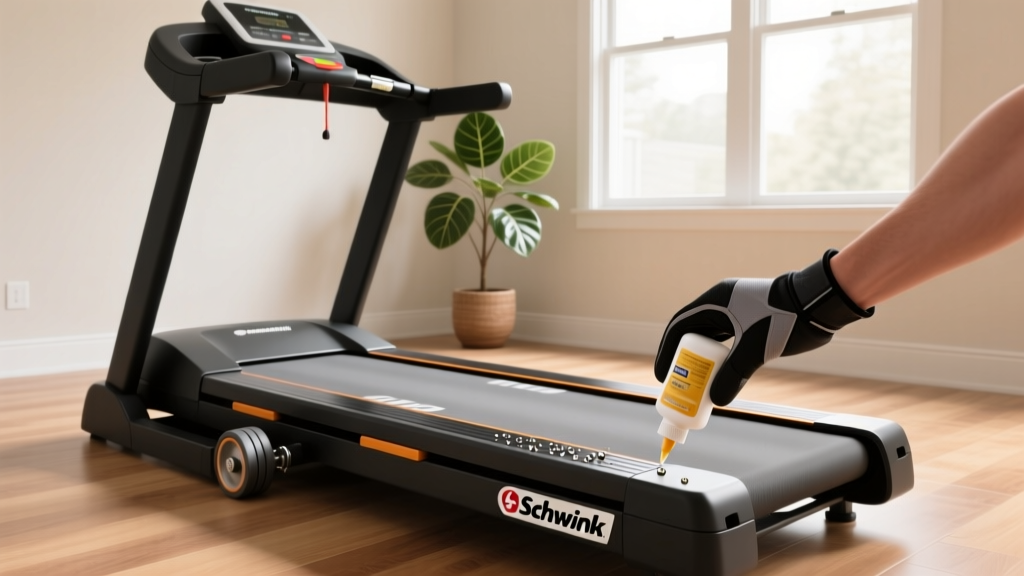
- Apply the Silicone: Using a 100% silicone applicator wand or bottle (brands like Impresa or Horizon Fitness cost roughly $12 to $16 per bottle), apply exactly 0.5 ounces (15 ml) of silicone in a zig-zag pattern directly onto the center of the deck, spanning about 12 inches of the deck's length.
- Repeat for the Right Side: Move to the right side of the belt, lift, and apply another 0.5 ounces. The total application should be 1 ounce (30 ml). Over-lubricating will cause the silicone to squeeze out the sides, creating a slipping hazard on your floor.
- Distribute the Lube: Plug the machine back in. Start the treadmill at 2.0 MPH and let it run for 3 minutes. Then, increase the speed to 4.0 MPH and walk lightly on the belt, shifting your weight from the left foot to the right foot to press the silicone evenly across the entire phenolic surface.
Tension and Alignment Matrix: Troubleshooting the 810
Lubrication is only half the battle. If the belt is misaligned or improperly tensioned, it will track off-center and shred the side seams. The Schwinn 810 uses standard rear-roller adjustment bolts requiring a 6mm Allen wrench. Use the matrix below to diagnose and fix belt behavior.
| Symptom | Diagnostic Check | Corrective Action (6mm Hex Key) |
|---|---|---|
| Belt slips or hesitates during foot strike | Lift belt at the center. If clearance is >3.5 inches, tension is too low. | Turn BOTH left and right rear roller bolts 1/4 turn clockwise. Re-test. |
| Belt drifts to the left side | Observe at 3.0 MPH. The left roller is effectively further back than the right. | Turn LEFT rear roller bolt 1/4 turn clockwise. Allow 10 seconds to track. |
| Belt drifts to the right side | Observe at 3.0 MPH. The right roller is effectively further back than the left. | Turn RIGHT rear roller bolt 1/4 turn clockwise. Allow 10 seconds to track. |
| High-pitched squealing from the rear | Belt is over-tensioned, putting extreme pressure on the roller bearings. | Turn BOTH rear roller bolts 1/4 turn counter-clockwise to relieve pressure. |
Amp Draw Testing: The Hidden Metric of Belt Health
Expert technicians do not rely on the 'feel' of the belt to determine if it needs maintenance; they measure electrical resistance. The Consumer Reports Treadmill Buying Guide frequently notes that motor longevity is directly tied to operating temperature and electrical draw.
To perform an Amp Draw test on your Schwinn 810, purchase a standard P3 Kill A Watt electricity usage monitor (approximately $25). Plug the treadmill into the monitor, and the monitor into the wall.
- No-Load Test (3.0 MPH, no user on belt): The display should read between 2.5 and 4.0 amps. If it reads higher, the deck-belt friction is excessive, or the roller bearings are failing.
- Load Test (3.0 MPH, 150 lb user walking): The display should read between 5.0 and 8.0 amps.
- Danger Zone: If the loaded amp draw consistently exceeds 12.0 amps, your belt and deck are experiencing severe friction. Continued use at this amperage will trip the internal thermal breaker or fry the motor controller.
"Proper equipment maintenance isn't just about protecting your financial investment; a jerky, poorly maintained belt can subtly alter your gait biomechanics, increasing the risk of knee and hip strain during repetitive cardio sessions." — Guidelines adapted from the American Council on Exercise (ACE) regarding home gym safety and ergonomics.
When to Replace vs. When to Maintain (2026 Pricing)
Maintenance can only delay the inevitable wear of the phenolic coating. If you perform the lubrication protocol and the No-Load Amp Draw remains above 6.0 amps, the deck's phenolic layer has likely worn through to the raw MDF. At this stage, lubrication will not help, and the raw wood will absorb the silicone and swell.
Cost Breakdown for Schwinn 810 Rebuild:
- 100% Silicone Lubricant (Maintenance): $12 - $18
- Replacement Belt Only: $65 - $85 (Part # 0810-BLT)
- Replacement Deck Only: $70 - $90 (Part # 0810-DEK)
- Belt and Deck Combo Kit: $110 - $140 (Highly recommended to replace both simultaneously to prevent the old deck from instantly ruining the new belt).
Frequently Asked Questions
Can I use a silicone spray aerosol instead of liquid?
Aerosol sprays are not recommended for the Schwinn 810. The overspray gets into the motor compartment and coats the optical sensors and electronics, attracting dust and causing sensor failures. Always use liquid silicone with an applicator wand.
How do I know if my belt is stretched beyond repair?
If you have tightened the rear roller bolts to their maximum thread exposure (usually about 1.5 inches of visible bolt thread) and the belt still slips during heavy foot strikes, the belt's internal Kevlar or polyester weave has stretched. It must be replaced.
Does the Schwinn 810 require waxing?
No. Modern phenolic-coated decks require liquid silicone, not paraffin wax. Wax was used on older, pre-2010 treadmill models and will gum up the 810's running surface.
More gear to consider
All reviews
Treadmill Motor Guide: How to Calculate Duke Treadmill Score Safely
Setup: High Intensity Interval Training Workouts Treadmill Motor Guide
Weighted Treadmill Trends: 2026 Under Desk Office Use Review

NordicTrack Treadmill Elite 3700 vs Curved Manual Treadmills
Compact Professional Treadmills: Small Space Folding Review 2026