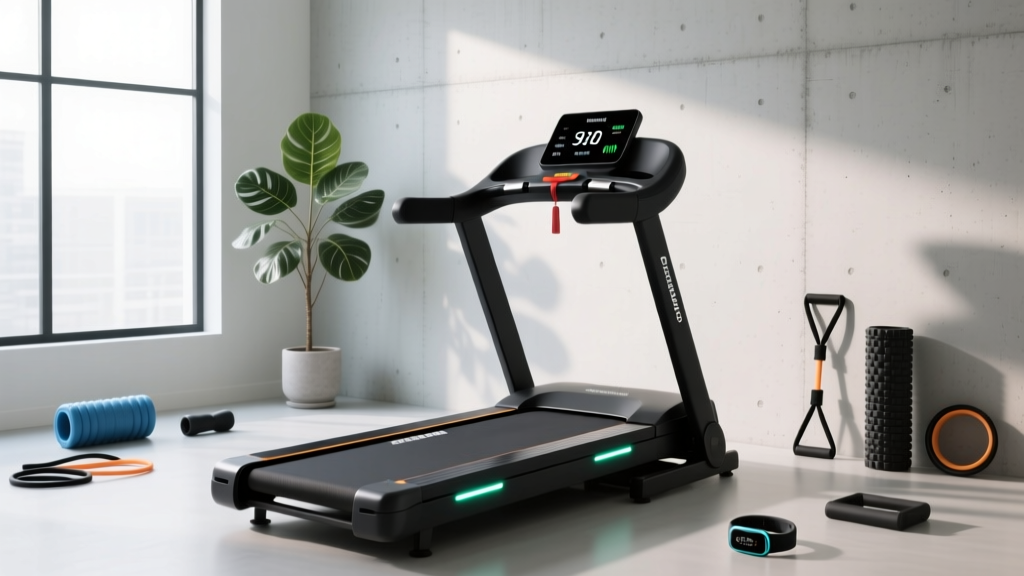
New Treadmill China Imports: Noise Troubleshooting & Comparison Guide
Compare noise levels of new treadmill China imports vs premium brands. Expert troubleshooting guide for belt slap, motor whine, and home gym acoustics.

The home fitness landscape in 2026 is heavily influenced by direct-to-consumer manufacturing. Many budget-conscious buyers type 'new treadmill china' into global wholesale platforms or search for direct-import models on Amazon, hoping to bypass traditional retail markups. While these Ningbo and Yongkang-manufactured machines offer undeniable value—often priced between $350 and $600 compared to $1,200+ for legacy domestic brands—they introduce a unique set of acoustic challenges. Without the heavy-duty sound dampening and precision machining of premium models, import treadmills can quickly turn a peaceful home gym into a noisy, vibrating echo chamber.
According to the Consumer Reports Treadmill Buying Guide, noise and vibration are the top two complaints for home cardio equipment, often leading to neighbor disputes in multi-family housing. This guide provides a deep-dive acoustic comparison between direct-import cardio machines and premium domestic brands, followed by an expert troubleshooting matrix to eliminate belt slap, motor whine, and structural resonance.
The Decibel Breakdown: Import vs. Premium Acoustic Profiles
Not all treadmill noise is created equal. The human ear is highly sensitive to high-frequency electronic whines and sharp mechanical slaps, while low-frequency footfall thuds are generally more tolerable. Budget imports often suffer from high-pitch noise pollution due to undersized continuous duty motors and thinner running belts.
| Brand Tier | Example Models | Motor (Continuous CHP) | Deck / Belt Setup | Avg dB (Walk / Run) | Primary Noise Signature |
|---|---|---|---|---|---|
| Budget China Imports | OMA 5108EB, Generic Alibaba 3.0HP | 1.25 - 1.5 CHP (Advertised as 3.0 Peak) | Raw MDF Deck / 1-Ply PVC Belt | 62-65 dB / 74-79 dB | High-pitch PWM motor whine, loud belt slap |
| Mid-Range Hybrids | Sunny Health SF-T7516 | 2.25 CHP | Phenolic-coated MDF / 2-Ply Belt | 58-61 dB / 68-72 dB | Roller friction, cooling fan rush |
| Premium Domestic | Sole F80, NordicTrack 1750 | 3.5 - 4.0 CHP | Aluminum Extrusion / 2-Ply Urethane | 50-54 dB / 62-66 dB | Low-frequency footfall thud, muffled hum |
When a 200-pound runner pushes a 1.25 CHP import motor, it spikes the amperage draw. This forces the Pulse Width Modulation (PWM) motor controller to work in overdrive, emitting a high-frequency electronic whine (typically between 2,000 and 4,000 Hz). Conversely, a 4.0 CHP motor on a premium machine barely breaks a sweat, resulting in a quieter, lower-frequency acoustic profile that is easily masked by a television or podcast.
4 Common Mistakes That Amplify Treadmill Noise
Before assuming your machine is defective, evaluate your setup and maintenance routines. The majority of noise complaints stem from user error during assembly or ongoing care.
1. The Belt Tension Guessing Game
The most frequent mistake with new imports is over-tightening the running belt to prevent slipping. An over-tensioned belt places immense lateral stress on the roller bearings and the motor drive shaft. This manifests as a loud, grinding whine that worsens as the machine heats up. According to the Sole Fitness Official Maintenance Guide, the correct tension allows you to lift the belt exactly 2 to 2.5 inches off the deck at the center point. Anything less than 2 inches means your belt is choking the motor.
2. Using the Wrong Lubricant Chemistry
Never use WD-40, PTFE (Teflon) sprays, or household oils on a treadmill belt. These chemicals break down the nylon weave of the belt and the PVC deck overlay. As the chemical degradation occurs, the friction coefficient spikes, creating a loud, rhythmic 'sanding' or 'squeaking' noise. You must use 100% pure liquid silicone treadmill lubricant.
3. Ignoring Sub-Floor Resonance
Placing a 120-pound treadmill directly on hardwood floors or second-story joists creates a soundboard effect. The kinetic energy from foot strikes transfers directly into the floor joists, amplifying the noise for anyone in the room below. Standard foam puzzle mats are insufficient for impact absorption; they compress fully under the machine's static weight, offering zero acoustic isolation.
4. Misaligning the Rear Roller
If the rear roller is adjusted unevenly during assembly, the belt will track to one side and rub against the plastic side rails. This creates a high-pitched squeal and will eventually fray the belt edges, leading to permanent structural damage and increased acoustic output.
⚠️ Critical Warning: The Break-In Period
Direct-from-China OEM treadmills often ship with a thick, sticky layer of factory wax on the deck. During the first 10 to 15 miles, this wax can cause the belt to slip and squeak violently. Do not immediately tighten the tension bolts. Instead, run the machine at 3.0 MPH for 20 minutes without walking on it to allow the factory wax to distribute evenly across the deck surface.
Step-by-Step Troubleshooting for Belt Slap and Motor Whine
If your machine is generating excessive noise, follow this diagnostic sequence to isolate the failure point.
- Isolate the Motor (The No-Belt Test): Unplug the machine, remove the motor hood, and loosen the rear roller bolts to completely detach the running belt from the drive system. Plug the machine in and run it at 5.0 MPH. If the high-pitch whine persists without the belt attached, the issue is internal to the motor bearings or the lower control board. If the noise disappears, the issue is friction-related (belt/deck/rollers).
- Perform the Deflection Test: With the belt reattached and centered, reach under the middle of the belt and pull upward. It should rise exactly 2.5 inches. If it rises 4 inches, it is too loose (causing belt slap). If it rises 1 inch, it is too tight (causing motor whine). Adjust the rear roller bolts in quarter-turn increments.
- Apply Precision Lubrication: Loosen the belt slightly. Squeeze exactly 15ml (0.5 oz) of 100% silicone lubricant in a zig-zag pattern directly onto the center of the deck. Run the treadmill at 2.0 MPH for 5 minutes to distribute the silicone. Wipe away any excess that squeezes out the sides.
- Install High-Density Isolation Pads: Purchase anti-vibration pads made from recycled rubber with a Shore A hardness rating of 60-70. Place these specifically under the four main feet of the treadmill to decouple the machine from the floor joists.
When to RMA Your Direct-to-Consumer Import
While many acoustic issues can be solved with basic maintenance, some noise profiles indicate catastrophic hardware failure that requires a Return Merchandise Authorization (RMA). Because quality control on budget imports can vary wildly between batches, you must know when to stop troubleshooting and contact the seller.
Initiate an RMA or warranty claim if you experience any of the following edge cases:
- ABEC-3 Bearing Grinding: If you hear a metallic, rhythmic crunching sound coming from the front or rear roller that persists even when the belt is removed, the sealed roller bearings have failed. Budget imports frequently use low-grade ABEC-3 bearings that degrade rapidly under heavy loads.
- PWM Board Arcing: A loud, electrical 'popping' or 'crackling' sound accompanied by a burning ozone smell indicates that the lower motor control board is arcing. Unplug the machine immediately to prevent a fire hazard.
- MDF Deck Delamination: If the deck warps due to humidity or excessive friction heat, you will hear a loud 'thwack' as the belt catches on the warped seam of the wood. Once an MDF deck warps, it cannot be sanded or repaired; the entire deck assembly must be replaced.
'Prolonged exposure to noise levels above 75 decibels can contribute to auditory fatigue and stress, even if it doesn't cause permanent hearing loss. Managing home gym acoustics isn't just about being polite to neighbors; it's about creating a sustainable training environment.' — American Speech-Language-Hearing Association (ASHA)
Final Verdict on Home Gym Acoustics
Purchasing a direct-import cardio machine is a highly effective way to build a home gym on a budget, provided you understand the acoustic compromises inherent in the design. By严格执行 proper belt tensioning, utilizing 100% silicone lubrication, and investing in high-durometer vibration isolation pads, you can reduce the operational noise of a budget import by up to 15 decibels. However, if you live in an apartment with shared walls or thin flooring, the low-frequency thud of a premium, heavy-duty domestic machine remains the only foolproof way to guarantee acoustic harmony with your neighbors.
More gear to consider
All reviews
Walking Pad Setup & Review: Avoid a Funny Treadmill GIF
Air Bike vs Assault Bike Guide & Spirit XT285 Treadmill Reviews

ProForm XP 650e Treadmill vs Rowing: Buying Guide

Walking Pad Review: Anti-Gravity Treadmill Charleston Alternatives

Elliptical vs Treadmill: The Truth About Adjusting Treadmill Belt
