Nautilus Treadmill Buying Guide: Feature Comparison Mistakes
Avoid buying mistakes with our Nautilus treadmill feature comparison guide. Learn to troubleshoot motor, belt, and incline issues on T618 and T616 models.

The 2026 Landscape: Why Feature Comparison Matters More Than Ever
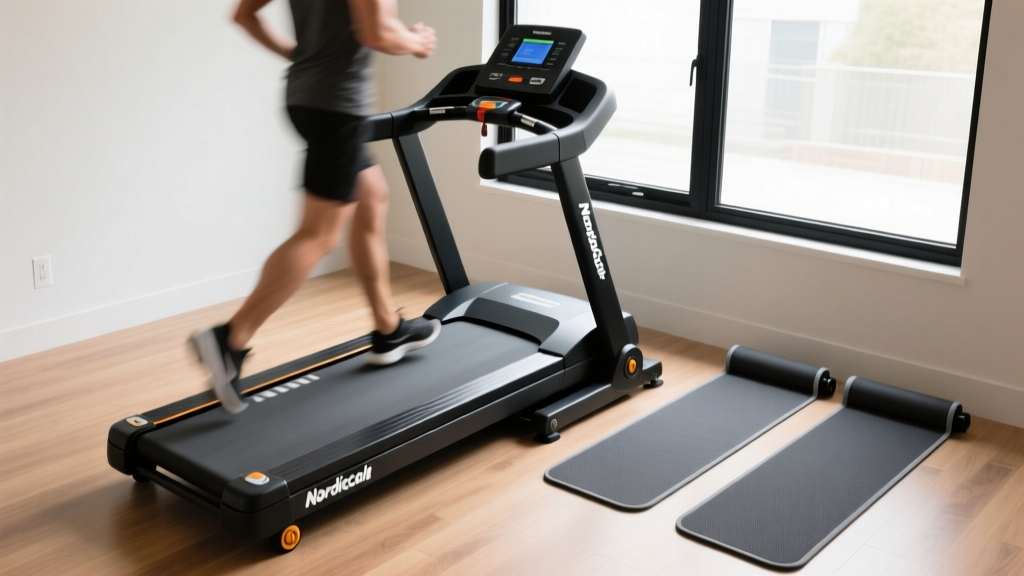
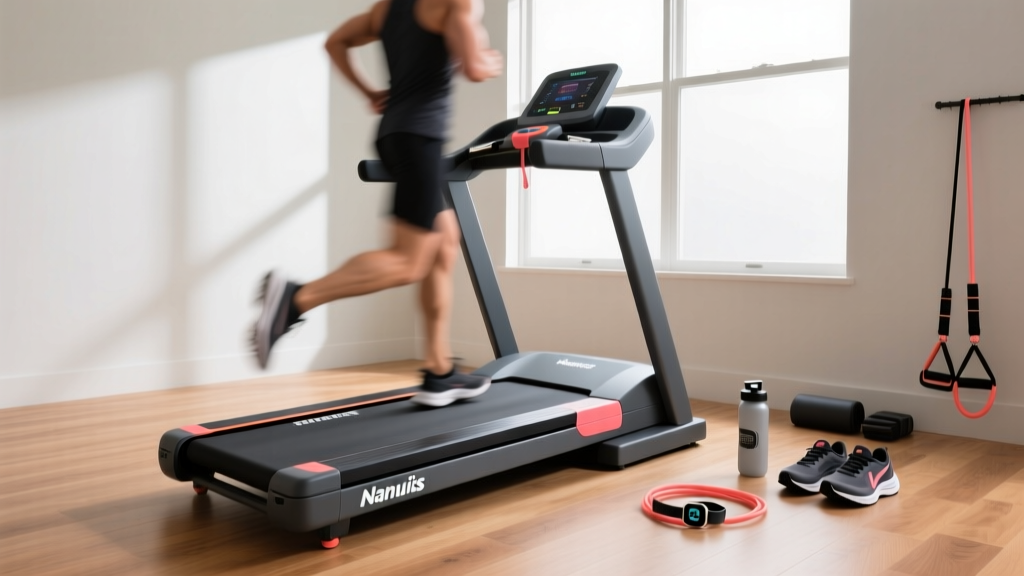
As we navigate the home fitness market in 2026, the secondary and refurbished markets for premium cardio equipment have exploded. The Nautilus treadmill lineup—specifically the flagship T618 and the mid-tier T616—remains a highly sought-after choice for home gyms. However, when buyers rush into a Nautilus treadmill feature comparison, they frequently make critical mistakes that lead to post-purchase frustration, voided warranties, and premature mechanical failure.
Comparing treadmills is not just about looking at the maximum speed or the size of the HD touchscreen. It is about understanding how continuous horsepower, belt ply thickness, and incline motor gearing translate to your specific biomechanics and training volume. According to the Consumer Reports Treadmill Buying Guide, mismatching a user's weight and running intensity with the treadmill's motor and deck specifications is the number one cause of early equipment failure. This guide breaks down the most common feature comparison mistakes buyers make with Nautilus treadmills and provides actionable troubleshooting steps to fix the resulting mechanical issues.
Motor Sizing Blunders: CHP vs. Peak HP and the Overheating Trap
The most pervasive mistake in any Nautilus treadmill buying guide is the confusion between Peak Horsepower (HP) and Continuous Duty Horsepower (CHP). The Nautilus T618 is equipped with a 3.0 CHP motor, while the T616 features a 2.6 CHP motor. Buyers often see a lower price point on the T616 and assume the 0.4 CHP difference is negligible. This is a costly error for heavier runners or those doing high-intensity interval training (HIIT).
💡 Expert Insight: A 2.6 CHP motor is perfectly adequate for walking and light jogging for users under 180 lbs. However, if you weigh over 200 lbs and plan to run at speeds above 7.0 MPH daily, the T616's motor will draw excessive amperage to maintain belt speed, leading to thermal shutdowns.Troubleshooting Motor Overheating (Error Codes E1 & E2)
If you have already purchased a Nautilus treadmill and are experiencing sudden stops or console error codes, the motor is likely overheating due to feature mismatch or belt friction. Here is how to troubleshoot:
- Check the Speed Sensor (E1 Error): Unplug the machine, remove the front motor hood, and locate the optical speed sensor near the motor flywheel. Ensure it is exactly 1/8th of an inch from the magnet. Wipe away any accumulated dust with a microfiber cloth.
- Reduce Amp Draw (E2 Error): An E2 error indicates motor overcurrent. This is almost always caused by a dry walking belt creating massive drag. Perform the 'lift test'—turn the machine off and try to slide your hand under the center of the belt. It should lift about 2 to 3 inches. If it is tight, loosen the rear roller bolts by a quarter-turn and apply 100% silicone lubricant.
Belt Ply and Deck Friction: The Silent Treadmill Killer
When comparing the T618 and T616, both boast a spacious 20-inch by 60-inch running surface. What the spec sheet often buries is the belt construction. The T618 utilizes a premium 2-ply commercial-grade belt, whereas the T616 uses a standard 1-ply belt. Buyers who ignore this feature difference often find themselves replacing the belt within 14 months on the cheaper model.
| Feature Specification | Nautilus T618 | Nautilus T616 |
|---|---|---|
| Belt Dimensions | 20' x 60' | 20' x 60' |
| Belt Ply Thickness | 2-Ply (Heavy Duty) | 1-Ply (Standard) |
| Deck Cushioning | StrikeZone™ Advanced | StrikeZone™ Standard |
| Estimated Belt Lifespan | 3 to 5 Years | 1.5 to 2.5 Years |
Troubleshooting Belt Slippage and Fraying
If you opted for the T616 to save money and are now noticing the belt hesitating when your foot strikes, or the edges beginning to fray, you are experiencing the limits of a 1-ply belt under high tension.
- Re-tension the Belt: Use the provided Allen wrench to turn both left and right rear roller bolts clockwise by exactly one-half turn. Test the treadmill at 3.0 MPH. If it still slips, add another quarter-turn. Never exceed two full turns from the factory baseline, or you will strip the tension bolts.
- Inspect the Deck: Lift the belt and run your hand across the wooden deck. If it feels rough or gouged, the 1-ply belt has worn through its backing. No amount of silicone will fix this; the belt and deck must be replaced as a paired set to prevent immediate motor burnout.
Incline Mechanics: Troubleshooting the 15% Grade Lift Motor
Both the T618 and T616 offer a 15% maximum incline. A common buying mistake is assuming that a motorized incline operates instantaneously like a commercial gym treadmill. Nautilus home models use a linear actuator lift motor that takes roughly 12 to 15 seconds to transition from 0% to 15%. Buyers who program rapid incline intervals in third-party apps often find the machine lagging behind their workout script.
"When comparing incline features, look at the lift motor's torque rating, not just the maximum percentage. A weaker lift motor will grind and strip its internal plastic gears if forced to change grades while a 200lb user is actively running on the deck."
— Adapted from SELF's Guide to Buying a Treadmill
Step-by-Step Incline Calibration Fix
If your Nautilus treadmill is stuck at an incline, or the console reads 15% but the deck is physically flat, the lift motor has lost its calibration sequence. Here is the hard-reset troubleshooting protocol:
- Remove the safety key from the console.
- Press and hold the INCLINE UP and SPEED DOWN buttons simultaneously for 5 seconds until the display flashes 'CAL'.
- Re-insert the safety key. The treadmill will automatically drive the incline to the maximum 15% position, then drop it to 0%.
- Once it stops at 0%, the console will beep, and the calibration is complete. If it grinds during this process, unplug immediately—the lift motor gear is stripped and requires a $85-$120 replacement part.
Console and App Integration: Avoiding the Subscription Trap
In 2026, hardware is only half the battle; software dictates the experience. A massive mistake buyers make when comparing Nautilus models is misunderstanding the Bluetooth ecosystem. The T618 features advanced Bluetooth FTMS (Fitness Machine Service) allowing seamless two-way communication with apps like Zwift and Peloton. The T616 has standard Bluetooth data casting, which only sends speed and distance data to your phone, but cannot receive automatic resistance or speed adjustments from third-party apps.
If your buying decision is based on running virtual routes in Zwift, purchasing the T616 will result in a frustrating, manual-adjustment experience. Furthermore, buyers often confuse Nautilus's native 'Explore the World' app with the premium 'JRNY' adaptive coaching platform. JRNY requires a separate monthly subscription (typically $14.99/month), a cost frequently omitted from initial budget comparisons.
Quick Troubleshooting Matrix for Common Nautilus Errors
Keep this matrix handy if your feature comparison led you to a model that is currently throwing console errors. These are the most frequent failure modes for the T616 and T618 series.
| Error Code | System Failure | Root Cause | Actionable Fix |
|---|---|---|---|
| E1 | Speed Sensor | Dust on optical reader or misaligned magnet. | Clean flywheel sensor; adjust gap to 1/8 inch. |
| E2 | Motor Overcurrent | Excessive belt friction or user exceeds weight limit. | Lubricate deck with 100% silicone; check belt tension. |
| E3 | Incline Motor | Lift motor disconnected or calibration lost. | Reseat Molex connector on lower board; run CAL mode. |
| E4 | Console Comm | Data cable pinched in the upright frame. | Disconnect, inspect for bent pins, and reconnect securely. |
Final Verdict: Matching Features to Your Biomechanics
A successful Nautilus treadmill feature comparison requires looking past the marketing gloss and evaluating the mechanical realities of the T618 and T616. If you are a high-mileage runner or weigh over 200 lbs, the 3.0 CHP motor and 2-ply belt of the T618 are not 'luxury upgrades'—they are mechanical necessities to prevent the E2 motor errors and belt fraying detailed above. Conversely, if you are a walker or light jogger with a dedicated climate-controlled gym space, the T616 offers exceptional value, provided you commit to a strict 90-day silicone lubrication schedule.
By understanding the exact failure modes, error codes, and maintenance requirements of these specific features, you can transition from a confused buyer into an informed owner, ensuring your cardio equipment survives well past its warranty period.
More gear to consider
All reviews
Treadmill Controller Noise: Cardio Machine Sound Comparison

Stair Climber Home Guide: Troubleshooting & Swim Treadmill Comparisons

XTERRA TR6.6 Treadmill Review: Compact Cardio Picks 2026

Home Stair Climber Guide: Beyond the Vision Fitness Treadmill Manual

NordicTrack C900i Treadmill Pivot: Air Bike vs Assault Bike Comparison