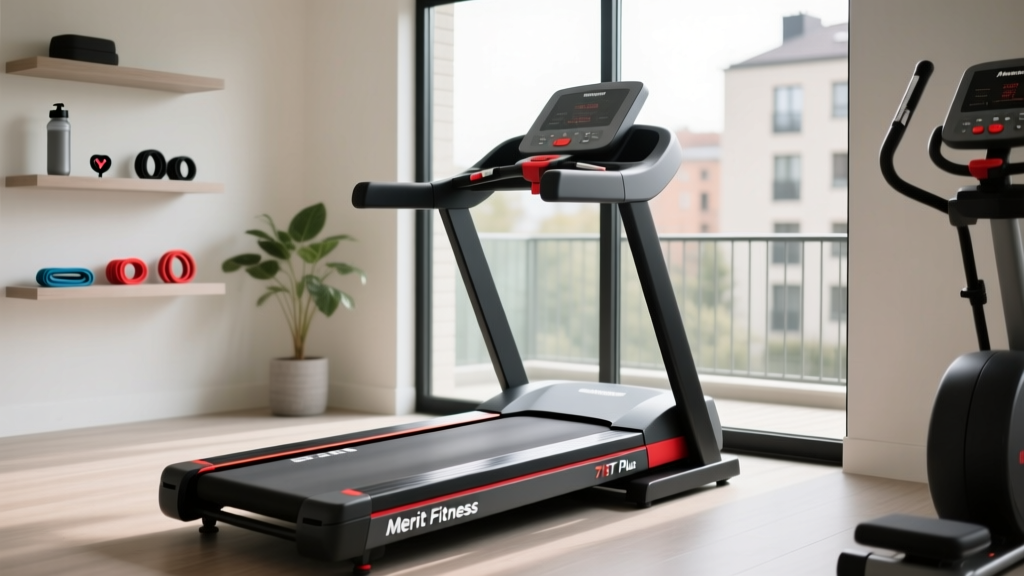
Merit Fitness 715T Plus Treadmill Setup & Noise Comparison
Master your Merit Fitness 715T Plus treadmill setup with our noise-reduction walkthrough. Compare decibel levels and learn acoustic dampening tips.

The Acoustic Reality of Home Cardio: Why Setup Matters
When investing in home fitness equipment, buyers often obsess over motor size, screen resolution, and running surface dimensions. However, the most common reason cardio machines end up as expensive clothing racks is noise. The merit fitness 715t plus treadmill is a highly capable, budget-friendly workhorse featuring a 2.25 HP continuous-duty motor and a reliable 1.4mm multi-ply belt. Priced competitively in the $450 to $550 range in 2026, it offers excellent value. Yet, like many treadmills in its class, its acoustic footprint is entirely dependent on how meticulously it is assembled and where it is placed.
Treadmill noise is divided into two categories: air-borne noise (motor whine, fan noise, belt friction) and structure-borne noise (footfall impact transferring through the deck, into the floor, and resonating through your home's joists). This complete setup and installation walkthrough will guide you through assembling the Merit Fitness 715T Plus specifically to minimize both, followed by a comprehensive noise level comparison against other popular cardio machines.
⚠️ Critical Pre-Setup Warning: Never assemble the 715T Plus directly on its side on hard flooring. The plastic shrouds and console mounts can micro-fracture, leading to permanent rattling. Always assemble on the included cardboard or a thick moving blanket.Phase 1: Subfloor Preparation and Acoustic Isolation
Before unboxing the main chassis, you must address the floor. The 715T Plus weighs approximately 145 lbs assembled. When a 180 lb runner strikes the deck at 6 MPH, the impact force can exceed 2.5 times their body weight. Without isolation, this kinetic energy becomes low-frequency structure-borne noise that will annoy anyone in the room below you.
Selecting the Right Equipment Mat
Do not use cheap, 1/4-inch PVC foam mats. They compress entirely under the machine's static weight, offering zero acoustic dampening. For the Merit 715T Plus, you need a 3/8-inch thick vulcanized rubber mat (often sold as 'Shok Mats' or heavy-duty gym flooring). Expect to spend between $60 and $90 for a 3x6 foot mat. This density absorbs the high-frequency vibrations from the 2.25 HP motor while decoupling the footfall impact from your subfloor.
- Hardwood/Laminate: Mandatory 3/8" rubber mat to prevent finish scratching and echo-chamber effects.
- Carpet: Use a 1/2" interlocking rubber tile base. Carpet padding alone will cause the treadmill to wobble, leading to uneven belt wear and squeaking uprights.
- Concrete (Basement/Garage):strong> A standard 3/8" mat is sufficient, primarily to protect the machine's leveling feet and prevent dust ingestion into the motor hood.
Phase 2: Step-by-Step Assembly for Quiet Operation
Factory assembly lines prioritize speed over acoustic perfection. To ensure your merit fitness 715t plus treadmill operates whisper-quiet, follow these modified assembly steps.
- Upright Installation & Threadlocking: When attaching the main uprights to the base, apply a single drop of Blue Loctite 242 (medium strength threadlocker) to the four main carriage bolts. Treadmill vibrations naturally loosen standard hardware over 3 to 6 months, causing the infamous 'console rattle'. Torque these bolts to exactly 18 Nm (Newton-meters) using a torque wrench. Overtightening will strip the internal weld nuts.
- Console Wiring Management: Before snapping the plastic console shroud into place, locate the internal ribbon cables and motor control wires. Use two small nylon zip-ties to secure these wires to the internal metal frame. If left loose, they will vibrate against the plastic casing every time your foot strikes the deck.
- Motor Hood Felt-Taping: Remove the front motor cover. Apply a 1-inch strip of adhesive weatherstripping or felt tape along the inside lip where the plastic hood meets the metal frame. This eliminates plastic-on-metal resonance when the motor ramps up to higher speeds.
- Initial Belt Tensioning: Out of the box, the 1.4mm belt is intentionally left slightly loose to prevent deck warping during shipping. Plug in the machine, set it to 2.0 MPH, and walk on it. If the belt slips under your foot, locate the two rear roller adjustment bolts at the very back of the deck. Turn both bolts exactly one-quarter (1/4) turn clockwise. Test again. Never tighten more than a half-turn total without consulting the manual, as over-tensioning will destroy the motor bearings and create a high-pitched whine.
Cardio Machine Noise Level Comparison Matrix
How does the properly assembled Merit Fitness 715T Plus compare to other cardio modalities? Understanding these decibel (dB) profiles helps you manage household expectations. According to the CDC's guidelines on noise and hearing, prolonged exposure to sounds above 70 dB can begin to cause hearing fatigue, making machine acoustics a genuine health and comfort metric.
| Equipment Type | Example Model | Motor/Air Noise (dB) | Impact/Structure Noise | Total Perceived Loudness |
|---|---|---|---|---|
| Treadmill (Budget/Mid) | Merit Fitness 715T Plus | 62 - 68 dB | High (Footfall) | Moderate-Loud |
| Treadmill (Premium) | NordicTrack Commercial 1750 | 58 - 64 dB | Moderate (Cushioning) | Moderate |
| Magnetic Elliptical | Schwinn 430 | 45 - 52 dB | None (Zero Impact) | Very Quiet |
| Air Resistance Bike | Rogue Echo Bike | 75 - 85 dB | Low | Very Loud (Wind) |
| Water Rowing Machine | WaterRower Natural | 60 - 65 dB | Low | Moderate (Sloshing) |
| Under-Desk Walking Pad | KingSmith WalkingPad X21 | 55 - 60 dB | Moderate | Quiet-Moderate |
As the data illustrates, the merit fitness 715t plus treadmill operates in the 62-68 dB range at cruising speeds (4-6 MPH). This is roughly equivalent to a normal conversation or a running dishwasher. The primary acoustic offender is not the motor, but the impact noise. As noted by the American Council on Exercise (ACE), understanding the biomechanical impact forces of different cardio modalities is crucial not just for joint health, but for managing the acoustic environment of a shared living space.
Troubleshooting Common 715T Plus Noise Issues
Even with a perfect installation, treadmills require acoustic maintenance. If your machine develops new sounds after a few months of use, use this diagnostic framework before calling for warranty service.
1. The Rhythmic 'Thump-Thump' Sound
The Cause: This is almost never a broken deck. It is the belt seam passing over the rollers, or the belt tracking slightly off-center and rubbing the side rail.
The Fix: Stand behind the machine and observe the belt at 2 MPH. If it drifts left, tighten the left rear bolt by 1/8th of a turn. If the thumping persists, the belt seam is stiff. Apply a light mist of water to the seam and let it run at 1 MPH for 15 minutes to soften and seat the splice.
2. High-Pitched Motor Whine or Squeal
The Cause: Excessive friction between the 1.4mm belt and the wooden deck, forcing the 2.25 HP motor to draw excess amperage.
The Fix: Your deck is dry. You must lubricate it. Never use WD-40 or petroleum-based products. Purchase a 100% silicone treadmill lubricant. Lift the edge of the belt, squeeze exactly 15ml (half an ounce) of silicone in a zig-zag pattern across the center of the deck, and run the machine at 3 MPH for 5 minutes to distribute the fluid.
3. Clicking or Grinding from the Front Roller
The Cause: A failing roller bearing or a piece of debris (pet hair, carpet fiber) wrapped around the roller shaft.
The Fix: Unplug the machine. Remove the front motor hood (usually 4 Phillips-head screws). Inspect the roller shafts. Use tweezers to remove any wound fibers. If the clicking persists when spinning the roller by hand, the sealed bearing has failed, and the front roller assembly must be replaced (Part #715T-FR, typically $35-$45).
Final Thoughts on Acoustic Optimization
The merit fitness 715t plus treadmill remains one of the most reliable entry-level cardio machines on the market in 2026, provided you respect the physics of its operation. By investing 45 extra minutes during setup to properly torque the hardware, manage the internal wiring, and isolate the machine from your subfloor, you transform a potentially noisy piece of machinery into a smooth, quiet, and enduring fitness asset. Remember that noise is simply energy escaping where it shouldn't; seal the gaps, dampen the vibrations, and enjoy your run.
For more detailed guides on maintaining your home gym's acoustic footprint and extending the lifespan of your cardio equipment, continue exploring our comprehensive equipment maintenance archives.
More gear to consider
All reviews
Reebok FR30z Floatride Treadmill Belt Maintenance & Value Analysis

Curved Manual vs Motorized: Is the Knox Treadmill Right for You?

The Complete Treadmill Guide: Weekly Nutrition & Training Plan

360 Treadmill VR vs Under Desk Treadmills: 2026 Office Review

Feier Treadmill Star 100 Belt Lubrication: Budget & Value Guide
