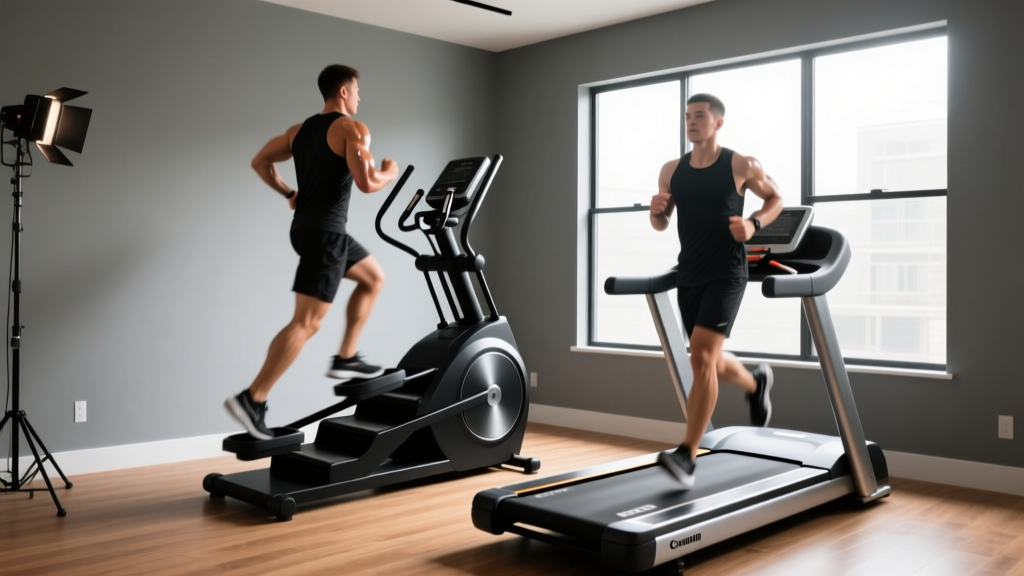
Elliptical vs Treadmill Longevity: A Complete Treadmill Routine Guide
Compare elliptical vs treadmill longevity. Discover the essential treadmill routine for motor care, belt tension, and maximizing home cardio lifespan.

The True Cost of Ownership: Treadmills vs. Ellipticals
When outfitting a home gym in 2026, most buyers obsess over interactive touchscreens, incline gradients, and connected fitness subscriptions. However, the most critical factor in the elliptical vs treadmill debate is rarely discussed on the showroom floor: long-term mechanical longevity. A high-end cardio machine is a significant investment, often ranging from $1,500 to $3,500, and the difference in mechanical wear between a motorized running belt and a magnetic flywheel system is staggering.
While both machines offer exceptional cardiovascular benefits, their internal engineering dictates entirely different lifespans and upkeep requirements. Treadmills are high-friction, high-impact environments that demand a strict, proactive treadmill routine to prevent catastrophic component failure. Ellipticals, by contrast, operate on low-impact pivot points and frictionless magnetic resistance, fundamentally altering their maintenance profile. Understanding these mechanical realities is the key to protecting your investment and avoiding a $2,000 clothes hanger.
Quick Summary: The 5-Year Horizon
- Treadmills: Require a rigorous treadmill routine focusing on belt lubrication, motor dust mitigation, and deck elastomer inspection. Average lifespan before major repair: 5-7 years.
- Ellipticals: Require periodic pivot-point greasing and drive-belt tensioning. Average lifespan before major repair: 8-12 years.
Deconstructing the Treadmill Routine: Motor, Belt, and Deck
A motorized treadmill is essentially a high-torque conveyor belt operating under the repetitive G-force of human body weight. This creates a trifecta of mechanical stress: friction, heat, and impact. To keep premium models like the Sole F80 or the NordicTrack Commercial 1750 running smoothly, your treadmill routine must address all three vectors.
The 100-Hour Lubrication Rule
The most common cause of premature treadmill death is belt friction. As the PVC belt rubs against the wooden or MDF deck, it generates immense heat. If this heat is not mitigated, the motor must draw excess amperage to maintain speed, which eventually fries the Motor Control Board (MCB)—a repair that typically costs between $200 and $350 for parts and labor.
Your core treadmill routine must include lubricating the deck every 130 miles or roughly every three months, depending on usage. Never use WD-40 or petroleum-based lubricants, as these will chemically degrade the belt backing. You must use 100% pure silicone treadmill lubricant (usually $12 to $15 per bottle). To apply it, loosen the rear roller bolts with an Allen key, lift the belt, and apply a zigzag pattern of silicone directly to the center of the deck before retightening.
Motor Dust and Control Board Failures
Treadmill motors rely on internal fans for cooling, which inadvertently act as vacuums for household dust, pet hair, and lint. In homes with pets, this debris coats the motor windings and the MCB, acting as an insulator that traps heat. A vital step in any comprehensive treadmill routine is removing the motor hood every six months and using a can of compressed air and a soft brush to clear the cooling fins and vacuum the chassis. According to equipment reliability data analyzed by Consumer Reports, dust ingress remains a leading cause of out-of-warranty electronic failures in motorized home fitness equipment.
Belt Tracking and Tension
If your treadmill belt drifts to the left or right, it will eventually fray against the side rails. Your treadmill routine should include a monthly visual inspection of belt tracking. If it drifts, locate the tension bolts at the rear of the machine. A simple quarter-turn of the bolt on the side the belt is drifting toward will re-center it. Over-tightening these bolts puts extreme strain on the roller bearings, leading to a high-pitched whining noise and eventual bearing seizure.
Elliptical Upkeep: Pivot Points and Magnetic Drives
When comparing an elliptical vs treadmill for home cardio, the elliptical wins the longevity contest primarily due to its resistance mechanism. Modern ellipticals like the Sole E95 or the Bowflex Max M9 use eddy-current magnetic resistance. Because the magnets never physically touch the flywheel, there is zero friction and zero heat generated during your workout. This eliminates the need for the intense lubrication schedules required by treadmills.
Flywheel and Drive Belt Tension
Ellipticals do, however, rely on internal drive belts (often ribbed poly-v belts) to connect the pedals to the flywheel. Over 2 to 3 years, these belts can stretch, resulting in a 'slipping' sensation when you push hard on the pedals. Adjusting the tension usually involves loosening the motor mount or idler pulley, pulling the assembly taut, and retightening—a DIY fix that costs less than $50 for a replacement belt if the original snaps.
The Pivot Point Protocol
While the drivetrain is low-maintenance, the articulation points are not. Ellipticals feature multiple Heim joints and pivot bearings at the pedal arms and handlebars. If you hear a rhythmic squeaking that matches your stride, the factory grease has dried out or attracted grit. Your elliptical maintenance routine requires wiping these joints clean and applying a PTFE-based marine grease (which resists breaking down under pressure better than standard lithium grease) every six to twelve months.
Head-to-Head Maintenance Matrix
To visualize the differences in long-term ownership, review the maintenance matrix below comparing standard home models (e.g., $1,500–$2,500 price tier).
| Maintenance Metric | Motorized Treadmill | Front/Rear-Drive Elliptical |
|---|---|---|
| Primary Wear Component | Running Belt & Deck | Pivot Bearings & Poly-V Belt |
| Routine Lubrication | 100% Silicone (Every 3 months) | PTFE Grease on joints (Annually) |
| Heat Generation | High (Motor & Belt Friction) | Negligible (Magnetic Resistance) |
| Average Cost of Major Repair | $200 - $450 (MCB or Motor) | $80 - $150 (Alternator or Belt) |
| Estimated Machine Lifespan | 7 - 10 Years | 10 - 15 Years |
Biomechanical Wear and Tear: The User Factor
Maintenance isn't just about the machine; it is also about how the machine impacts the user, which indirectly affects how consistently the equipment is used over its lifespan. According to biomechanical analyses highlighted by the Mayo Clinic, treadmills subject the knees, hips, and lower back to repetitive impact forces equivalent to 1.5 to 2 times your body weight with every footstrike. Ellipticals reduce this impact to near zero by keeping the foot planted on the pedal throughout the stride cycle.
This biomechanical difference also manifests in the machine's physical frame. Every footstrike on a treadmill sends a shockwave through the deck and into the steel uprights. To combat this, manufacturers install rubber elastomers (shock absorbers) between the deck and the frame. Over 3,000 to 5,000 miles, these elastomers compress, harden, and lose their dampening properties, requiring a $100 to $150 replacement to restore joint protection. Elliptical frames, experiencing only smooth, continuous load vectors, rarely suffer from metal fatigue or shock absorber degradation.
"The decision between an elliptical and a treadmill shouldn't just be about calories burned per hour. It must factor in your willingness to perform mechanical upkeep. A treadmill will demand a strict, scheduled treadmill routine to survive its first decade, whereas an elliptical will largely run on inertia and basic annual inspections."
Verdict: Which Machine Fits Your Maintenance Tolerance?
If your primary goal is running specificity, training for a marathon, or engaging in high-intensity interval sprints, the treadmill is irreplaceable. However, you must commit to the treadmill routine outlined above: buying pure silicone, clearing motor dust, and monitoring belt tension. Neglecting this routine guarantees a premature, expensive failure of the drive motor or control board.
Conversely, if you are seeking sustainable, lifelong cardiovascular conditioning with minimal joint impact and near-zero mechanical upkeep, the elliptical is the superior long-term investment. The frictionless nature of magnetic resistance and the absence of a high-impact deck mean that an elliptical will easily outlast a similarly priced treadmill by several years, requiring nothing more than an occasional wipe-down and a dab of PTFE grease on the pivot arms.
Final Action Steps for Home Gym Owners
- For Treadmill Owners: Set a recurring calendar reminder every 90 days to lift the belt and apply 100% silicone lubricant. Order a can of compressed air today for your bi-annual motor hood cleaning.
- For Elliptical Owners: Inspect the poly-v drive belt for fraying every two years, and keep a tube of PTFE marine grease in your toolbox for the annual pivot-point service.
- For Prospective Buyers: Let your willingness to perform mechanical maintenance dictate your purchase. Choose the machine that aligns with your lifestyle, not just your fitness goals.
More gear to consider
All reviews
How Fast is 7.5 on a Treadmill? 2026 Under-Desk Picks

What's a Good Incline and Speed for Treadmill Walking Pads?

Does a Treadmill Help Glutes? 2026 Feature & Setup Guide
Walking Pad vs. ProForm Treadmill Incline: 2026 Showdown
Rowing Machine Guide: Setup & How to Dismantle ProForm Treadmill