Hydro Treadmill Motor Sizing: Horsepower Mistakes & Fixes
Avoid common horsepower mistakes with our hydro treadmill motor size guide. Learn to troubleshoot CHP ratings, torque issues, and waterproofing failures.

The Unique Challenge of Hydro Treadmill Motors
As aquatic therapy and high-resistance recovery protocols continue to evolve in 2026, the hydro treadmill has become a staple in both clinical rehabilitation and elite athletic facilities. However, sizing a motor for a hydro treadmill—or troubleshooting an existing one—requires a fundamental shift in how we understand treadmill mechanics. Water is approximately 784 times denser than air. This means the drag force exerted on a user's legs, and consequently the mechanical load transferred back to the treadmill belt and motor, is exponentially higher than on a standard land-based treadmill.
According to rehabilitation guidelines published by the American Physical Therapy Association, aquatic treadmills must provide consistent, stutter-free resistance across varying depths and speeds. When facility managers or DIY biohackers attempt to retrofit standard treadmill motors for hydro environments, or when they misunderstand horsepower ratings, the result is almost always catastrophic motor failure. This comprehensive guide breaks down the exact motor sizing requirements, common horsepower illusions, and step-by-step troubleshooting protocols for hydro treadmill systems.
The Physics of Drag: Why Standard Sizing Fails
To understand motor sizing, we must first look at the physics of fluid dynamics. The drag equation dictates that resistance increases with the square of velocity. On a standard treadmill, the motor primarily overcomes the friction of the belt against the deck and the inertia of the user's weight. The American College of Sports Medicine notes that standard walking or running mechanics on land require a steady, relatively linear energy output from the drive system.
In a hydro treadmill environment, the motor must overcome the viscosity and density of water. If a user doubles their walking speed in waist-deep water, the resistance doesn't just double—it quadruples. Therefore, a hydro treadmill motor requires massive low-end torque and an exceptionally high Continuous Duty Horsepower (CHP) rating to prevent the belt from slipping or the motor from bogging down when the user pushes against the water's resistance.
Decoding the Label: Peak HP vs. Continuous Duty HP (CHP)
The most common mistake buyers and technicians make is confusing Peak Horsepower (Peak HP) with Continuous Duty Horsepower (CHP). This mistake is magnified in hydro setups where the motor is under constant, unrelenting load.
Peak Horsepower (The Marketing Illusion)
Peak HP measures the absolute maximum output the motor can achieve for a fraction of a second before the thermal overload switch trips or the windings melt. A motor labeled as '3.5 Peak HP' might only be able to sustain 1.5 HP of actual work. In a hydro treadmill, relying on Peak HP will result in immediate belt stalling the moment a user leans into the water resistance.
Continuous Duty Horsepower (The Reality)
CHP is the horsepower the motor can sustain indefinitely without overheating. For a standard home treadmill, a 2.5 to 3.0 CHP motor is generally sufficient for running. However, for a hydro treadmill, the baseline requirement shifts dramatically. Because water resistance eliminates the 'flight phase' of running (where both feet are off the ground, giving the motor a micro-second break), the motor is under 100% continuous load. For hydro applications, you must look for a minimum of 4.0 CHP, with commercial aquatic units often utilizing 5.0 to 7.0 CHP AC induction motors.
Sizing Matrix: Standard vs. Hydro Treadmill Motors
The table below illustrates the critical differences in specifications between standard land-based treadmill motors and those engineered specifically for hydro treadmill environments.
| Specification | Standard Land Treadmill | Hydro / Aquatic Treadmill |
|---|---|---|
| Minimum CHP | 2.5 - 3.0 CHP | 4.0 - 7.0+ CHP |
| Peak Torque Requirement | 15 - 25 Nm | 45 - 80+ Nm |
| Motor Type | Brushed DC (Standard) / BLDC | Sealed AC Induction / Marine BLDC |
| Enclosure Rating | IP20 (Open / Fan Cooled) | IP67 / IP68 (Submersible / Epoxy Potted) |
| Average Replacement Cost | $250 - $450 | $1,800 - $3,500+ |
Three Critical Mistakes in Hydro Motor Sizing
⚠️ WARNING: Never use a standard brushed DC treadmill motor in a splash-zone or submerged hydro environment. The carbon dust from the brushes combined with ambient moisture creates a highly conductive sludge that will short-circuit the drive board and pose a severe electrocution hazard.- Ignoring Torque Curves for Horsepower: Horsepower is a function of torque and RPM. Hydro treadmills operate at very low speeds (often 0.5 to 3.0 mph) but require immense force to pull the belt through the water's drag. A high-HP motor that only delivers its power at 12 mph is useless in a pool. You must spec a motor with a high low-end torque curve, typically achieved through specialized gear reduction or multi-pole AC windings.
- Undersizing the Drive Board (PWM Controller): The motor is only half the system. The Pulse Width Modulation (PWM) drive board controls the current. In a hydro setup, the amperage draw is massive. Using a standard 15-amp controller with a 4.0 CHP hydro motor will cause the controller's MOSFETs to overheat and fail within hours.
- Over-tensioning the Belt to Compensate for Slippage: When a motor bogs down in water, technicians often tighten the belt to prevent slippage. This increases deck friction exponentially, adding parasitic load to an already struggling motor, leading to rapid thermal failure.
Step-by-Step Troubleshooting Guide: Motor Bogging and Overheating
When a hydro treadmill motor begins to stall, hesitate, or shut down mid-session, follow this diagnostic flow to isolate the failure point.
Step 1: Isolate the Mechanical Load
Remove the user from the treadmill and drain the water to the lowest level. Run the belt at 2.0 mph. If the motor runs smoothly without water but bogs down when the water level rises, the issue is strictly a sizing/torque deficit. The motor is physically incapable of overcoming the hydrodynamic drag. Fix: Upgrade to a higher-torque AC motor or install a secondary gear-reduction pulley system.
Step 2: Test the Thermal Overload Switch
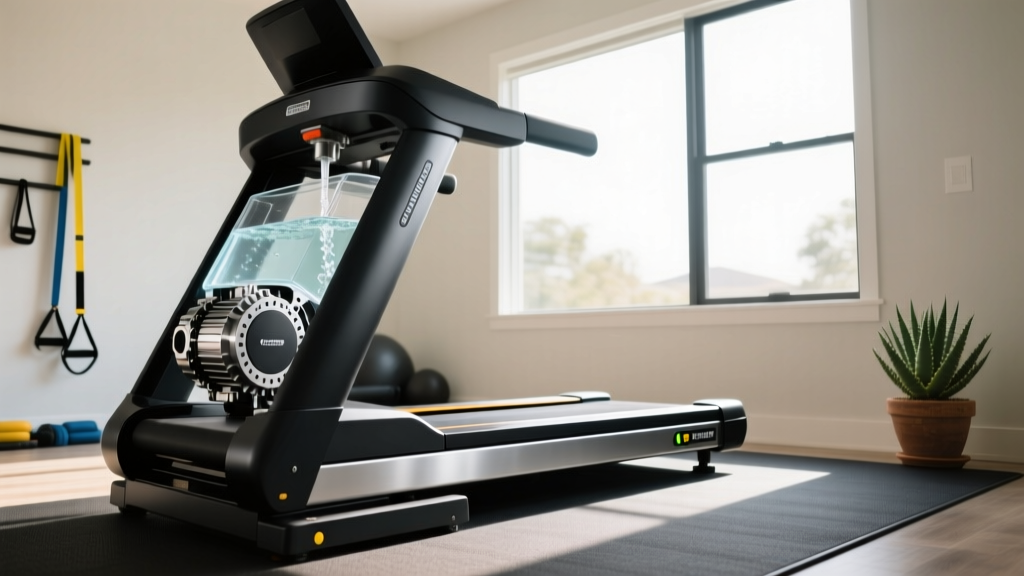
If the treadmill runs perfectly for exactly 8 to 12 minutes and then abruptly dies, only to work again after a 20-minute cooldown, the internal thermal overload switch is tripping. Use a multimeter to test the continuity of the thermal fuse on the motor housing. If it is functioning correctly, the motor is undersized for the continuous load (insufficient CHP) or the cooling mechanism (often a liquid-cooling jacket in high-end hydro units) has failed.
Step 3: Inspect for Moisture Ingress (IP Failure)
If the motor hums but refuses to turn, or trips the facility's GFCI breaker immediately upon startup, moisture has breached the motor housing. According to the National Electrical Manufacturers Association (NEMA), aquatic environments require specialized enclosures. Check the epoxy potting on the stator windings and the integrity of the shaft seals. Water ingress destroys the dielectric insulation of the windings, causing a dead short.
The Waterproofing Imperative: Understanding IP Ratings
When sourcing replacement parts or building a custom hydro treadmill, the Ingress Protection (IP) rating is just as critical as the horsepower. Standard treadmill motors are typically IP20, meaning they are protected against solid objects larger than 12mm (like fingers) but have zero protection against water. They rely on internal fans for cooling, which actively suck humid, chlorinated pool air directly into the copper windings.
'In aquatic rehabilitation, equipment failure isn't just an inconvenience; it's a safety hazard. Motors must be hermetically sealed or epoxy-potted to prevent chlorinated moisture from compromising the electrical isolation.' — Clinical Biomechanics Equipment Standards.
For any motor situated below the water line or in the direct splash zone of a hydro treadmill, you must demand an IP67 or IP68 rating. IP68 indicates the motor is fully submersible under continuous pressure. These motors do not use internal fans; instead, they rely on the surrounding water or specialized conductive housing materials to dissipate heat, which is why they are significantly more expensive and heavier than standard DC motors.
Frequently Asked Questions (FAQ)
Can I use a standard 3.0 HP treadmill motor for a DIY underwater pool treadmill?
No. Beyond the severe electrocution risk of using an open-air cooled motor near water, a standard 3.0 HP motor lacks the low-end torque required to pull a belt against water resistance. It will stall immediately, overheat, and likely destroy the PWM drive board.
Why does my hydro treadmill motor smell like burning plastic?
A burning plastic or ozone smell indicates that the motor windings are overheating and the dielectric varnish is melting. This happens when the Continuous Duty Horsepower (CHP) is too low for the water depth and user speed. You are forcing the motor to operate in its 'Peak HP' zone continuously.
Are Brushless DC (BLDC) motors better for hydro treadmills?
Yes, provided they are properly sealed. BLDC motors eliminate the carbon brushes found in standard DC motors, removing a primary point of friction, heat, and electrical arcing. When encased in an IP68-rated marine-grade housing, a high-torque BLDC motor is the most efficient and reliable choice for modern hydro treadmill applications in 2026.
How often should I maintain the drive belt on a hydro treadmill?
Because hydro treadmills operate under extreme tension and torque, the ribbed drive belt connecting the motor to the front roller stretches and degrades much faster than on land units. Inspect the belt for micro-cracking and glazing every 30 days, and plan for a full replacement every 12 to 18 months depending on clinical usage volume.
More gear to consider
All reviews
Stair Climber Setup & Gold's Gym Air Stride Plus Treadmill Prep
Life Fitness Treadmill Mat: Feature Comparison & Buying Mistakes

How to Lose Weight on Treadmill at Work: 2026 Under-Desk Reviews

Manual Incline Treadmill Buying Guide: 2026 Feature Comparison

NordicTrack Treadmill T5zi vs Ellipticals: Home Cardio Guide 2026