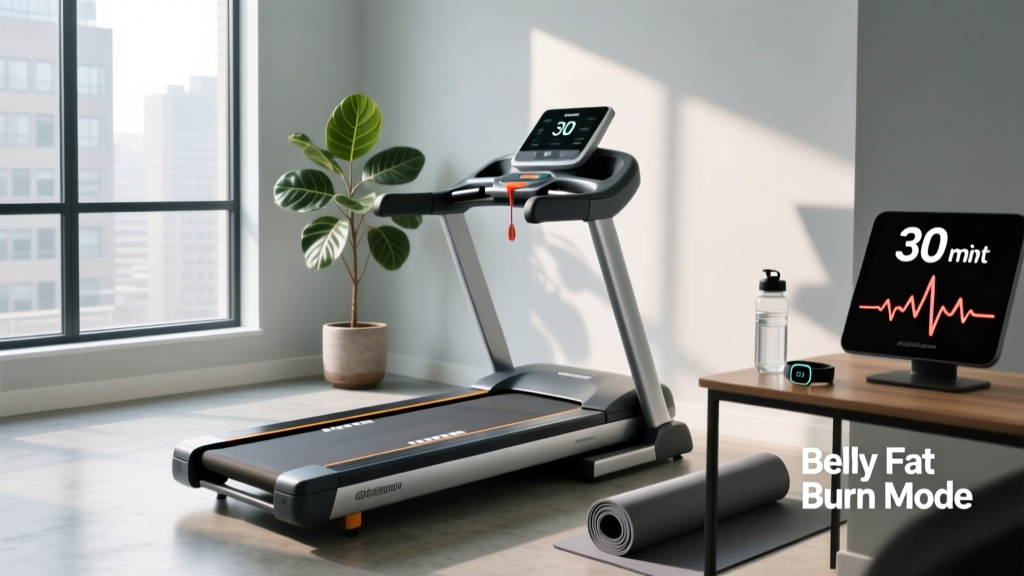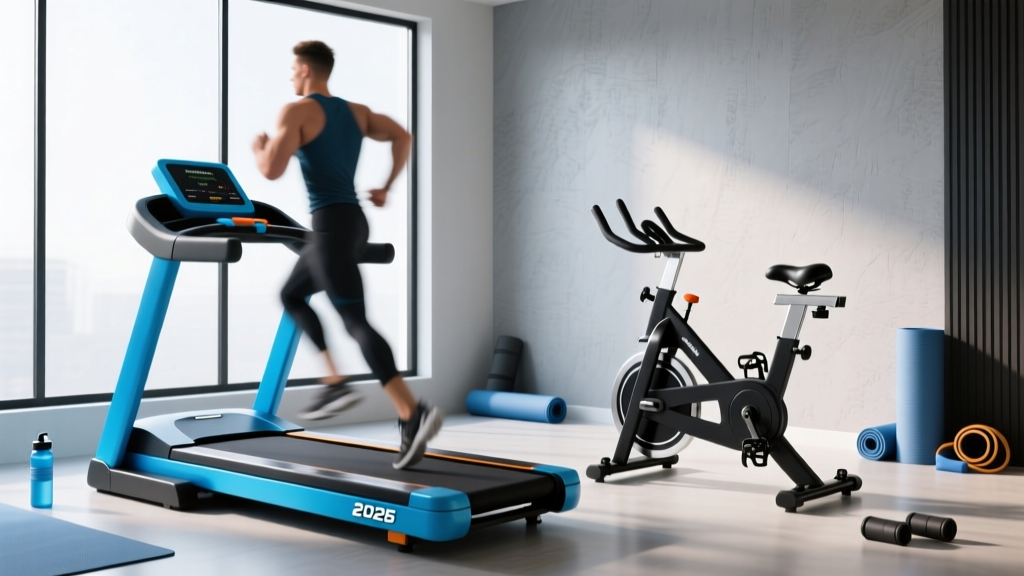
How to Lose Stomach Fat on Treadmill vs. Stationary Bikes
Discover how to lose stomach fat on treadmill vs. stationary bikes. We review 2026 upright, recumbent, and spin bikes for maximum visceral fat burn.

The Spot-Reduction Myth: Treadmills, Bikes, and Visceral Fat
When users search for how to lose stomach fat on treadmill machines, they are usually looking for a targeted solution to a stubborn problem. However, as a core physiological rule, spot reduction is a myth. According to Harvard Health Publishing, you cannot dictate where your body pulls fat from during exercise. Instead, reducing abdominal obesity requires a systemic caloric deficit and the reduction of visceral fat—the dangerous fat stored deep within the abdomen around your organs.
Expert Insight: While incline treadmill walking is fantastic for steady-state caloric burn, stationary bikes (specifically spin and upright models) offer distinct biomechanical advantages. They allow for high-intensity interval training (HIIT) with zero impact on the patellofemoral joint, making them superior for obese beginners or those with lumbar radiculopathy who cannot tolerate the ground reaction forces of a treadmill.
In this 2026 hands-on review, we pivot from the treadmill to evaluate the three primary stationary bike types—spin, upright, and recumbent—to determine which machine truly optimizes visceral fat oxidation for your home gym.
Caloric Expenditure Matrix: Treadmill vs. Bike Types
To understand how to effectively burn fat, we must look at Metabolic Equivalent of Task (MET) values and real-world caloric expenditure. The Centers for Disease Control and Prevention (CDC) recommends 150 minutes of moderate or 75 minutes of vigorous aerobic activity weekly for baseline health, but visceral fat loss often requires pushing into the upper limits of these guidelines.
| Modality | Intensity Level | Avg. METs | Calories/Hr (180lb User) | Joint Impact |
|---|---|---|---|---|
| Treadmill (Incline Walk) | Moderate (3.5 mph, 10% grade) | 8.0 | ~650 kcal | Medium |
| Treadmill (Run) | Vigorous (6.0 mph) | 9.8 | ~800 kcal | High |
| Spin Bike (HIIT) | Vigorous (Sprint Intervals) | 10.5 - 12.0 | ~850+ kcal | None |
| Upright Bike (Zone 2) | Moderate (Steady State) | 6.8 | ~550 kcal | None |
| Recumbent Bike | Light to Moderate | 5.0 | ~400 kcal | None (Supported) |
Spin Bikes: The HIIT Fat-Burn Champions
If your primary goal is triggering Excess Post-exercise Oxygen Consumption (EPOC)—the 'afterburn' effect that keeps your metabolism elevated for hours after your workout to burn visceral fat—the spin bike is unmatched. By alternating between maximal effort sprints and active recovery, you deplete muscle glycogen and force the body to tap into fat stores post-workout.
Top 2026 Pick: Schwinn IC8
The Schwinn IC8 remains a dominant force in the home cycling space. Priced around $899, it features a 40-pound perimeter-weighted flywheel and 100 levels of micro-adjustable magnetic resistance.
- Q-Factor: 165mm (mimics outdoor road bikes, reducing knee valgus stress).
- Drivetrain: Polygroove belt drive (virtually silent and requires no lubrication).
- Real-World Failure Mode: The dual-sided pedals (SPD clip-in and toe cage) are prone to spindle bearing wear if users aggressively clip in/out without periodically cleaning the mechanism. Furthermore, the integrated media shelf can warp over time if heavy tablets (>1.5 lbs) are left on it in high-humidity environments.
"For visceral fat loss, 30 minutes of spin bike HIIT (e.g., Tabata protocols: 20 seconds all-out, 10 seconds rest) yields a superior hormonal response for fat oxidation compared to 60 minutes of steady-state treadmill walking." — FitGearPulse Biomechanics Team
Upright Bikes: The Steady-State Cardio Workhorses
Upright bikes are ideal for 'Zone 2' cardio training. Exercising in Zone 2 (roughly 60-70% of your max heart rate) optimizes mitochondrial density and teaches your body to utilize fat as its primary fuel source rather than carbohydrates. This is crucial for long-term metabolic health and sustainable stomach fat reduction.
Top 2026 Pick: Sole Fitness U60
Retailing at approximately $1,299, the Sole U60 is a commercial-grade upright bike built for heavy daily use. Unlike magnetic spin bikes, the U60 uses a self-generating power system, meaning it doesn't need to be plugged into a wall—a massive advantage for 2026 eco-conscious home gym layouts.
- Flywheel: 30 lbs, driven by a heavy-duty induction braking system.
- User Capacity: 400 lbs, featuring a reinforced steel chassis.
- Ergonomics: The gel-contoured seat is significantly wider than a spin bike saddle, preventing the perineal numbness often reported by heavier users on narrow racing seats.
- Edge Case Warning: Because it relies on self-generation, the console will not turn on until you begin pedaling at roughly 30 RPM. Users with severe mobility issues who need to set up their heart rate monitors on the screen before starting may find this frustrating.
Recumbent Bikes: Low-Impact Fat Loss for Joint Rehab
While recumbent bikes burn fewer calories per hour than treadmills or spin bikes, they are the undisputed kings of accessibility. For individuals with a BMI over 35, severe osteoarthritis, or lower back herniations, the treadmill is simply not a viable option. The recumbent bike allows these users to achieve the aerobic exercise volume required for a caloric deficit without joint degradation.
Top 2026 Pick: Horizon Fitness Comfort R
At $1,199, the Comfort R features a true step-through design with a seat height of just 20 inches from the floor. This is a critical measurement: standard treadmills require a 10-to-12-inch step-up onto the deck, which can trigger hip impingement in rehabilitating users.
- Seat Design: Ergonomic mesh backrest with a 3-inch thick contoured seat pan, distributing weight away from the ischial tuberosities (sit bones).
- Resistance: 24 levels of quiet magnetic resistance.
- Footprint: 63" L x 27" W. It takes up roughly 30% less floor space than a standard folding treadmill.
- Limitation: The recumbent position eliminates core and upper body stabilization. To maximize caloric burn, users must actively focus on maintaining a high cadence (80-90 RPM) rather than relying on heavy resistance grinding.
Expert Verdict: Which Machine Wins for Visceral Fat Loss?
If you are strictly asking how to lose stomach fat on treadmill equipment, the answer is to utilize 12-15% incline intervals to spike your heart rate without the impact of running. However, if you are open to stationary bikes, the Spin Bike (like the Schwinn IC8) is the superior tool for rapid visceral fat reduction due to its ability to safely facilitate maximum-effort HIIT protocols.
The Decision Framework:
- Choose the Treadmill if: You enjoy weight-bearing exercise, want to improve bone mineral density, and have healthy knees/hips.
- Choose the Spin Bike if: You want maximum caloric burn per minute, love HIIT, and need to save floor space.
- Choose the Upright Bike if: You prefer long, steady-state Zone 2 sessions while reading or watching TV, and want a traditional cycling feel without the aggressive forward lean of a spin bike.
- Choose the Recumbent Bike if: You are managing obesity, lower back pain, or joint replacements, and need a sustainable, pain-free way to maintain a daily caloric deficit.
Frequently Asked Questions
Q: Can I use a recumbent bike to lose belly fat if I can't use a treadmill?
A: Yes. While the hourly calorie burn is lower, the lack of joint pain allows for longer, more frequent sessions. Consistency over a 12-week period on a recumbent bike will yield better fat-loss results than a treadmill routine you abandon after two weeks due to knee pain.
Q: Does holding onto the treadmill handrails ruin fat loss?
A: Absolutely. Holding the handrails at a 15% incline reduces caloric expenditure by up to 30% and alters your spinal biomechanics. If you must hold on, lower the incline or speed until you can swing your arms naturally, or switch to an upright bike where your hands are safely on the grips.
More gear to consider
All reviews
Stair Climber Home Guide & Best Lube for NordicTrack Treadmill Care

ProForm Crosswalk 365e Treadmill Setup & Walking Pad Comparison

Does Hotworx Have Treadmills? The Ultimate Home Stair Climber Guide

Troubleshooting Cardio Machine Noise & Treadmill Speed Conversions

2026 Market Trends: NordicTrack Treadmill T6.5S vs Stationary Bikes