How Heavy Is a Treadmill? Under Desk Office Care & Reviews
Discover how heavy a treadmill for office use is, compare top under-desk models, and learn expert maintenance tips to maximize your machine's lifespan.

The Shift to Active Workspaces: Why Machine Weight Matters
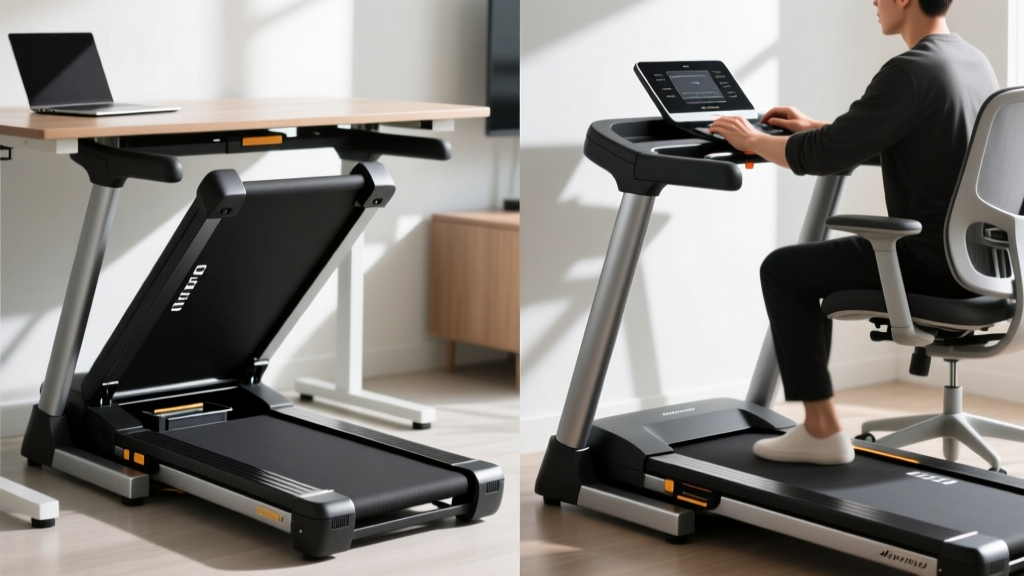
As remote and hybrid work models solidify in 2026, the under-desk treadmill has transitioned from a niche executive perk to a standard ergonomic investment. According to the Mayo Clinic, breaking up prolonged sitting with low-intensity movement significantly reduces cardiovascular risk and improves cognitive focus. However, when outfitting a home or corporate office, a critical logistical question arises: how heavy is a treadmill designed for under-desk use, and how does that weight impact floor integrity, mobility, and long-term maintenance?
The Physics of Under-Desk Treadmills
Standard commercial treadmills weigh between 150 and 250 pounds, often requiring dedicated floor reinforcement and permanent placement. Under-desk treadmills, by contrast, typically range from 40 to 75 pounds. This weight reduction is achieved by eliminating the upright console, handrails, and heavy incline motors. But in the world of fitness equipment, weight is a proxy for internal component density. A 65-pound under-desk treadmill usually houses a steel alloy frame and a larger continuous duty (CHP) motor. These heavier units dissipate heat better, endure millions of low-speed revolutions, and require less frequent structural maintenance than ultra-lightweight 40-pound models utilizing aluminum and plastic composites.
💡 Office Floor Load Insight: While a 60-pound treadmill poses no threat to standard residential joists, rolling it across commercial office carpeting daily can cause localized fiber crushing. Always use a high-density PVC equipment mat to distribute the dynamic load and protect the carpet pile.Top Under-Desk Treadmills for Office Use: A Longevity Review
To understand how weight correlates with maintenance needs, we evaluated three market-leading under-desk treadmills in 2026, focusing specifically on their build quality, motor strain, and long-term care requirements.
1. LifeSpan TR1200-Glow (The Heavy-Duty Workhorse)
- Weight: 52 lbs
- Motor: 2.5 CHP
- Price: $899
The TR1200-Glow is engineered specifically for the 8-hour workday. Its 52-pound footprint is anchored by a robust steel frame that prevents lateral flexing. Maintenance Quirk: Because it is designed for continuous, low-speed walking (which generates more friction heat than high-speed running), the belt requires 100% silicone lubrication every 3 months rather than the standard 6-month interval. Failure to do this will trigger the E01 overcurrent error as the motor strains against a dry deck.
2. WalkingPad R2 (The Foldable Commuter)
- Weight: 65 lbs (with upright)
- Motor: 1.25 CHP
- Price: $499
WalkingPad revolutionized the category with its 180-degree foldable design. The R2 is surprisingly heavy at 65 pounds due to the reinforced aluminum alloy hinges required for the folding mechanism. Maintenance Quirk: The central folding hinge is a mechanical wear point. To ensure longevity, apply a dry graphite powder lubricant to the hinge joint every 6 months. Avoid liquid oils, which attract office dust and create a grinding paste that degrades the locking pin.
3. UREVO Strol 2E (The Budget-Friendly Stepper)
- Weight: 55 lbs
- Motor: 2.0 CHP
- Price: $299
UREVO offers an excellent entry point for active workspaces. At 55 pounds, it strikes a balance between portability and stability. Maintenance Quirk: The motor shroud on the Strol 2E sits very close to the floor, making it highly susceptible to ingesting carpet fibers and pet hair. Users must vacuum the front motor intake grill bi-weekly to prevent the internal thermal switch from tripping during long afternoon walking sessions.
Office Environment Hazards vs. Preventative Maintenance
The office environment presents unique threats to cardio equipment that do not exist in a standard home gym. The Occupational Safety and Health Administration (OSHA) notes that proper ergonomic equipment setup is vital, but maintaining that equipment in a carpeted, climate-controlled office requires specific protocols.
| Office Hazard | Impact on Treadmill | Preventative Maintenance Action |
|---|---|---|
| Synthetic Carpet Static | Generates up to 15kV of static electricity, which can arc and fry the lower control PCB board. | Place an anti-static grounding mat under the treadmill; ensure the wall outlet is properly grounded. |
| Carpet Fibers & Dust | Wraps around the front roller bearing, increasing drag and burning out motor brushes. | Use a compressed air duster on the roller edges and motor shroud monthly. |
| Low-Speed Friction | Walking at 1-2 mph creates sustained friction heat on the deck, degrading the factory wax. | Apply 15ml of 100% silicone treadmill lubricant under the belt every 90 days. |
Step-by-Step Longevity Protocol for Office Treadmills
To maximize the lifespan of your under-desk treadmill, implement this exact maintenance routine. The American Heart Association recommends consistent daily movement, which means your office treadmill is likely accumulating 10,000+ steps a day—far exceeding the average recreational user.
- The Quarter-Turn Belt Tensioning: If the belt slips when you step on it, locate the two rear roller adjustment bolts. Using a 3/16-inch Allen wrench, turn both the left and right bolts exactly one quarter-turn clockwise. Never exceed a half-turn, as over-tensioning will destroy the front roller bearings within weeks.
- The Zig-Zag Lubrication Method: Unplug the machine. Lift the edge of the walking belt and insert the nozzle of a 100% silicone lubricant bottle. Squeeze exactly 15ml in a zig-zag pattern across the center of the deck. Plug the machine in and run it at 1.0 mph for 3 minutes to distribute the silicone evenly.
- The Static Discharge Check: Once a month, touch the metal frame of the treadmill before stepping on. If you feel a static shock, your office carpet is generating a charge. Wipe the belt with a damp microfiber cloth mixed with a drop of fabric softener to neutralize surface static temporarily, and invest in an ESD (Electrostatic Discharge) mat.
Troubleshooting Common Under-Desk Failures
Even with meticulous care, under-desk treadmills can exhibit specific failure modes related to their unique office use cases.
Error Code E02 (Motor Communication Loss)
Unlike full-size treadmills, under-desk models route the communication cable from the remote receiver to the motor control board through a tight, low-clearance pathway. If the treadmill is dragged across a thick carpet, the underside chassis can flex, pinching this wire. Fix: Flip the unit (with a partner, as it weighs 50+ lbs), unscrew the belly pan, and check the data cable for crimps. Reseating the connection resolves this 90% of the time.
Squeaking During the Push-Off Phase
A rhythmic squeak that aligns with your walking stride is rarely the belt. In foldable under-desk models, it is almost always the rear deck support shock absorbers. Fix: Locate the pneumatic or spring-loaded struts near the rear hinges and apply a single drop of PTFE (Teflon) spray to the piston rod. Wipe away any excess to prevent dripping onto your office floor.
Final Verdict on Office Treadmill Care
When asking how heavy is a treadmill for office use, remember that a heavier machine (50-65 lbs) generally indicates a more robust motor and frame capable of surviving the grueling 8-hour workday. By mitigating office-specific hazards like static electricity and carpet dust, and adhering to a strict 90-day silicone lubrication schedule, your under-desk treadmill can easily surpass 5,000 miles of active workspace productivity.
More gear to consider
All reviews
Folding Treadmill for Small Spaces Review vs True Grit Runner
How Does an Anti-Gravity Treadmill Work vs Budget Stationary Bikes?

ProForm Treadmill 415 Crosswalk & Air vs Assault Bike Guide

2026 Trends: Stationary Bike Types vs. a 7.5 Treadmill Pace
Curved vs Motorized Treadmill: How to Grease a Treadmill Belt
