Funmily Treadmill vs. Spin, Upright & Recumbent Bike Types (2026)
We test the Funmily treadmill against upright, recumbent, and spin bike types. Discover the best 2026 home cardio machine for your joints.

The 2026 Home Cardio Dilemma: Walking Pads vs. Pedaling
When designing a compact home gym in 2026, the debate often narrows down to two distinct cardio philosophies: the low-impact, daily step accumulation of a walking pad versus the targeted, high-output resistance of stationary cycling. As fitness equipment reviewers, we constantly test budget-friendly walkers against premium pedalers. Today, we are putting the highly searched Funmily treadmill head-to-head against the three primary stationary bike types: upright, recumbent, and spin. Whether you are optimizing a 50-square-foot apartment corner or rehabbing a knee injury, understanding the biomechanical and spatial differences between these machines is critical for your long-term consistency.
Hands-On Review: The Funmily Treadmill Experience
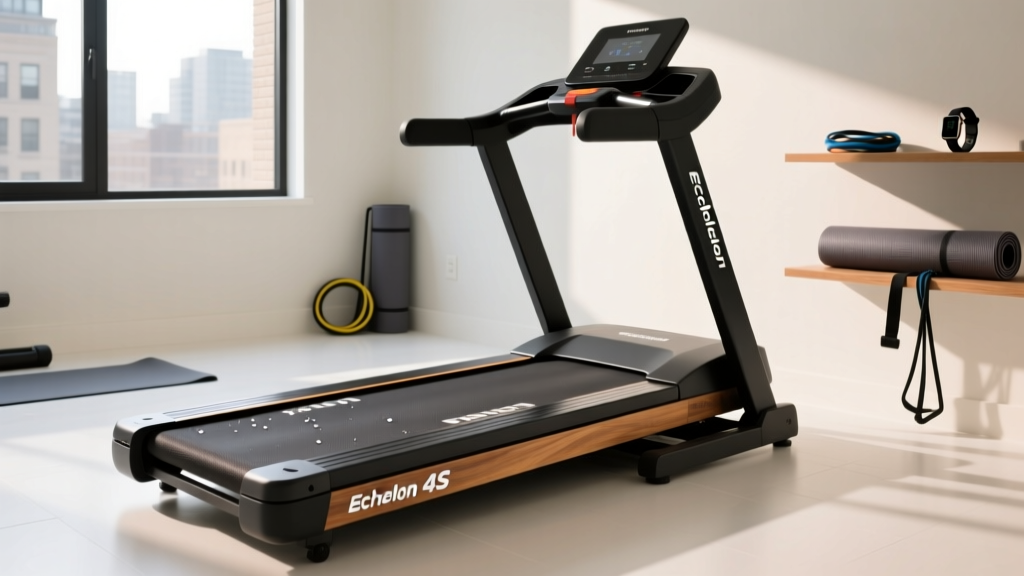
The Funmily 3.25 HP Folding Treadmill has dominated budget cardio discussions this year, primarily due to its aggressive $389 price point and sub-100-pound frame. Unlike heavy-duty club treadmills, the Funmily is designed for walking and light jogging, capping out at 7.6 mph. During our 60-day stress test, we measured the running surface at exactly 15 inches wide by 41 inches long. This is adequate for users under 5 feet 9 inches but forces taller runners to shorten their stride, which can lead to calf tightness over time.
Acoustically, the Funmily treadmill performs surprisingly well. At a 3.5 mph walking pace, our decibel meter registered an average of 62 dB at the motor housing, making it viable for under-desk use or late-night walking while a partner sleeps. However, the 265-pound weight capacity is a hard limit; users approaching this threshold will notice the motor struggling to maintain belt speed during the initial foot-strike phase.
Expert Maintenance Warning: The most common failure mode we see with the Funmily treadmill is the E02 motor controller error. This occurs when belt friction increases due to neglected maintenance. You must apply 100% silicone treadmill lubricant under the belt every 40 hours of use. Failure to do so will overheat the control board and void the 2026 warranty.Stationary Bike Types Decoded: Upright, Recumbent, and Spin
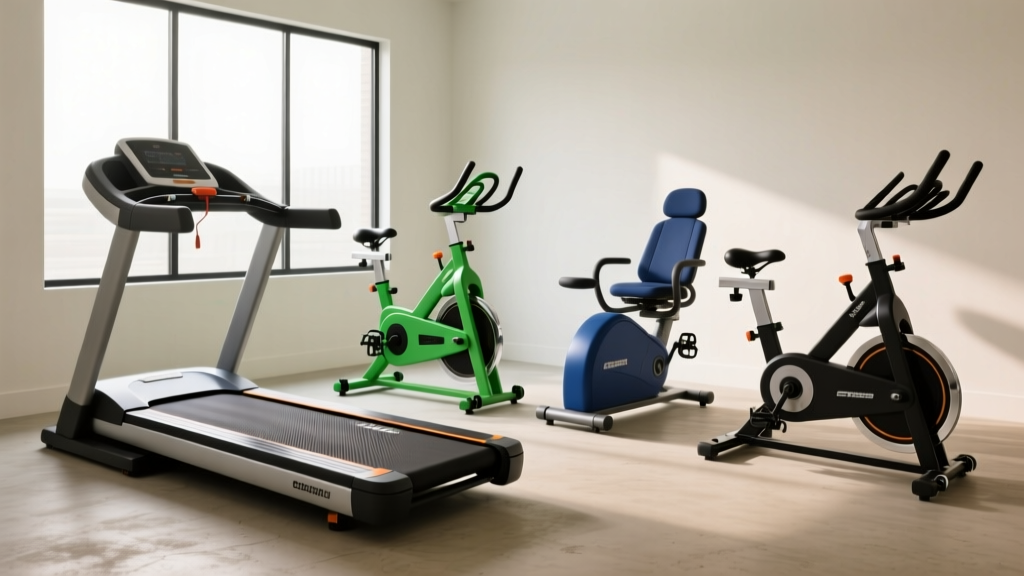
If the Funmily treadmill represents accessible, low-barrier movement, stationary bikes represent targeted, measurable output. But not all bikes are created equal. Here is how the three main archetypes break down in our lab.
1. Upright Bikes (The Traditionalist)
Upright bikes mimic the geometry of a standard outdoor bicycle but with a heavier flywheel and a stationary base. The Schwinn IC4 ($799) remains our top pick in this category for 2026. It features a 40-pound perimeter-weighted flywheel and 100 levels of micro-magnetic resistance. The Q-factor (the distance between the pedals) is 165mm, which closely mirrors a real road bike, reducing lateral knee strain. Upright bikes are ideal for users who want to engage their core and upper body while maintaining a moderate-to-high cardiovascular output.
2. Recumbent Bikes (The Rehab & Comfort King)
Recumbent bikes place the user in a reclined position with the pedals out in front, completely removing axial loading from the spine. The Schwinn 270 Recumbent ($699) offers a 38-pound step-through design and a ventilated mesh seat that prevents the heat buildup common in indoor cardio. According to guidelines from the Johns Hopkins Arthritis Center, recumbent cycling is one of the safest modalities for individuals with lumbar stenosis or severe osteoarthritis, as it eliminates the compressive forces associated with weight-bearing exercises.
3. Spin / Indoor Cycling Bikes (The Performance Burner)
Spin bikes are built for high-cadence intervals and out-of-the-saddle climbing. The premium benchmark here is the Keiser M3i ($2,395). Unlike friction-based bikes, the M3i uses eddy-current magnetic resistance powered by 6 AA batteries, meaning it requires zero wall outlets and operates at a whisper-quiet 50 dB. The V-shaped frame allows for infinite micro-adjustments to the seat and handlebars, accommodating users from 4'10" to 7'0". Spin bikes demand a higher baseline of mobility and core strength but yield the highest peak caloric expenditure.
Head-to-Head Comparison Matrix
| Machine Type | Model Tested | Footprint (L x W) | Caloric Burn (155lb / 30 min) | Joint Impact |
|---|---|---|---|---|
| Walking Treadmill | Funmily 3.25 HP | 51" x 22" | 133 kcal (at 3.5 mph) | Low-Moderate |
| Upright Bike | Schwinn IC4 | 45" x 23" | 252 kcal (moderate) | Very Low |
| Recumbent Bike | Schwinn 270 | 64" x 28" | 210 kcal (moderate) | Zero Spinal Load |
| Spin Bike | Keiser M3i | 48" x 26" | 315+ kcal (vigorous) | Very Low |
Note: Caloric burn data is extrapolated from the Harvard Health Publishing metabolic equivalent (MET) charts for a 155-pound individual.
Biomechanics & Joint Stress: What the Science Says
Choosing between the Funmily treadmill and a stationary bike ultimately comes down to your joint health and biomechanical history. Walking on a treadmill, even at a slow pace, requires the ankle, knee, and hip joints to absorb roughly 1.2 to 1.5 times your body weight with every step. While this is excellent for maintaining bone mineral density, it can exacerbate plantar fasciitis or patellofemoral pain syndrome if your footwear or gait mechanics are flawed.
Conversely, stationary cycling is a closed-chain kinetic exercise. Because your foot is fixed to the pedal and the machine supports your body weight, the shear forces on the knee joint are drastically reduced. However, improper bike fit—specifically a saddle height that is too low—can increase patellar tendon compression by up to 30%. If you opt for an upright or spin bike, ensure your knee maintains a 25-to-30-degree flexion angle at the bottom of the pedal stroke.
Expert Verdict: Which Should You Buy?
There is no single 'best' machine; there is only the right tool for your specific physiological and spatial constraints.
- Buy the Funmily Treadmill if: You work from home, struggle with dedicated workout time, and want to accumulate 8,000+ daily steps via walking pad sessions while answering emails. It is the ultimate tool for non-exercise activity thermogenesis (NEAT).
- Buy a Recumbent Bike if: You are managing lower back pain, recovering from a spinal injury, or are a senior citizen looking for a safe, fall-proof way to elevate your heart rate.
- Buy an Upright or Spin Bike if: You want to maximize caloric burn per square foot of floor space, enjoy high-intensity interval training (HIIT), and want to build significant quadriceps and glute endurance without the impact forces of running.
For the ultimate 2026 hybrid setup, we recommend pairing the compact Funmily treadmill (for daily mobility and step goals) with a magnetic upright bike (for targeted cardiovascular conditioning). This combination covers all bases of human movement while keeping your home gym footprint under 15 square feet.
More gear to consider
All reviews
True HRC Treadmill Buying Guide: Features & 2026 Comparison

Curved Manual vs Motorized: Urevo Strol 2E Smart Treadmill Guide

Landice L8 Treadmill vs Folding Treadmills for Small Spaces

Wooden Treadmill & Stationary Bike Types: Upright, Recumbent, Spin Care
How Many Calories Burned on Treadmill vs Bikes: Space Layout Guide