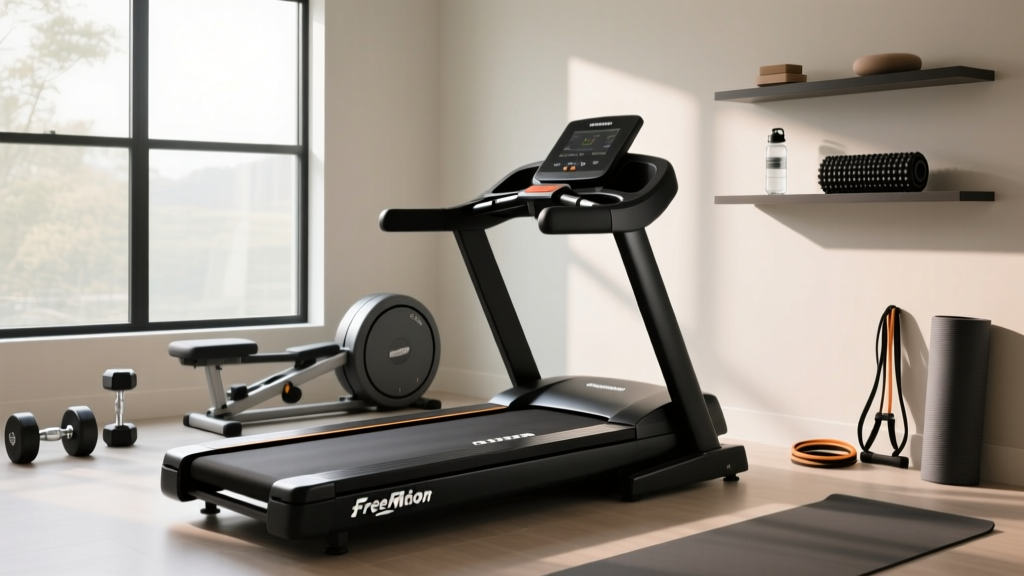
FreeMotion 890 Treadmill Motor Guide & Installation Setup
Master your FreeMotion 890 treadmill setup with our complete installation walkthrough, motor horsepower guide, and electrical troubleshooting tips.

Understanding the Heart of Your Machine: FreeMotion 890 Motor Specifications
When investing in a premium piece of cardio equipment like the FreeMotion 890 Incline Trainer, the motor is the single most critical component dictating longevity, performance, and noise levels. Unlike standard folding treadmills that rely on 2.5 HP motors, the FreeMotion 890 is engineered around a robust 3.8 CHP (Continuous Horsepower) Mach Z commercial-grade motor. This specific motor is designed to handle the extreme torque requirements of 30% incline training and heavy-duty interval sprinting without suffering from thermal throttling.
However, a high-output motor is only as effective as its installation environment. Improper setup, inadequate electrical supply, or incorrect belt tensioning can cripple a 3.8 CHP motor, leading to premature Pulse Width Modulation (PWM) board failure or winding burnout. This comprehensive walkthrough bridges the gap between understanding treadmill motor sizing and executing a flawless, technician-grade installation of your FreeMotion 890.
Decoding Treadmill Motor Sizes: Peak HP vs. Continuous Duty (CHP)
Before unboxing the heavy components, it is vital to understand how manufacturers rate treadmill motors. According to Consumer Reports, the most common marketing trap in the fitness industry is the distinction between Peak Horsepower and Continuous Duty Horsepower. The American Council on Exercise (ACE) consistently advises consumers to ignore Peak HP ratings entirely, as they only measure the motor's absolute maximum output for a fraction of a second before tripping a thermal breaker.
| Motor Metric | Definition | Real-World Implication | FreeMotion 890 Spec |
|---|---|---|---|
| Peak HP | Maximum power generated for a brief surge. | Meaningless for sustained running; often inflated in budget models. | N/A (Not rated by peak) |
| Continuous HP (CHP) | Power the motor can sustain indefinitely at a specific RPM. | Determines if the motor can handle your weight and speed without overheating. | 3.8 CHP Mach Z |
| Torque Rating | Rotational force generated at low speeds. | Critical for incline trainers; prevents belt stuttering when walking uphill. | High-Torque Incline Rated |
Pre-Installation Electrical & Spatial Requirements
A 3.8 CHP motor operating on a 30% incline with a 220-pound user can draw upwards of 12 to 14 amps continuously. If your FreeMotion 890 is plugged into a shared circuit, the voltage sag will force the motor controller to draw even more current to compensate, generating excessive heat.
⚠ Critical Electrical Warning:The FreeMotion 890 requires a dedicated 120V, 60Hz, 15-amp (or 20-amp) circuit. Do not plug this treadmill into a circuit shared with refrigerators, air conditioners, or high-draw electronics. Use a properly grounded, 3-prong outlet. Never use an extension cord or a surge protector, as these can restrict amperage flow and void the motor warranty.
Spatially, the motor's cooling fan requires unobstructed airflow. You must maintain a minimum clearance of 3 feet behind the rear roller and 2 feet on each side of the treadmill base. Restricting the rear exhaust will cause the motor housing to trap ambient heat, drastically reducing the lifespan of the internal bearings and insulation.
Step-by-Step FreeMotion 890 Setup & Motor Integration
Proper assembly ensures that the physical drivetrain does not place unnecessary parasitic drag on the motor. Follow these steps to protect your investment.
Step 1: Base Positioning and Leveling
Place the main deck assembly on a high-density EVA equipment mat. This mat dampens acoustic vibrations and prevents dust ingestion into the motor compartment. Use a carpenter's level across the width and length of the deck. Adjust the rear leveling feet until the base is perfectly flat. An unlevel base twists the frame, causing the running belt to track poorly and forcing the motor to work harder to overcome lateral friction.
Step 2: Upright Assembly and Harness Routing
- Bolt the left and right uprights to the base frame using the provided M10 hex bolts. Torque to 35 ft-lbs.
- Route the main data and power harness through the left upright. Crucial: Ensure the wire harness does not pinch against the metal bracket or the incline rack gear. A pinched harness will cause console blackouts or short out the motor controller.
- Connect the color-coded pin connectors, ensuring the locking tabs click securely into place.
Step 3: Deck and Belt Tensioning
Factory belt tension is rarely perfect after shipping. The belt must be tight enough to prevent slipping under heavy foot strikes, but loose enough to minimize motor amp draw.
- Locate the rear roller adjustment bolts on the left and right end caps.
- Turn both bolts clockwise by exactly one-quarter turn.
- Perform the 'lift test': You should be able to lift the center of the running belt exactly 2 to 3 inches off the deck. If it lifts higher, the belt is too loose (causing slip). If it lifts less than 2 inches, the belt is overtightened, which will cause the motor to over-amp and trigger a thermal shutdown.
Motor Calibration and Initial Power-On Walkthrough
Once assembled, plug the treadmill into the dedicated outlet and flip the red reset switch on the front motor cover to the 'ON' position. Insert the magnetic safety key into the console.
'Never step onto the belt for the initial power-on. Always allow the motor controller to initialize and run a dry diagnostic cycle to establish the baseline PWM frequency without the variable of user weight.' - FitGearPulse Technical Bench
Press 'Quick Start' and let the belt run at 3.0 MPH for three minutes. Listen closely to the motor compartment. A healthy 3.8 CHP Mach Z motor will emit a low, consistent hum. If you hear a high-pitched whining or a rhythmic clicking, power down immediately and check for debris caught in the drive motor fan or a misaligned drive belt. Next, increase the incline to 15% and the speed to 2.0 MPH. Observe the console for any flickering, which would indicate voltage drop from an inadequate electrical circuit.
Troubleshooting Motor Heat and Performance Edge Cases
Even with a perfect installation, environmental factors and usage patterns can lead to motor-related edge cases. Here is how to diagnose and resolve them without voiding your warranty.
Edge Case 1: Thermal Shutdown During Incline Intervals
The Symptom: The treadmill abruptly stops, the console displays an 'Error 1' or 'Motor Overheat' code, and the motor housing is hot to the touch. The Diagnosis: Walking at slow speeds (under 3.0 MPH) on maximum incline generates the highest possible torque and heat. The internal cooling fan is RPM-linked to the belt speed; therefore, slow walking provides minimal cooling air. The Fix: Implement active cooling protocols. Alternate incline walking with flat jogging to increase the motor RPM and fan speed, allowing the windings to shed heat. Ensure the room temperature is below 72°F (22°C).
Edge Case 2: Belt Hesitation and PWM Board Strain
The Symptom: The belt stutters or pauses for a microsecond when your foot strikes the deck, even though the console speed remains constant. The Diagnosis: This is rarely a motor failure. It is almost always caused by excessive friction between the running belt and the phenolic deck, forcing the motor controller to rapidly pulse extra voltage to maintain speed. The Fix: Lift the belt edge and apply 100% pure liquid silicone treadmill lubricant (never use WD-40 or petroleum-based products, which will destroy the deck). Apply 0.5 oz in a zig-zag pattern, run the belt at 3.0 MPH for two minutes to distribute the silicone, and re-test. Amp draw should immediately drop by 2 to 4 amps.
Long-Term Motor Maintenance Framework
To ensure your FreeMotion 890's motor operates at peak efficiency for its entire 10-year rated lifespan, adopt a strict maintenance schedule. Vacuum the motor compartment every 90 days using a soft brush attachment to remove conductive dust and pet hair that can short out the lower control board. Annually, inspect the motor-to-roller drive belt for glazing or micro-cracks, replacing it if tension drops below the manufacturer's 1/2-inch deflection threshold. By respecting the electrical requirements and mechanical tolerances of the 3.8 CHP system, your FreeMotion 890 will deliver commercial-grade performance in your home gym for years to come.
More gear to consider
All reviews
ProForm 400i Treadmill Review: Is It the Best Compact Cardio?

Under Desk Treadmill Review: How Many Calories Lost on Treadmill?

Stationary Bike Types vs GT5 Treadmill: 2026 Market Trend Report

Walking Pad vs Treadmill Review: Safety Magnet Guide
Space Guide: How Many Steps on Treadmill for 30 Minutes Speed 3 vs Elliptical
