Treadmill Buying Guide: Features for Reverse Treadmill Walking
Master reverse treadmill walking with our step-by-step buying guide. Compare belt sizes, motor torque, and handrails to find the perfect machine.

Why Reverse Treadmill Walking Demands a Specific Machine
Reverse treadmill walking—often called retro walking—has exploded in popularity among physical therapists, athletes, and longevity enthusiasts. By walking backward, you shift the biomechanical load away from the patellofemoral joint (the knee cap) and heavily engage the quadriceps, calves, and stabilizing ankle muscles. According to research indexed in the National Library of Medicine, retro walking significantly reduces knee joint stress while increasing energy expenditure compared to forward walking at the same speed.
However, stepping onto a standard, budget-friendly treadmill and hitting 'start' in reverse is a recipe for disaster. Standard machines are engineered for forward momentum. When you walk backward, your spatial awareness drops, your stride changes, and your need for ultra-low, stutter-free speeds becomes paramount. This step-by-step buying guide will walk you through the exact features you must compare to find a treadmill optimized for safe, effective reverse treadmill walking in 2026.
⚠️ Beginner Safety Warning: Never attempt reverse treadmill walking on a machine with a minimum speed higher than 0.5 mph. Beginners should start at 0.2 to 0.3 mph. Always utilize the safety clip, even when walking backward, by routing the lanyard under your arm or attaching it to your waistband behind you.Step 1: Decode Belt Dimensions and Deck Shock Absorption
When walking forward, you can easily see the edges of the treadmill belt. When walking backward, you are entirely reliant on proprioception (your body's ability to sense movement and position). If the belt is too narrow, a slight lateral drift will result in your foot catching the side rail, which is the leading cause of treadmill-related ankle sprains during retro walking.
The 22-Inch Rule
For dedicated reverse walking, you must prioritize a belt width of at least 22 inches. While 20-inch belts (common on sub-$600 treadmills like the Horizon T101) are fine for forward walking, they leave zero margin for error when your eyes are facing the rear of the machine. Furthermore, belt length should be a minimum of 60 inches. This allows you to stand fully on the belt, step off the back onto the floor to mount the machine safely, and begin walking without immediately hitting the front motor cowling.
Deck Cushioning for Joint Rehab
Most people take up reverse walking to rehabilitate knee pain. If your treadmill deck is made of cheap, unyielding MDF (medium-density fiberboard) with basic rubber pucks, the repetitive backward heel-strike will transfer shock directly into your lumbar spine and hips. Look for multi-zone cushioning systems, such as Sole's Cushion Flex or NordicTrack's FlexSelect, which allow you to adjust the deck firmness or provide targeted shock absorption at the strike zone.
Step 2: Compare Motor Torque at Ultra-Low Speeds
This is the most critical, yet most overlooked, technical specification for retro walking. A treadmill motor's Continuous Horsepower (CHP) rating tells you how it performs at a 6.0 mph jog. It tells you almost nothing about how it performs at 0.3 mph.
At ultra-low speeds, cheap DC (Direct Current) motors struggle to maintain consistent torque. This results in 'belt hesitation' or 'stuttering'—a micro-pause in the belt's movement every time the motor's internal commutator switches poles. When walking backward, a 0.2-second belt stutter will instantly throw off your balance, causing you to lurch backward or grip the handrails in a panic.
- Minimum Requirement: 3.0 CHP motor.
- Ideal Spec: 3.5 to 4.0 CHP, or a high-torque commercial-grade AC motor.
- The Test: If testing in-store, set the treadmill to 0.2 mph, stand on the side rails, and watch the belt. It should glide like glass. If it pulses or jerks, walk away.
Step 3: 2026 Treadmill Feature Comparison Matrix
To help you visualize how these specs translate to real-world purchasing decisions, we have compared three popular 2026 home treadmill models specifically through the lens of reverse walking viability.
| Feature / Model | Sole F80 (Top Pick) | NordicTrack T10 | ProForm Pro 9000 |
|---|---|---|---|
| Estimated Price | $1,199 | $599 | $1,499 |
| Motor (CHP) | 3.5 CHP (Smooth low-end) | 2.6 CHP (Prone to stutter) | 3.6 CHP (Excellent torque) |
| Belt Dimensions | 22' x 60' | 20' x 55' | 22' x 60' |
| Min Speed / Increments | 0.5 mph / 0.1 mph | 0.5 mph / 0.1 mph | 0.2 mph / 0.1 mph |
| Handrail Design | Extended front grips | Standard short grips | Wrap-around continuous |
| Retro-Walking Verdict | Highly Recommended | Not Recommended | Premium Choice |
Step 4: Evaluate Handrail Continuity and Console Ergonomics
When walking backward, your center of gravity shifts. According to biomechanical guidelines from the American Council on Exercise (ACE), maintaining a stable upper body is crucial when altering standard gait patterns. You will instinctively reach out for stability.
Most budget treadmills feature 'broken' handrails—meaning the metal bar stops where it meets the plastic console uprights. If you drift backward or need to reach behind you to stabilize, your hand will grasp empty air. You need a treadmill with continuous, wrap-around handrails or heavily extended front grips (like the Sole F80) that allow you to hold the machine securely without twisting your shoulders into an unnatural, painful angle.
Speed Increment Controls
Your console must feature physical, tactile buttons for speed adjustments that allow for 0.1 mph increments. Touchscreen-only interfaces are a major liability for reverse walking; taking your eyes off your path to swipe a glass screen to adjust speed from 0.4 to 0.5 mph can cause immediate disorientation and falls.
Step 5: Your Beginner Setup and Execution Routine
Once you have selected and assembled a treadmill that meets the criteria above, follow this exact step-by-step protocol for your first reverse walking session.
- Mount Safely: Straddle the belt by standing on the left and right side rails. Do not stand on the belt while it is stationary and then turn around.
- Secure the Lanyard: Clip the magnetic safety key to the front of your shirt, but route the lanyard under your arm so it pulls taut if you fall backward off the rear of the deck.
- Engage the Belt: Face the rear of the room. Hold the side handrails firmly. Press the start button and allow the belt to reach its minimum speed (e.g., 0.5 mph or 0.2 mph).
- Step and Match: Step backward onto the belt with one foot, matching its speed, then bring the other foot back. Do not let go of the handrails for the first 5 minutes.
- Posture Check: Keep your chest up and shoulders back. Avoid the beginner mistake of hunching forward to look at your feet; this negates the postural benefits of retro walking and strains the cervical spine.
- Dismounting: Press the stop button. Wait for the belt to come to a complete, 100% halt before stepping off backward onto the floor.
Real-World Failure Modes to Avoid
Even with a good machine, users encounter specific edge cases. Here is how to troubleshoot them:
- The 'Creep' Effect: Over time, treadmill belts stretch. If your belt is loose, the motor pulley will spin, but the belt will hesitate before catching. This is magnified at low speeds. Fix: Adjust the rear roller tension bolts exactly one-quarter turn at a time until the belt tracks smoothly without centering issues.
- Shoe Friction Mismatch: Walking backward causes the toe of your shoe to drag slightly on the belt before the heel strikes. Shoes with aggressive, deep-lugged trail running soles will catch the belt texture, causing you to trip. Fix: Wear flat-soled, smooth cross-training shoes (like the Nike Metcon or Reebok Nano) for retro walking.
Frequently Asked Questions
Can I use a walking pad for reverse treadmill walking?
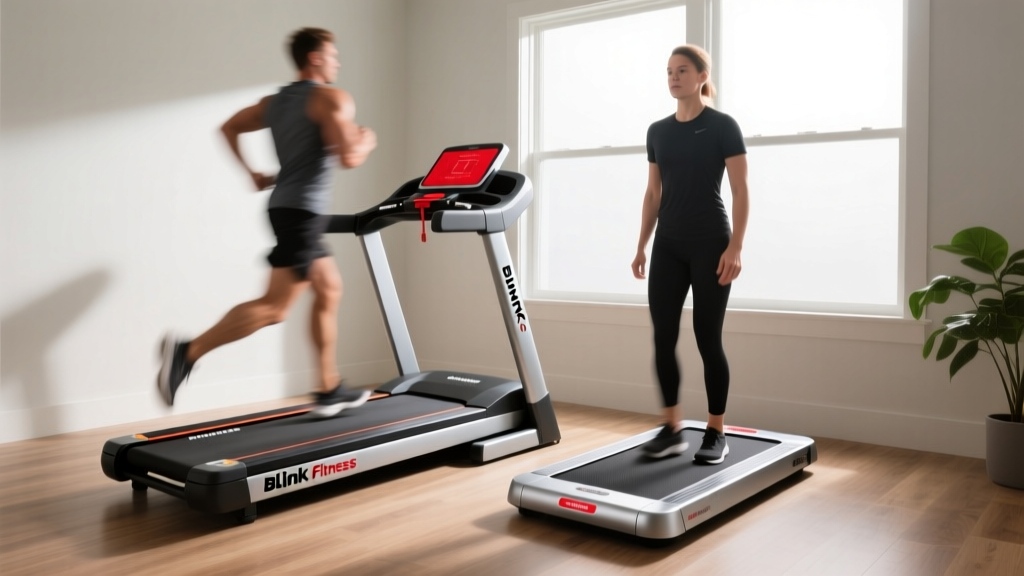
No. Walking pads (under-desk treadmills) lack handrails entirely and typically have belts that are only 16 to 18 inches wide. The lack of lateral stability and the narrow belt make them exceptionally dangerous for backward walking, especially for beginners.
How long should a beginner walk backward per session?
Start with just 3 to 5 minutes at the end of your normal forward-walking workout. The neurological demand of walking backward causes rapid mental fatigue. Gradually increase to 10-15 minutes over the course of 4 to 6 weeks as your proprioception adapts.
Does reverse walking burn more calories?
Yes. Because retro walking is biomechanically inefficient compared to forward walking, your body must recruit more muscle fibers to stabilize and propel you. Studies show it can increase heart rate and caloric expenditure by up to 30% compared to forward walking at the exact same speed.
More gear to consider
All reviews
Air Bike vs Assault Bike: Does the Treadmill Help You Lose Weight?

Walking Pad Versus Treadmill: 2026 Stationary Bike Budget Breakdown

Best Under Desk Treadmills & Treadmill Dolly Setups for 2026

Best Folding Treadmills for Small Spaces & Treadmill Lubricant

Farmers Walk on Treadmill & Stationary Bike Types: 2026 Review