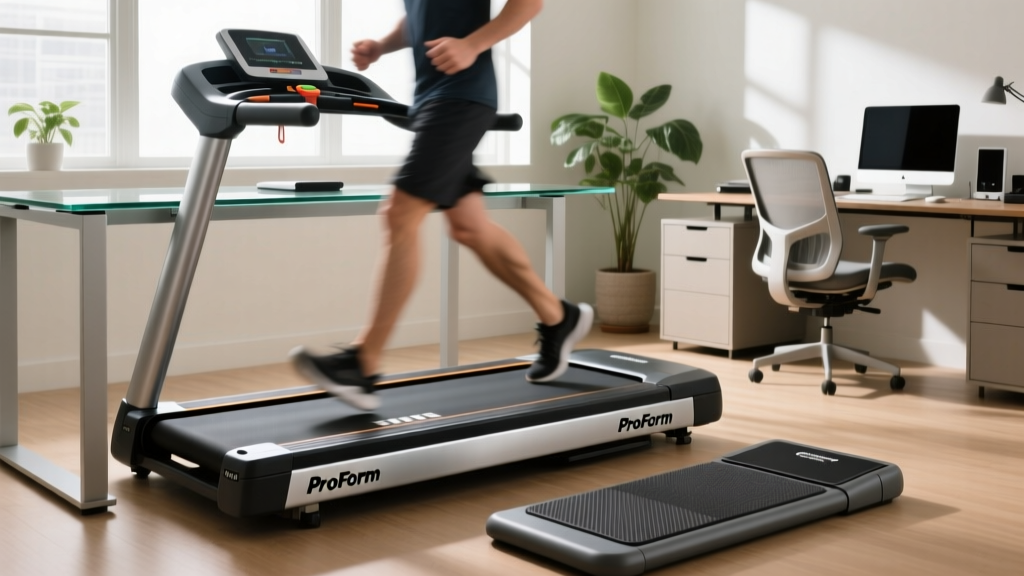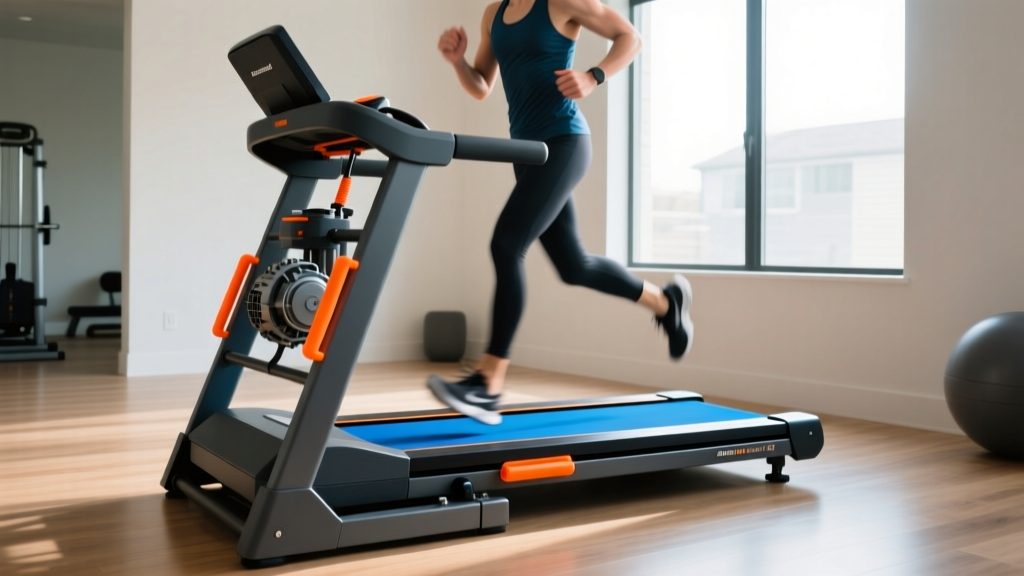
Folding Interval Running Treadmill Review & Care Guide
Discover the best folding treadmills for small spaces that handle HIIT, plus expert maintenance tips to extend motor and belt life for interval runners.

The Engineering Conflict: Small Footprints vs. High-Intensity Sprints
Finding a true interval running treadmill that also accommodates a small living space is one of the most common dilemmas in modern home fitness. High-intensity interval training (HIIT) demands rapid acceleration, heavy impact absorption, and sustained motor torque. Conversely, folding treadmills designed for compact apartments often sacrifice deck rigidity, motor mass, and cooling capacity to achieve a collapsible footprint. When you subject a lightweight folding hinge to the violent lateral shear forces of sprint intervals, premature mechanical failure is almost guaranteed without a rigorous, specialized maintenance protocol.
According to the American Heart Association, interval training places unique, fluctuating demands on both the cardiovascular system and the equipment supporting it. In 2026, manufacturers have finally bridged this gap, producing heavy-duty folding models capable of surviving 12-mph sprint spikes. However, owning one requires abandoning the 'set it and forget it' maintenance mindset.
2026 Review: Top Folding Treadmills for Interval Training
Before diving into maintenance, we must establish which folding models actually possess the biomechanical and electrical architecture to handle interval running. Budget walking pads and light joggers will burn out their motor control boards (MCBs) within weeks of HIIT use.
1. Sole F85 (The Heavy-Duty Folding Champion)
- Motor: 4.0 Continuous Horsepower (CHP)
- Belt Size: 22" x 60"
- Folded Dimensions: 36" L x 35" W x 71" H
- 2026 Retail Price: ~$1,199
The Sole F85 remains the gold standard for small-space interval runners. Its 4.0 CHP motor provides the immediate torque required to accelerate from 3 mph to 10 mph in under three seconds without tripping the thermal overload switch. The folding hinge utilizes a soft-drop hydraulic system, but the sheer weight of the 4.0 CHP motor requires careful hinge maintenance, which we will cover below.
2. Horizon 7.8 (The Agile Sprinter)
- Motor: 3.5 CHP
- Belt Size: 22" x 60"
- Folded Dimensions: 38" L x 36" W x 73" H
- 2026 Retail Price: ~$1,099
Horizon’s 7.8 model features a slightly lighter footprint and an exceptionally responsive FeatherLight folding mechanism. Its rapid-response motor controller is specifically tuned for interval running, adjusting belt speed faster than standard steady-state treadmills. However, its 3.5 CHP motor runs hotter during sprint intervals, making cooling fan maintenance absolutely critical.
The Biomechanics of Belt Wear During Interval Sprints
When you transition from a steady-state jog to an all-out sprint, the friction coefficient between the treadmill belt and the wooden deck spikes dramatically. The Mayo Clinic notes that the ground reaction forces during sprint intervals can exceed 2.5 times your body weight. On a treadmill, this translates to immense downward pressure and lateral shear on the belt edges.
Expert Insight: The Heat Accumulation FactorDuring a standard 45-minute steady-state run, a treadmill deck generates roughly 110°F to 120°F of surface heat. During a 30-minute HIIT session with frequent sprinting, localized deck temperatures can surge past 145°F. This thermal spike breaks down standard silicone lubricants 40% faster, leading to belt delamination and MCB burnout if not addressed.
The 130-Mile Lubrication Rule
Most manufacturers recommend lubricating the deck every 300 miles. Ignore this if you are an interval runner. For dedicated HIIT users, you must apply 0.5 oz of 100% pure silicone treadmill lubricant per side every 130 to 150 miles, or every 8 weeks, whichever comes first.
Interval vs. Steady-State Wear Metrics
| Maintenance Component | Steady-State Runner (Jogging) | Interval Runner (HIIT/Sprints) | Failure Mode if Ignored |
|---|---|---|---|
| Deck Lubrication | Every 300 miles / 6 months | Every 130 miles / 8 weeks | Belt snapping, MCB thermal trip |
| Belt Tension Check | Bi-annually | Monthly | Belt slip during acceleration |
| Hinge Pin Inspection | Annually | Every 3 months | Lateral deck wobble, hinge shear |
| Motor Dust Vacuum | Every 6 months | Every 2 months | Motor capacitor failure |
Step-by-Step Folding Mechanism Maintenance
The folding hinge is the weakest structural link on any compact treadmill. When you sprint, your foot strike creates a harmonic vibration that travels down the deck and into the pivot pins. Over time, this vibration loosens the retention bolts and degrades the gas shocks.
1. The Pivot Pin and Bolt Torque Check
- Unplug the treadmill and lower the deck to the running position.
- Locate the main pivot bolts on the left and right hinge brackets (usually requiring a 17mm or 19mm socket).
- Using a calibrated torque wrench, ensure these bolts are tightened to the manufacturer's specification (typically between 45-55 ft-lbs for heavy-duty models like the Sole F85).
- Apply a small dab of blue Loctite (threadlocker) to the threads if you notice them loosening repeatedly after sprint sessions.
2. Gas Shock and Soft-Drop Inspection
The gas shocks assist in lifting the heavy deck and control the descent. Interval running vibrations can cause the shock mounting brackets to fatigue. Inspect the ball-stud mounts for micro-fractures. If the deck no longer holds itself up securely when folded, or if it drops too quickly when the release latch is pulled, the internal nitrogen seal has failed. Replacement gas shocks cost between $40 and $85 and can be swapped with a standard Allen wrench set.
Motor Shroud and MCB Cooling Protocols
Because folding treadmills often feature enclosed, compact motor housings to maintain a sleek aesthetic when folded, airflow is inherently restricted. When you demand rapid speed changes during interval running, the Motor Control Board (MCB) draws massive amperage spikes, generating intense heat.
Warning: Avoid Compressed AirNever use canned compressed air to clean your treadmill motor. The high pressure can force conductive carbon dust deeper into the MCB solder joints and motor windings, causing a short circuit. Always use a vacuum with a soft brush attachment.
The 'Coast Down' Friction Test
To determine if your motor is overworking due to belt friction, perform the Coast Down test:
- Start the treadmill at exactly 6.0 mph with no one on the belt.
- Press the physical stop button (do not use the emergency clip, as it cuts power instantly rather than initiating the braking sequence).
- Time how long it takes for the belt to come to a complete halt.
- Optimal: 5 to 8 seconds.
- High Friction (Needs Lube/Tensioning): Under 4 seconds.
- Low Friction (Over-tightened/Slipping): Over 10 seconds.
Frequently Asked Questions (FAQ)
Can I use a walking pad for interval running?
No. Walking pads (like the WalkingPad X21 or similar ultra-compact models) utilize 1.5 to 2.0 HP motors and lack the structural cross-beams required for running impact. Attempting sprint intervals on a walking pad will void the warranty and likely destroy the motor controller within the first few sessions.
How do I know if my belt tension is correct for HIIT?
Reach under the center of the belt and lift. You should be able to lift the belt exactly 2 to 3 inches off the wooden deck. If it lifts higher, it is too loose and will slip during rapid acceleration. If you cannot lift it 2 inches, it is too tight, which will starve the motor of amperage and cause the MCB to overheat during sprint intervals.
Does incline interval training cause more wear?
Yes. Running at a 15% incline shifts the user's center of gravity backward, placing disproportionate friction on the rear third of the treadmill deck. If you frequently do incline intervals, you must pay special attention to lubricating the rear half of the deck and inspecting the rear roller bearings for grinding noises.
Final Thoughts on Longevity
Investing in a premium folding interval running treadmill is only half the battle. The extreme mechanical and electrical demands of HIIT require a proactive, data-driven approach to maintenance. By adhering to the 130-mile lubrication schedule, monitoring the Coast Down friction metrics, and rigorously inspecting the folding hinges, you can easily extend the lifespan of your compact cardio machine well past the standard 5-year expectancy, ensuring your small-space gym remains a powerhouse for years to come.
More gear to consider
All reviews
Treadmill Slipping? Try Rowing: Beginner Buying Guide & Technique
Stationary Bike Types vs Adaptive Treadmill: Expert Review

Almost Threw Up After Treadmill HIIT? Quiet Cardio Machines Compared
Curved vs Motorized Treadmill Setup: Calibrating Treadmill Speed to Pace
NordicTrack Treadmill X11i vs Folding Treadmills: Small Space Review